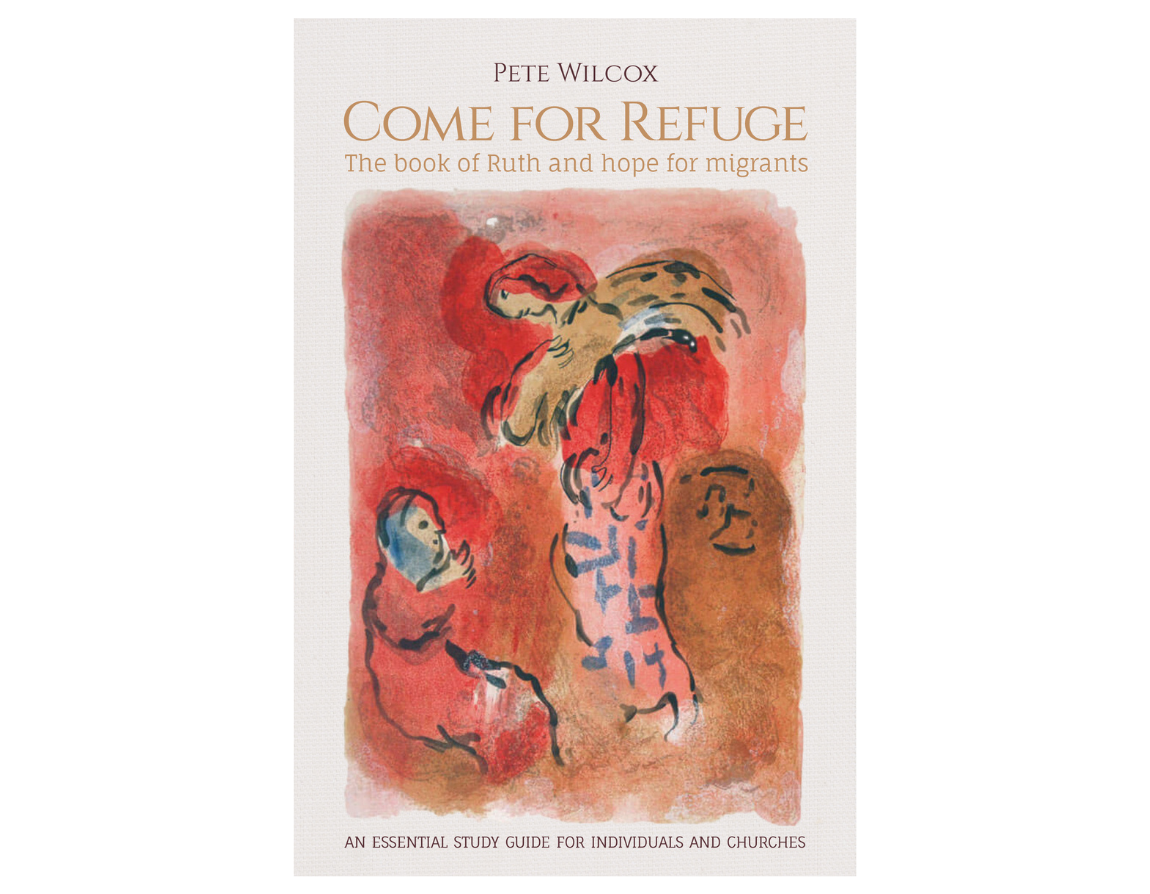

Pete Wilcox, Bishop of Sheffield, explores the striking parallels in the experience of Ruth and Naomi over 3,000 years ago and that of contemporary refugees and asylum seekers. This is an edited extract from the conclusion of his timely, illuminating, and quietly provocative new book Come for Refuge, to mark Refugee Week 2026, which begins tomorrow.
Read previous extracts – part 1 and part 2.
14 June 2026
A story of all times
‘Come for Refuge is a story of our time and a story of all times. Resonating with profound relevance, it weaves first-hand accounts of refugees today with those of biblical characters, reminding us that themes of migration, refuge, and asylum are nothing new. There is a potency in the dialogue between contemporary voices and ancient text, each illuminating and enhancing the other, and together revealing that amid pain and tragedy there is also light and hope.’
The Rt Revd Dr Guli Francis-Dehqani, bishop of Chelmsford
Given recent events, and continuing tensions, an extract from the Conclusion of Come for Refuge encourages us all to pause, and reflect.
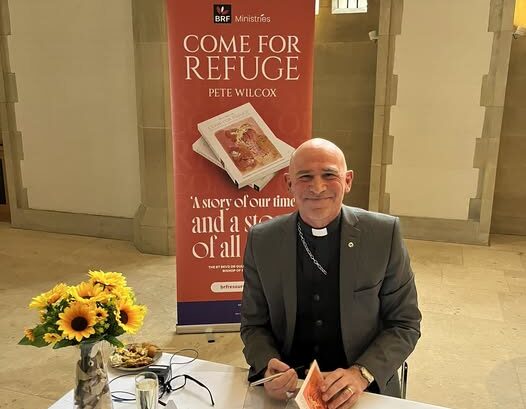
‘Come for Refuge is a story of our time and a story of all times.’
Blessing and kindness in the book of Ruth
One of the distinctive features of the book of Ruth is the extent to which all its characters act with kindness and generosity towards one another. It may only be Boaz (2:1) and Ruth (3:11) who are explicitly described as virtuous or noble (chayil), but in practice they share this quality with the whole Bethlehem community (which may account for the prayer of its womenfolk that the union of Boaz and Ruth will issue in chayil in Ephrathah, 4:11).
Why is this? The behaviour of these citizens of Bethlehem is not presented as a matter of chance. These characters are not coincidentally good and kind. Their ethics are not independent of their faith; their behaviour is not unrelated to their knowledge of the Lord. On the contrary, the character of the dramatis personae in the book of Ruth is derived directly from the character of the Lord in whom they have put their trust. It is a theological truism that human beings are shaped by the nature of the God they worship.
That said, the book of Ruth is a rare thing among the books of the Hebrew scriptures: the Lord is somewhat in the background. There is some similarity here with the only other book in the Bible named after a woman: the book of Esther.
Esther is a story about a Jewish woman living among foreigners; Ruth is about a foreign woman living among Israelites. In both books, the sovereign providence of God is at work, but in and through ordinary men and women living out their ordinary lives. The hand of God is rather veiled, and the voice of God is silent. In Esther, there is not one single reference to God – not by any name. God doesn’t directly act or speak and is not once worshipped or acknowledged, though the audience discerns his presence all the same.
The Lord also seldom acts, and never speaks, in the book of Ruth. But unlike in Esther, in the book of Ruth there are numerous references to the Lord, 18 in all, and these arguably turn out to be key to an adequate understanding of the book…
It transpires that just as the Lord doesn’t speak in the book of Ruth, so none of the characters speak to the Lord as such; instead, they all speak to others about the Lord. Yet, almost without exception, these references to the Lord are still best characterised as ‘prayers’: in almost every case they are wishes, spoken by one of the characters in the story to another, about what they hope the Lord will do. By and large, these are benedictions, calling down the blessing of God upon another person.

One feature of the book of Ruth is the extent to which all its characters act with kindness and generosity towards one another.
The Lord of blessing and kindness
Admittedly, five of the 16 references to the Lord which are to be found in sections of dialogue do not quite fit this pattern. [But] Of the other eleven references to the Lord in the book of Ruth that occur in sections of dialogue, ten consistently also share two other features: they are wish-prayers, and they assume the Lord to be a God of blessing and kindness.
Together these ten references (1:8, 9; 2:4 [x2], 12 [x2], 20; 3:10; 4:11, 12) constitute a consistent and comprehensive pattern. The pattern is consistent in that each reference is set in dialogue, amounts to a prayer for the Lord to act in a certain way, and assumes the Lord to be a God of kindness and blessing. It is comprehensive in that the pattern is to be found in all four acts of the drama and embraces not only each of the three major individual players (Naomi, Ruth, and Boaz), but also each of the three identifiable groups within Bethlehem (the harvesters, the elders, and the women).

References to the Lord in the book of Ruth assume the Lord to be a God of blessing and kindness.
Kindness in the community in the book of Ruth
Together, the consistency and the comprehensiveness indicate that something normative is in view: here is a community which acknowledges the Lord with its lips and seeks to honour him with its common life. The knowledge of God is sufficiently embedded in this community for its members to speak easily of him to one another; his name comes readily and sincerely to their lips.
And the knowledge of God is sufficiently embedded in this community for its members instinctively to imitate him in the way they relate to one another. Since they know the Lord to be gracious and merciful, they relate to one another in ways which are gracious and merciful. Since they know the Lord to be slow to anger and abounding in steadfast love [hesed], they relate to one another in kindness. Indeed, so formed are they by their knowledge of the Lord, that they even relate to the outsider, the migrant, with kindness.
Ultimately, the book of Ruth is not actually about Ruth and Naomi. It is not even about their wider community, comprising Boaz and his workers, the elders, the women, and all the people of Bethlehem. For all that he never speaks and barely acts directly, this is a story about their Lord. If Ruth and Naomi, Boaz and the people of Bethlehem turn out to be noble people, who act in ways that are generous and kind, it is because their character reflects the character of the Lord they have known.
If the book of Ruth can be described as a study in kindness, this is why: it is because the book explores what human community can look like when it is shaped by the nature of God. The persistent kindness of the people of Bethlehem in this story is all the more impressive because it is set in the time of the judges (1:1), when kindness was in short supply. But then, at the time of the judges, people ‘did not know the Lord’ (Judges 2:10).
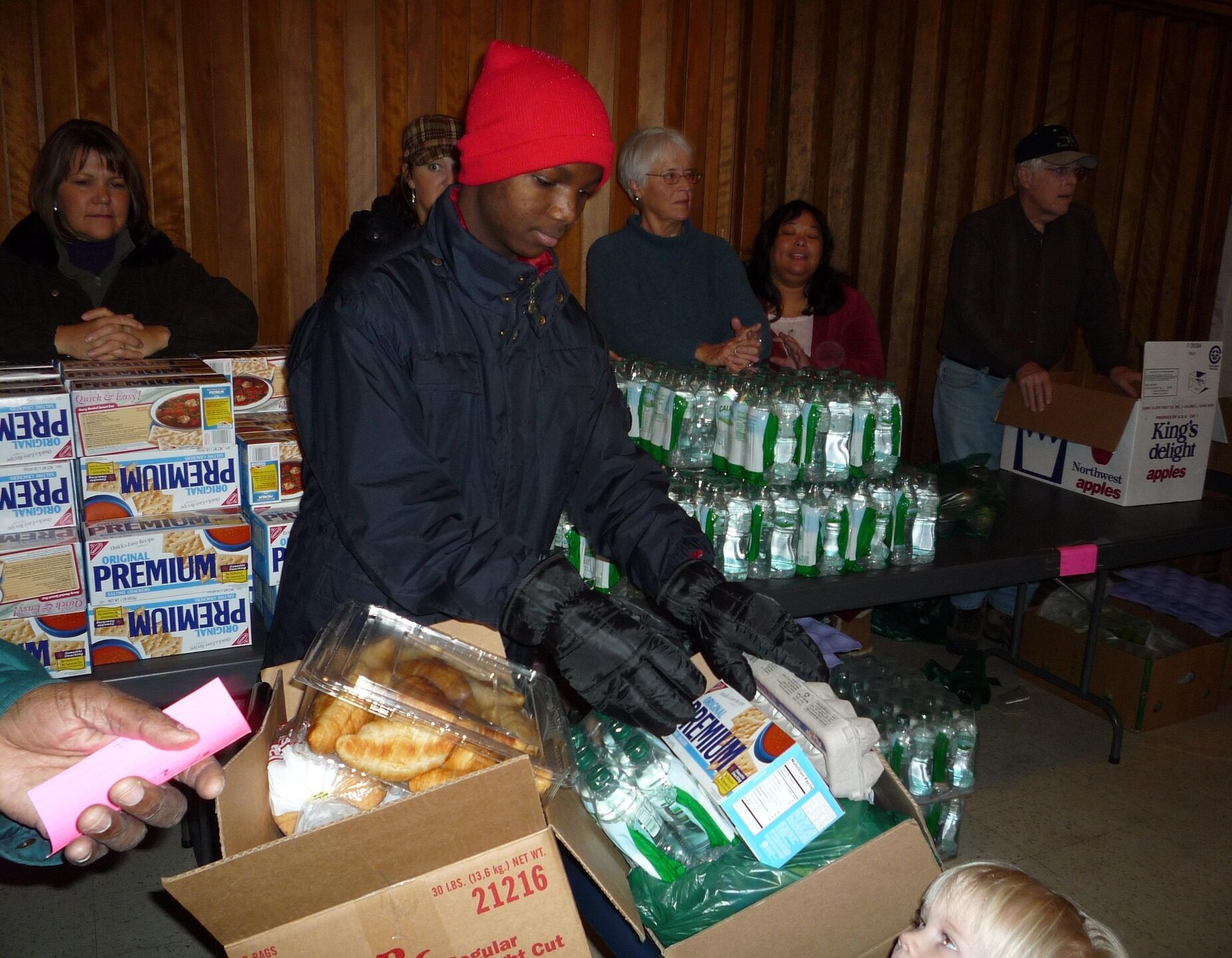
The book of Ruth can be described as a study in kindness.
Kindness and refuge for migrants today
In its World Migration Report for 2022, the United Nations International Organization for Migration (IOM) states its commitment ‘to the principle that humane and orderly migration benefits migrants and society. As an intergovernmental organization, IOM acts with its partners in the international community to: assist in meeting the operational challenges of migration; advance understanding of migration issues; encourage social and economic development through migration; and uphold the human dignity and well-being of migrants.’
It goes without saying that every national government is responsible for framing policy in relation to migration, and government policies are bound to vary according to time, place, and circumstance.
However, the challenging commitment of the IOM expressed here combines at least two elements, which every government will surely wish to weigh carefully in the formulation of migration policy: the right of migrants to be treated humanely (to experience kindness), on the one hand, and the potential of migrants to benefit both society and themselves, on the other. So the IOM seeks to ‘encourage social and economic development through migration’, on the one hand, and to ‘uphold the human dignity and well-being of migrants’, on the other. This vision for global migration is a long way from a hostile environment.
Both these elements are combined in the book of Ruth. The experience of Ruth and Naomi might almost be considered a case study to illustrate the commitment of the IOM. As the kindness and blessing of God were mediated to them by the people of Bethlehem, and pre-eminently by Boaz (as they were treated humanely), they were enabled to move from crisis and calamity, as safely as possible through migration and kinship, subsistence and vulnerability, to security and well-being. In making this journey, and in finding integration and inheritance, they made a contribution and left a legacy, so benefiting not only themselves but their place of refuge. This is a journey every forced migrant aspires to make, and it is kindness which enables it.
This is precisely the point of the ‘happy ending’ in the book of Ruth, at the conclusion of Act IV:
So Boaz took Ruth and she became his wife. When they came together, the Lord made her conceive, and she bore a son… The women of the neighbourhood gave him a name, saying, ‘A son has been born to Naomi.’ They named him Obed; he became the father of Jesse, the father of David.
In the providence of God, the legacy of this migrant woman to the society in which she sought refuge was nothing less than the grandfather of Israel’s greatest king. The story invites the audience to ask what might have been lost if she had not received sanctuary in Israel. A contemporary British reader might be tempted to consider how things would have turned out if Israel had set out to ‘stop the boats’. A hostile environment runs the risk of rendering a country Ruth-less.
One final thought: the practice of kindness is not without risk. That too is precisely the point: it is in the nature of kindness (and especially kindness to the migrant, the refugee, the outsider) to be courageous and even risky. Perhaps it is in the Lord’s nature, also.