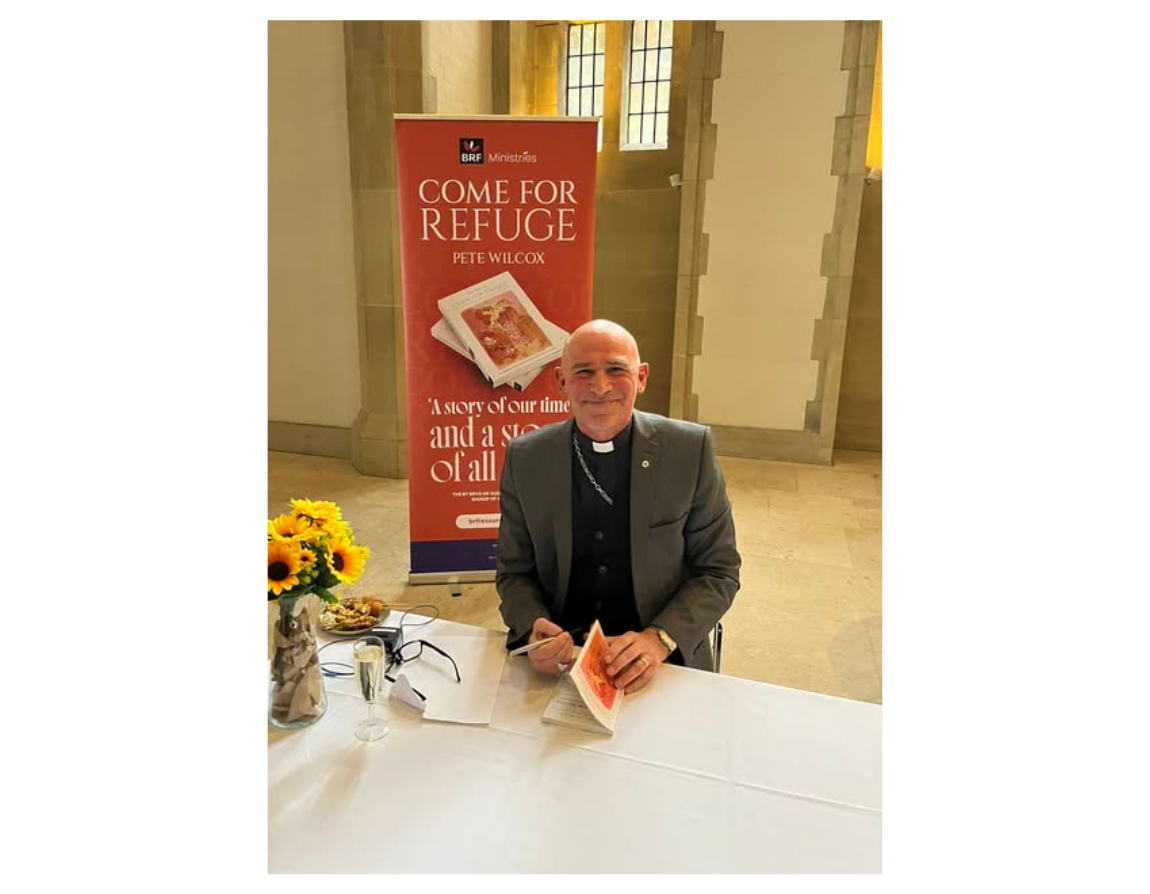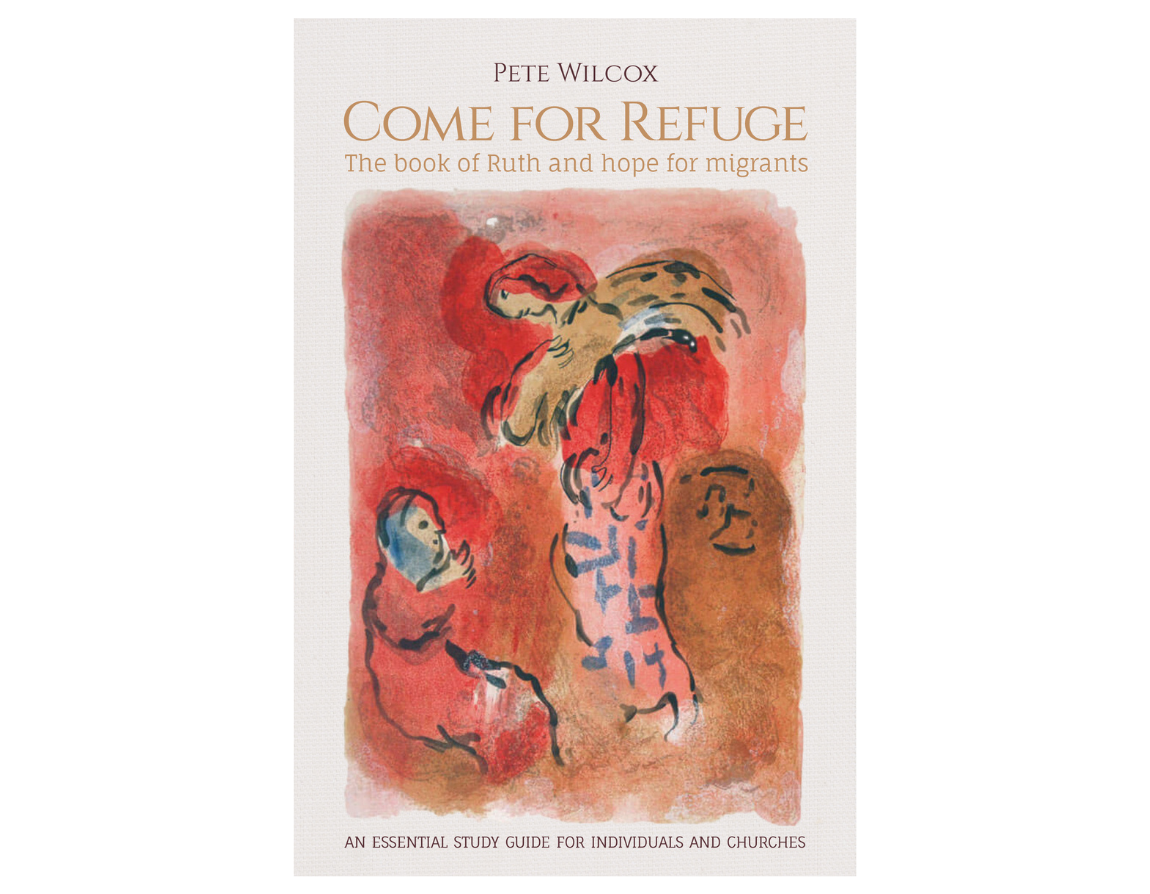

When bishop Pete Wilcox launched his new book Come for Refuge after evensong in Sheffield Cathedral last Sunday, four of the refugees whose stories are included in the book were present. These contemporary testimonies, from the UK and Australia, sit alongside bishop Pete’s deep dive into the 3,000-year-old story of Ruth, Naomi, and Boaz, highlighting parallels in the experience of migrants and refugees across the centuries, and challenging Christians to respond with kindness and justice.
26 April 2026
Nasir’s story: to Sheffield from Pakistan
Nasir’s story is raw. His departure from his country of origin was relatively recent. As such, his testimony illustrates most vividly the migrant journey, from crisis and calamity, to migration and kinship, to subsistence and vulnerability. (Note also that names have been changed in this story to protect the identity of the people concerned.)
I grew up in Lahore, Pakistan. My family has been Christian as far back as I know. I am the youngest of my siblings, and all of us, in school and out of school, have experienced discrimination in small but persistent ways on account of our faith. The discrimination is more severe in employment, from colleagues and bosses: Christians are generally seen as fit only for menial jobs – when a Christian succeeds in securing an office job, for example, people will say, ‘The cleaners are behind the desk now.’
After leaving school in 2009, I came to the UK to study for a degree in mechanical engineering at Doncaster College. I stayed until 2013 and returned home after that.
Our life circumstances changed in 2010 when my oldest brother, who had a successful business, was asked for help by a colleague and friend who wanted to convert to Christianity. Though my brother warned him of the trouble he would face, the man was determined, so he helped him. The result was that, first, that man himself had to flee (because his in-laws started to come after him), and then my brother had to flee. The man’s family (together with some extremist people) blamed my brother for the man’s conversion. The threats and attacks against him became increasingly violent, so he fled.
After my brother had gone, we assumed life would settle down again, but, in fact, occasional threats and harassment against my family continued, even after I returned to Pakistan in 2013. People would come to our house or confront us in the street to humiliate us or beat us or whatever.
I got married to Aman in 2020. My wife used to work for a Catholic charity that supported people facing harassment or persecution – such as having bogus blasphemy cases brought against them. Their work focused on villages and small towns because these attacks were frequent. My wife supported girls and young women who were especially vulnerable.
After one particular case, she, too, became the focus of personal attacks. Even their efforts to make the school curriculum unified and less religiously biased were met with extreme opposition in the form of verbal and targeted threats on many occasions. For some months, we tried to escape the threats: moving house, even moving to a new city for a few months, hoping things would calm down. But repeatedly, people managed to track us down. Occasionally, someone would come to our house to ‘talk’ with my wife.
So, in mid-2023, we decided to leave. That was a hard decision. Our family is important to us, and we didn’t want to leave them. We tried our best to survive, but eventually, our situation became untenable. We fled to the UK and as soon as we got to Heathrow, claimed asylum.
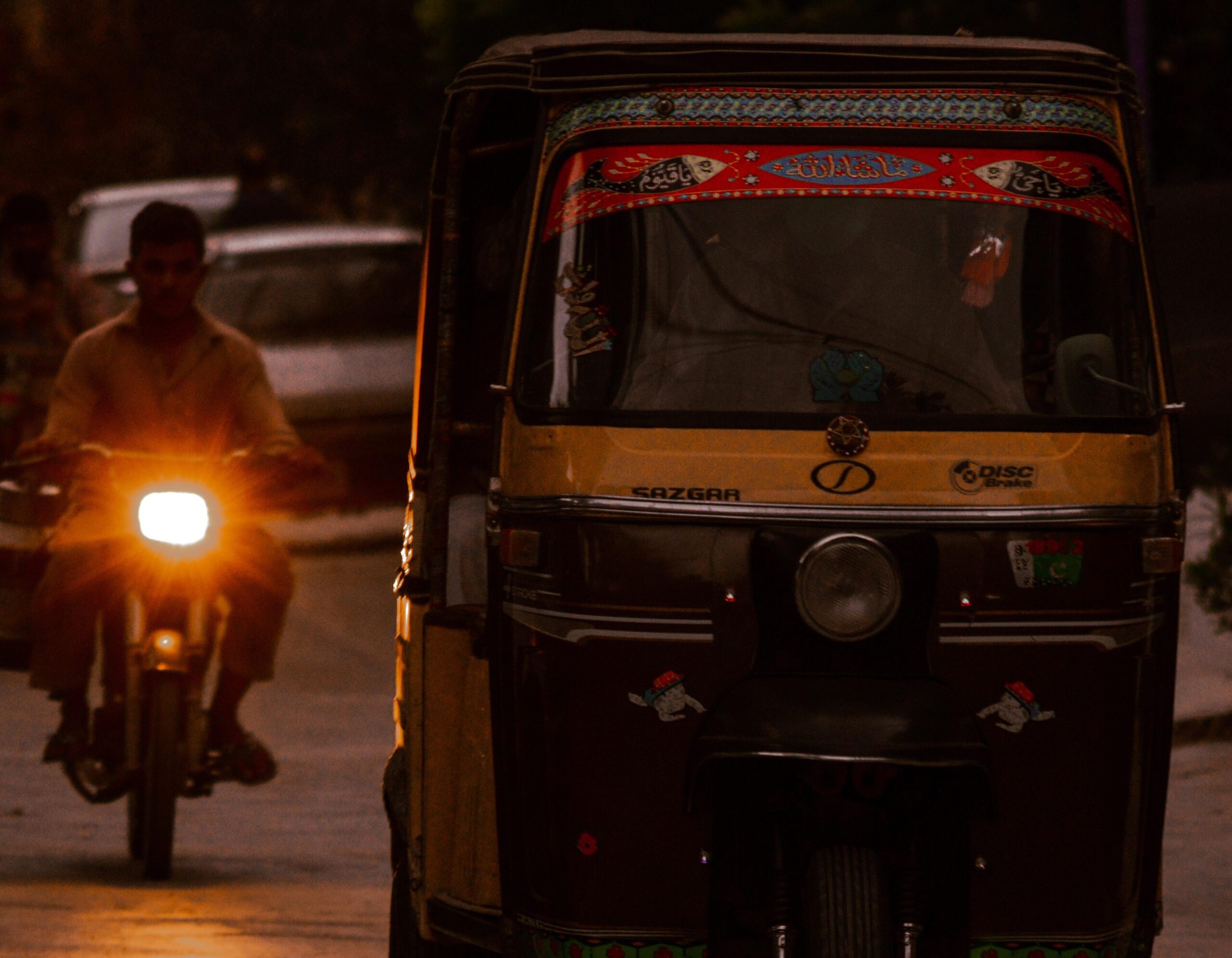
For some months, we tried to escape the threats: moving house, even moving to a new city for a few months.
We were detained at the airport for four or five hours and interrogated. After processing, the Home Office transferred us to a hotel in Chelmsford. We arrived at the hotel around 2.00 am and were told that we would stay in the hotel until a decision was made on our asylum application.
However, the next morning the hotel staff informed us about a letter from the Home Office requiring us to leave the hotel because we had about £1,500 with us, which we had declared at the airport. Because of this money we were not entitled to accommodation.
I offered to pay for us to stay there, but the hotel manager said his contract was exclusively with the Home Office, and so he could not accept paying guests – his hands were tied. When we tried to find alternatives, we couldn’t – our passports had been held at the airport, so we had no identification papers, no bank cards, nothing.
Desperate, I contacted my oldest brother, a pastor in Virginia, USA. He is also a doctoral student at the University of Cambridge, at Wesley House. He contacted some people he knew here in the Methodist Church and explained our predicament, that we were a family with a small daughter, about to be made homeless, with nowhere to go.
Amazingly, the people at Cliff College, which is a Methodist college, offered us accommodation. A church in Chelmsford helped us with the transportation to Cliff College. We were stunned by the hospitality and welcome offered by the college staff and community. We have a one-bedroom flat, which is more than enough for us. We couldn’t have asked for anything better.
We feel safe here and have become a part of the community. We have joined a local church where my wife and I serve actively. This community has become a second home to us. Our two-year-old daughter has made friends here. We stay in contact with our families in Pakistan via phone and social media. I did see my oldest brother when he came over from the USA in January: that was the first time I had seen him for 14 years!
As we wait for our asylum application to be processed, we are left in a state of uncertainty.
With the backlog at the Home Office, it could take a long time for our asylum claims to be processed. The unknown future is a constant source of worry and stress for us.
Despite the challenges we have faced, we remain hopeful for a better future in the UK. We hope that our asylum application will be granted, allowing us to live without the constant threat of persecution. We are eager to contribute to the economy and well-being of this country, using our education, skills, and experience.
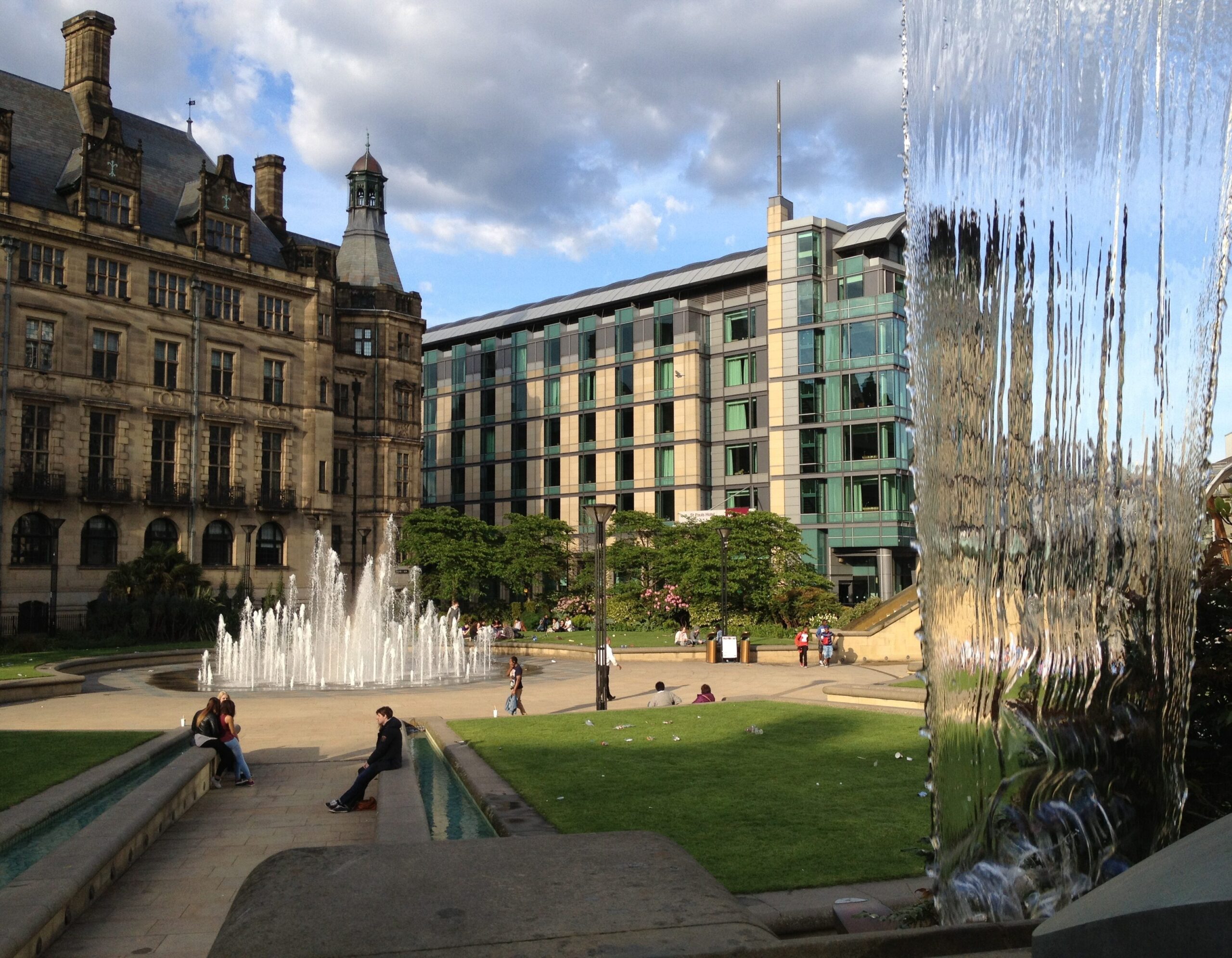
Despite the challenges we have faced, we remain hopeful for a better future in the UK.
Ana Maria’s story: to Sheffield from Chile
Ana Maria reflects back over a 50-year period on her transition from crisis and calamity, to migration and kinship, to subsistence and vulnerability, to security and wellbeing, to integration and inheritance, and finally to contribution and legacy.
I am now 79 years old and I have been in England for over 50 years, but I am originally from Chile. I left there in 1975, because of the terrible military dictatorship led by General Augusto Pinochet, who seized power in 1973. Over the course of the next 17 years, his regime exercised a cruel oppression: thousands of people were killed or disappeared, and tens of thousands were detained and tortured.
I was raised in the south of Chile, where my father was a dentist, who also had a healthcare role in the service of Allende’s socialist govern-ment. So following the military coup, my father was placed under house arrest. At that time I was finishing my degree in biochemistry. The universities were a key focus of opposition to Pinochet, and in the first year of the dictatorship I saw friends and colleagues put in prison and tortured. My fiancé disappeared. Hundreds of people, and especially young people, were leaving the country in trauma. Almost every family had someone who disappeared, was tortured, or was imprisoned. So my father advised me to flee. This was a distressing decision, because I was an only child. But it was clear there was no prospect for me to have a good career in Chile.
So in 1974 I flew to Madrid with one suitcase. I had not even had time to say farewell to my loved ones. I was 28 years old.
There was a professor at the university in Madrid with an international reputation in the field of study I was working in, so I approached him and he arranged for me to have a bursary to do some research for one year. Then I wanted to enrol for a PhD. That wasn’t possible in Madrid, but with the help of this professor I secured a place to study in London with a professor at Middlesex Hospital on a British Council bursary.
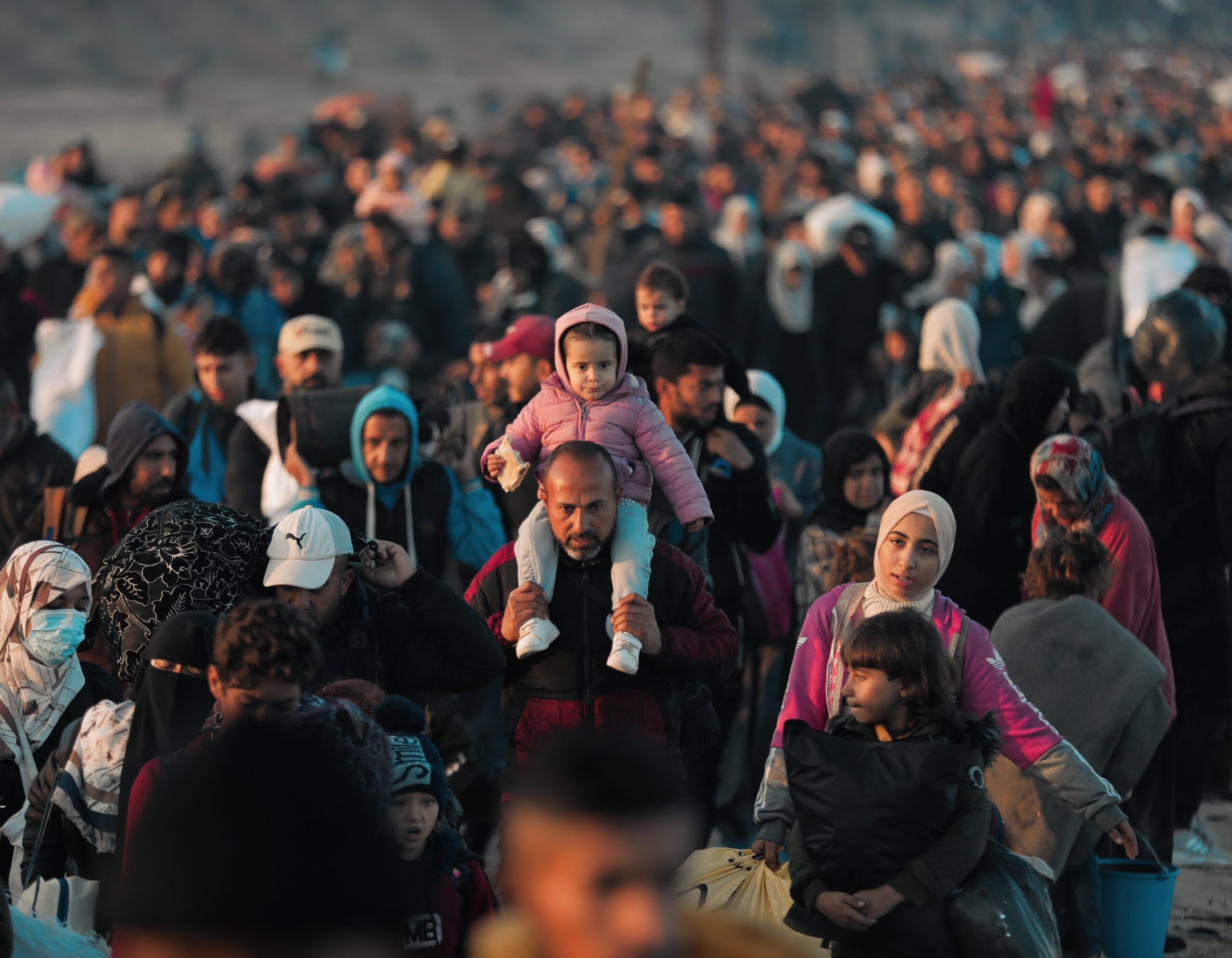
I have never forgotten what it is like to be a refugee.
At first, I was put in a hotel for refugees. I lived there for about two months, but shortly after I met a friend who put me up in his house in Islington. I stayed there for the rest of my time in London – from 1975 to 1989, 14 years in all.
Much of that time is a blur; many of us were suffering nightmares because of the horrors we had experienced. It took me the best part of ten years to come to terms with what had happened, and even so I am still scarred by it now. There was a lot of despair and anguish in my generation of refugees, mainly because we knew that the country we remembered no longer existed and that we couldn’t go back to a job or to study or to be the same person we once were.
In 1979, my father came to London to say goodbye. His health had deteriorated and he died later the same year. I was not able to attend his funeral; it would not have been safe to return to Chile at that time.
In the early 1980s, I formed a relationship with a civil servant, Robert, who had moved into the flat in Islington. In 1983, our son Thomas was born, and in 1985 I completed my PhD.
Towards the end of the 1980s, many things changed. Robert was transferred by the civil service to Sheffield, and Thomas and I went with him, leaving behind the large Chilean community in London. From 1988, I gained a British passport, acquiring dual citizenship. Then in 1989, Pinochet was overthrown, opening up the prospect that I might return to Chile. Many refugees and exiles did return at that time. I visited with Thomas, and I did consider settling in Chile again. But Robert missed us and urged us to return, so we did.
Robert and I separated in 1991. By then I had found work at the University of Sheffield, where I was employed to set up a lab, working in the field of diabetes. I had a good career there, retiring in 2009.
These days it is safe for me to visit Chile and I go each year to meet up with the friends I had before the dictatorship, friends from university, school, and even from nursery! Each time I leave Chile, I cry. My mother died in 2014, and this time I was able to attend the funeral.
But even though I enjoyed a good career in England, these past 50 years have been hard. Although I hold a British passport, I don’t always feel very British; but when I go to Chile, I don’t feel Chilean either.
Now my life has two chief joys. The first is Thomas, who still lives in Sheffield. We are close and go to watch football (Sheffield United!) together. I keep reminding Thomas he is half and half: 50% British and 50% Chilean – but he hasn’t been back to Chile since he was nine years old. I will never leave the UK now, because of him.
My second joy is to volunteer in support of refugees and asylum seek-ers, especially at present from Iran, Pakistan, and parts of Africa. I have never forgotten what it is like to be a refugee. My hope for the future is that some new government policies will help asylum seekers come into this country with the right to work. That is so important for them and that’s my big hope really. The recent riots and demonstrations against asylum seekers and refugees have shocked me.