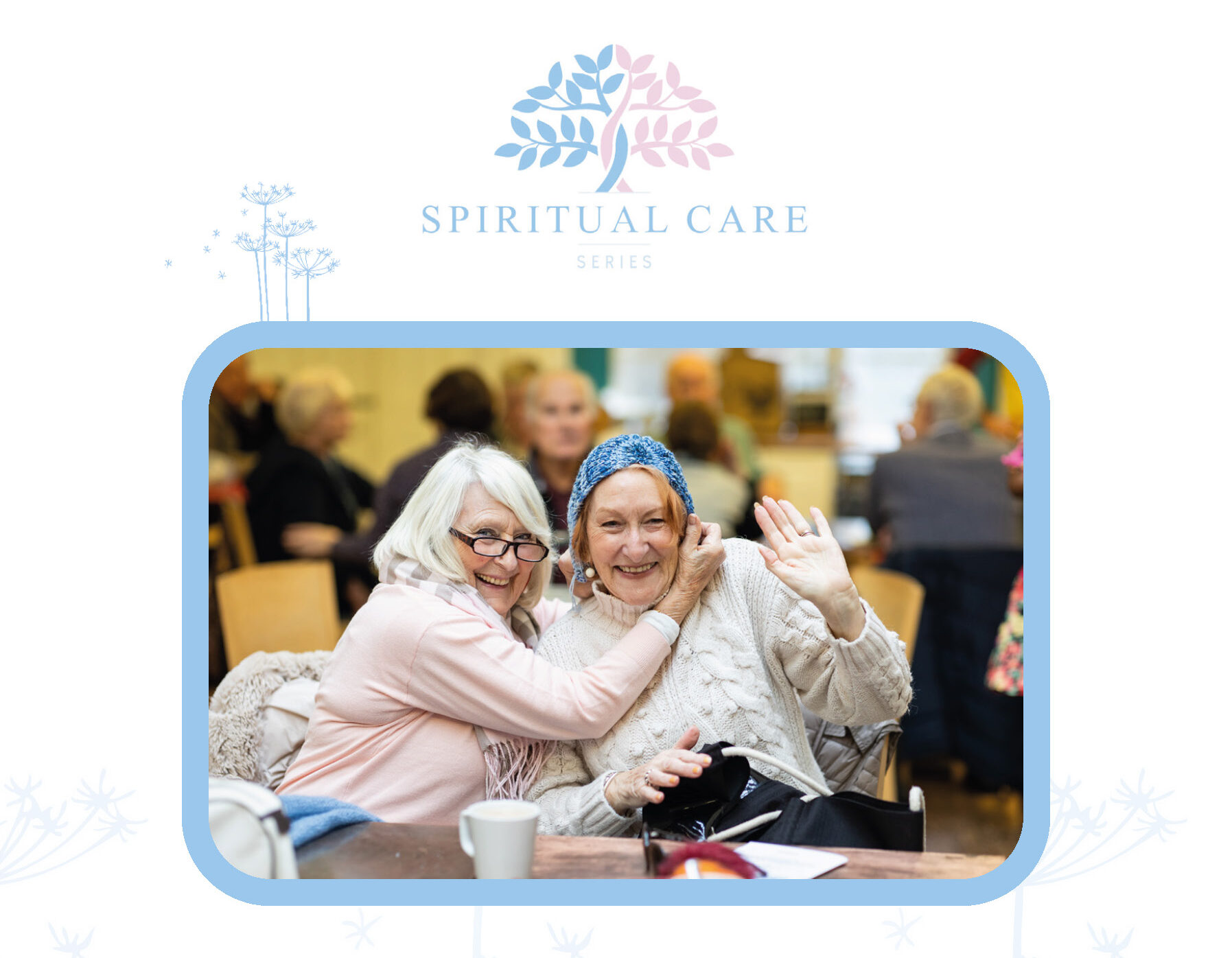

The highly regarded Spiritual Care Series course has now been completed by nearly 400 people since BRF Ministries began distributing it in the UK in 2022. This is an eight-week comprehensive course for churches, groups, and individuals who want to provide good-quality spiritual care to older people in their local community. The course equips participants to understand the ageing process, and help older people reconnect with their past and cope with the losses that ageing brings. It also covers the importance of good listening skills, communication, and boundaries in the provision of this care. In an important new development, the course is now available in three formats: in-person local groups, online national groups, and, most recently, the self-learning edition.
Emily Spencer is the Anna Chaplain in Alton, Hampshire, where the ministry was founded by Debbie Thrower in 2010. She works with a number of volunteer Anna Friends, and earlier this year decided to offer the Spiritual Care Series course to her team and the wider community. Our comms officer Eley McAinsh heard how she got on.
27 September 2026
A call to care for older people
Emily Spencer has been in post just over a year. She has always felt called to the pastoral care of older people, but, she says:
‘I was never quite sure what that looked like until this job came up. I’d never heard of Anna Chaplaincy, but as soon as I saw the advert I looked at the job description and thought that is exactly what I want to do.’
Emily’s background as a licensed pastoral assistant stood her in good stead as she completed her Anna Chaplaincy training and began working in her dream job. It was only a few months later that she decided to offer the Spiritual Care Series course for a small, in-person group.
‘I wanted to give people who are in regular contact with older people the opportunity to further their skills in offering good spiritual care, so I initially offered it to my team of Anna Friends. I’m really lucky. I have a big team of volunteers and four of them decided that they wanted to do it.’
She then offered it more widely in the parish and a number of other people signed up. She invited voluntary donations of £50 to help cover the costs, but phrased the invitation very carefully to ensure no one would be put off if they couldn’t afford it.
Initially, Emily had ten people signed up, but three of them had to drop out at the last minute.
‘It was really sad because one had a bad diagnosis, and another two suddenly had extra family commitments, so we dropped down to seven.’
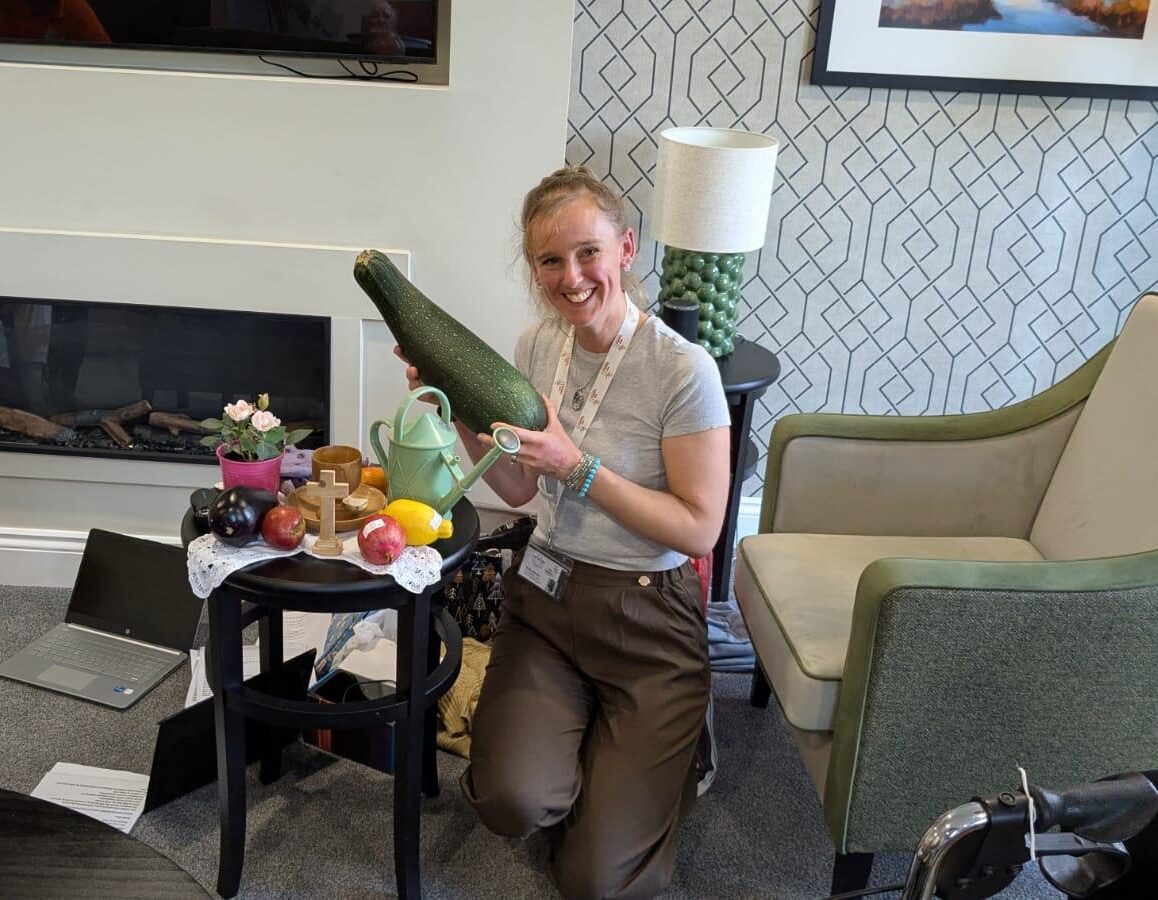
Emily Spencer has always felt called to the pastoral care of older people.
Group dynamics
The all-women group met fortnightly on a Thursday afternoon and gelled immediately.
‘Obviously the four Anna Friends knew each other, so that perhaps helped, but the three ladies who joined, they instantly gelled, and the group really got on right from the start. There was no awkwardness at all and it was a lovely group to be in.’
The four Anna Friends signed up in order to develop their skills for ministry, and of the other three members, two had older parents and one has a lot of contact with older people in her work and wanted to have those skills in spiritual care. Whatever their reasons for joining, when the course finished, they all wanted to stay in touch and are planning a get-together in the autumn.
‘A few of them said that, on a personal level, being in the group made them realise they weren’t on their own. If you’re looking after frail parents, especially when you’re getting older yourself, it can be quite isolating and exhausting. They were very honest about how hard that can be, and so knowing there were others in a similar situation was really helpful for them. It became an amazing support group for members personally, as well as for their ministry, or their professional roles.’
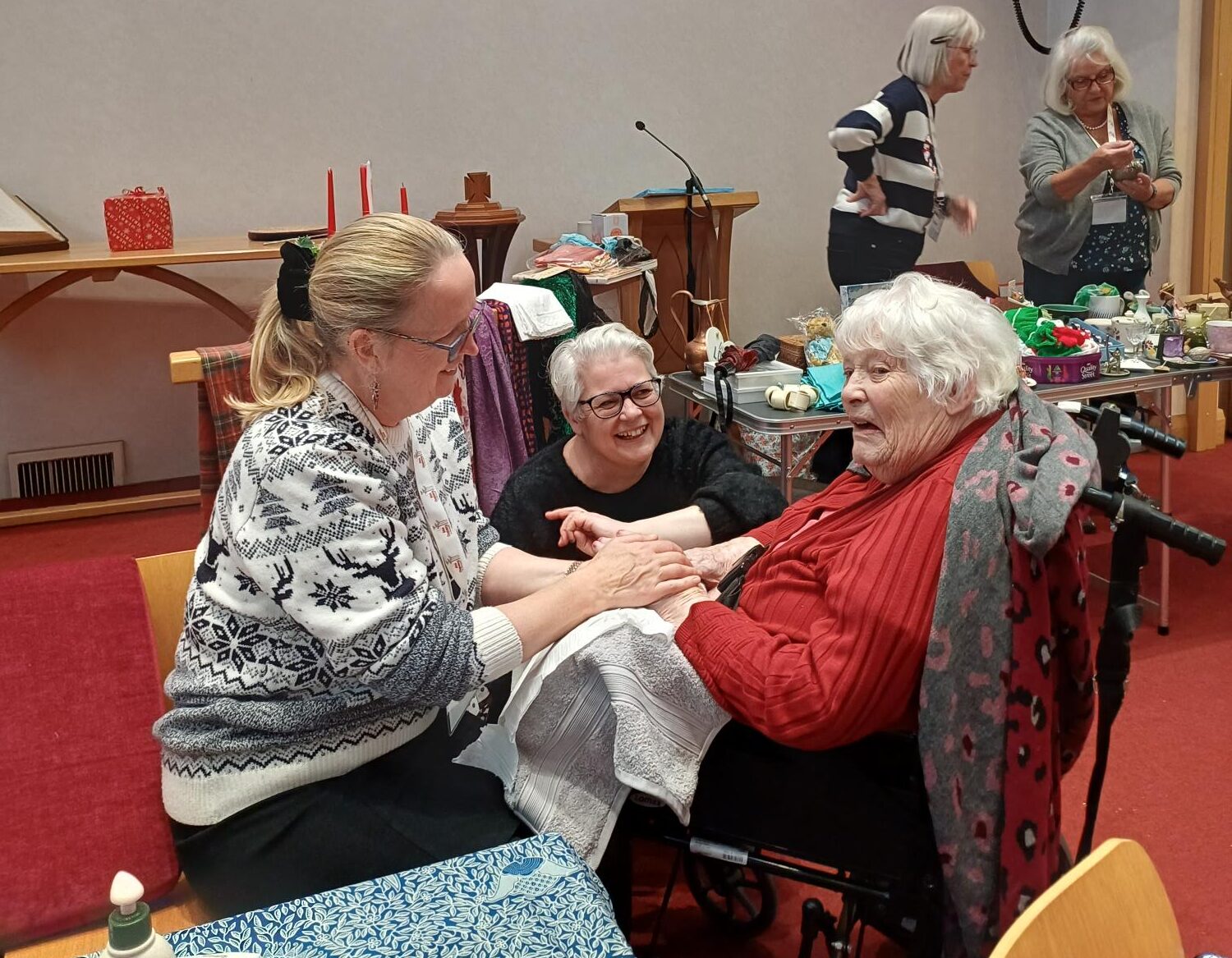
If you’re looking after frail parents, especially when you’re getting older yourself, knowing there were others in a similar situation was really helpful.
Timing issues
The one thing Emily would change if she ran the course again – and she has every intention of doing so – is the timing.
‘We only met for two hours, and that turned out to be a bit of an issue. I know the course developers suggest you take longer, but to be to be honest, when I advertised it, I didn’t want to make it longer than two hours because I thought that would put people off!’
They did manage to cover almost all the material despite only meeting for two hours, but it put a lot of pressure on the sessions.
‘There were a few bits that I had to omit or edit as we went along, but generally we did cover it in order, and we got into some really good discussions.’
Interestingly, Emily hadn’t actually completed the course herself before she offered it, but for her that was a positive.
‘Obviously, I did all the preparation before each session, but we were learning together, and that seemed to make it even more special. I thoroughly enjoyed facilitating the course, and I learnt so much from the group as people shared their experience and their insights. It wasn’t me standing up there going, “I know everything.” It was a wonderful learning journey for all of us.’
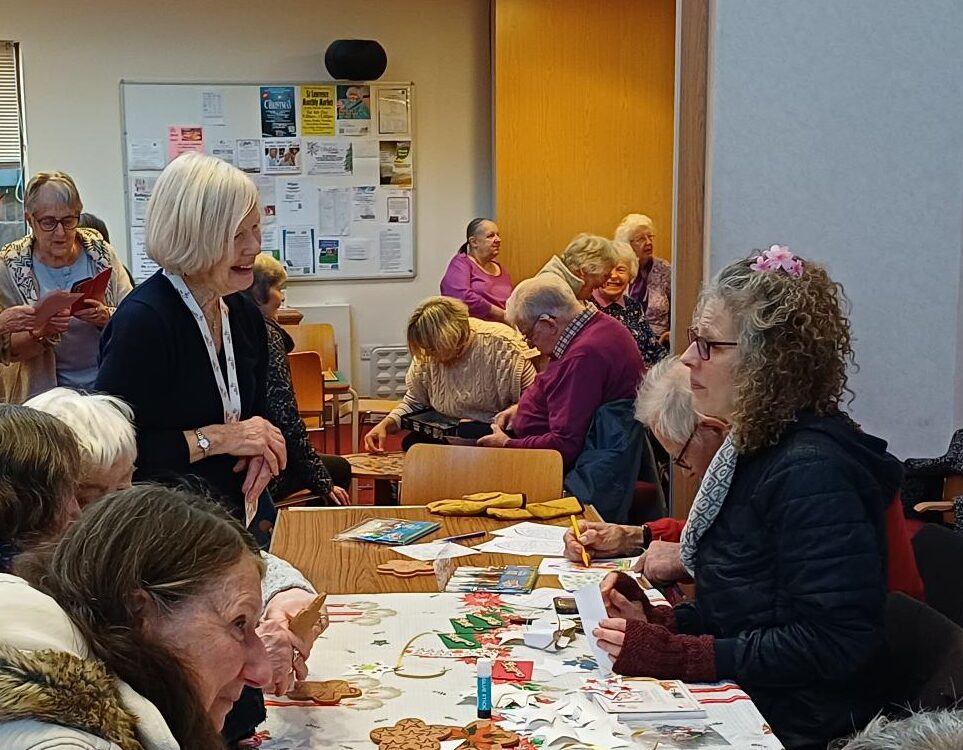
I thoroughly enjoyed facilitating the course, and I learnt so much from the group as people shared their experience and their insights.
Key lessons
The eight sessions cover a lot of ground, some practical, some theological, some deeply emotional. But for Emily, the key lesson that everyone began to absorb, right from the first session, is that it’s okay to sit with people in their sadness.
‘That was a really big thing that came up for us as a group. Most of us came into the course thinking, we’ve got to be fixers. If people share their problems and issues and questions with us, we need to fix everything for them.
‘But actually, we don’t! It’s much more important to simply sit there quietly and let people explore how they’re feeling. Particularly if they are sad or low, it’s okay to sit in silence, simply being present with them. For most of the group, that was a real revelation, and to be honest, a huge relief.’
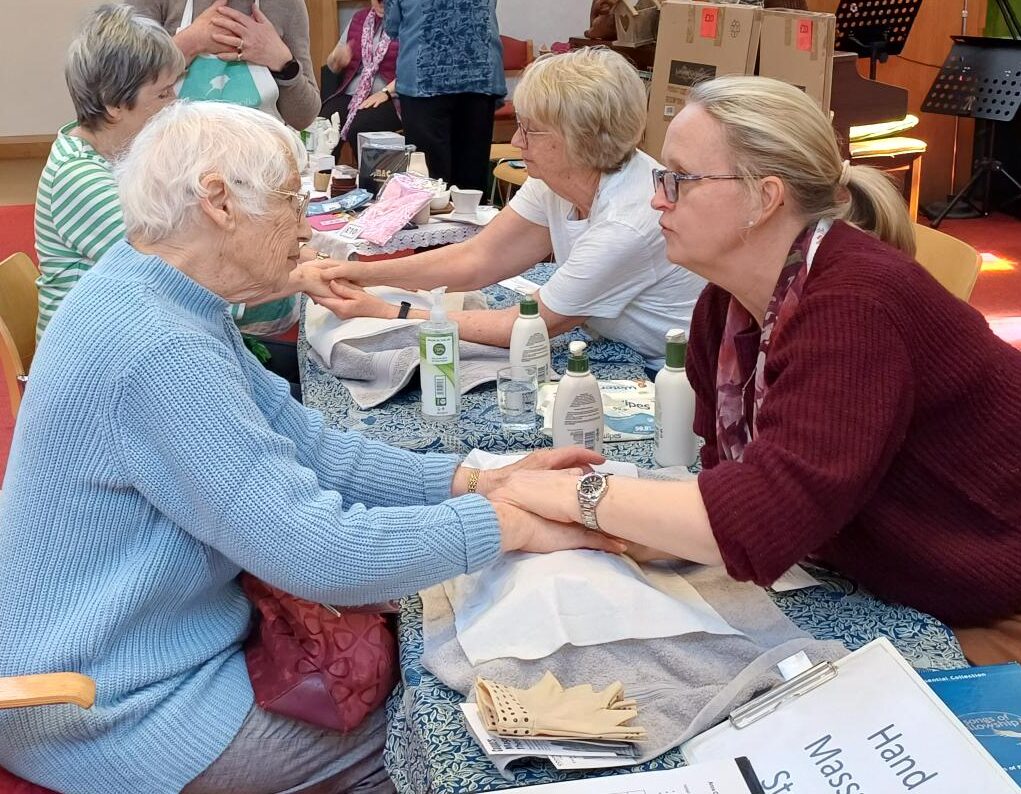
Most of us came into the course thinking, we’ve got to be fixers. But actually, we don’t!
Highlights and challenges
Emily continues:
‘For me as facilitator, the main highlight was watching the group learn to trust each other and share, with confidence, their experiences and insights. It was lovely to see when aspects of the course resonated with the group, and they learnt something new or gained a different perspective. They’d say, “Oh, I’ve never thought of it that way!”’
The group was impressed by the quality of the video material. ‘They loved the videos, especially some of the personal stories: they really brought it home, some of the struggles and challenges older people face. And they found it really helpful that they could go away and rewatch them. And they really liked having the Bible reflection at the beginning of each episode: the fact that it set the scene and got them thinking. That was really effective for our group.’
‘Challenges for me as a facilitator: keeping to time! I mean, that’s partly my own fault for putting pressure on myself to do it in two hours. As I said, I didn’t want to advertise it for any longer than two, but in future, I would definitely give it extra time.’
Apart from the time-keeping challenges, there were a few minor niggles. Some members of the group struggled a little with the online learning platform and accessing materials. Overall, the ‘quizzes’ at the end of each session ‘really didn’t do justice to the quality and the depth of the material’, and no one enjoyed the role plays, which they found ‘quite awkward, so they were the first thing we cut out when we were short of time’.
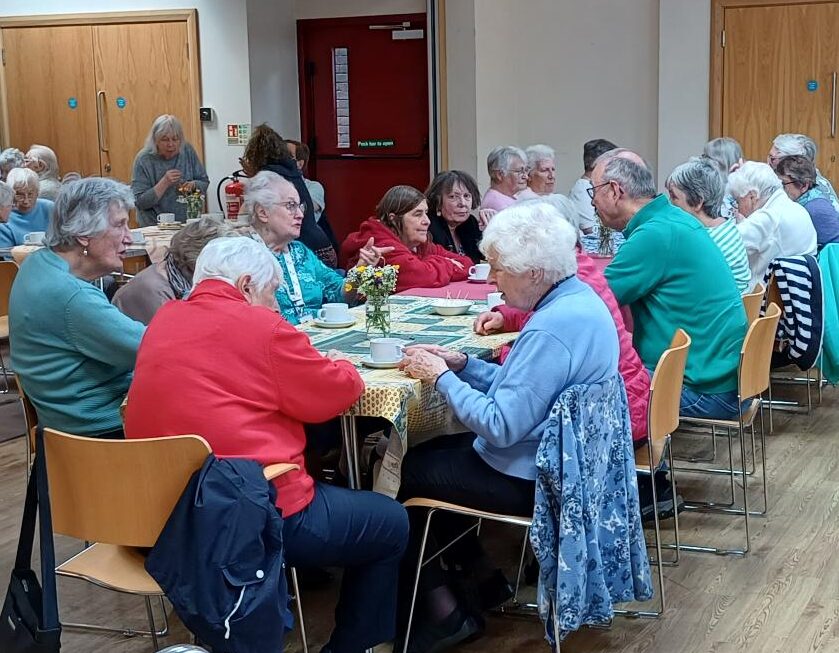
The main highlight was watching the group learn to trust each other and share.
Impact
So has anything in Emily’s ministry changed as a result of doing the Spiritual Care Series?
‘I haven’t changed anything specifically, but it’s made me more aware of how important it is, not only for myself but my team of Anna Friends, to feel equipped and confident in being able to offer effective, meaningful spiritual care to older people. The course enabled us to do that. It was so rich. We’ve all said that now, when we go out visiting and into care homes, we have a much deeper perspective and awareness, which is brilliant because it makes you so much more aware of people and their needs.’
‘And personally, it’s made me think about my own family, particularly my parents and my grandparents on my dad’s side, and what might be going on for them. It’s made me see them differently, and given me a sense of how they might be processing some of these big questions. It’s given me the insights, and the words maybe, to open up some of those hard conversations we can shy away from in families, and that seems a really healthy thing.’