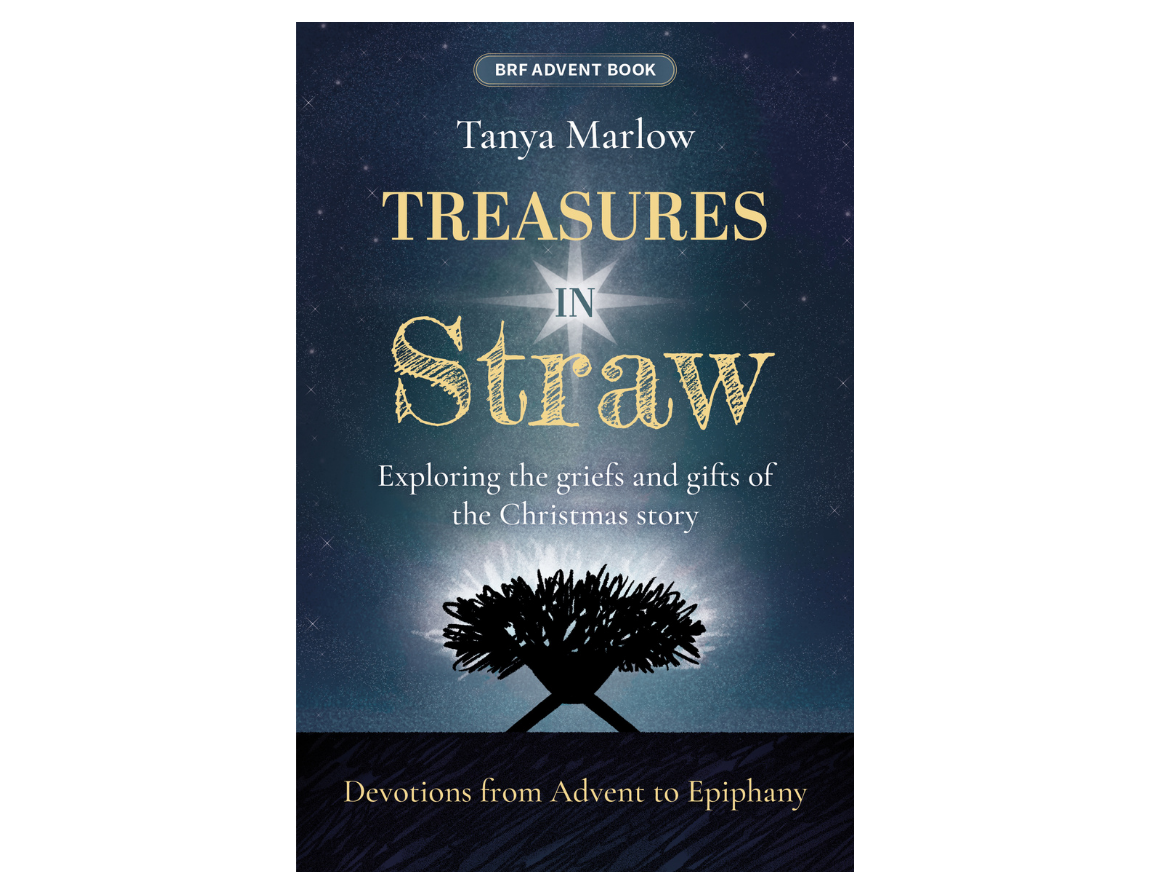
Enjoy this second extract from our 2026 Advent book, Treasures in Straw: Exploring the griefs and gifts of the Christmas story, by Tanya Marlow. This is from the third section of the book, entitled ‘Songs after silence’.
8 November 2026
Elizabeth is given a song of wonder
When Elizabeth heard Mary’s greeting, the baby leaped in her womb, and Elizabeth was filled with the Holy Spirit. In a loud voice she exclaimed: ‘Blessed are you among women, and blessed is the child you will bear! But why am I so favoured, that the mother of my Lord should come to me? As soon as the sound of your greeting reached my ears, the baby in my womb leaped for joy. Blessed is she who has believed that the Lord would fulfil his promises to her!’… Mary stayed with Elizabeth for about three months and then returned home.
Luke 1:41–45, 56 (NIV)
If I were to ask a roomful of church ministers who was the first person to recognise Jesus as the Messiah (God’s chosen king), what would their answer be? My bet would be Peter, because of his reply to Jesus’ question, ‘Who do you say I am?’ (e.g. Luke 9:20).
But Peter wasn’t the first: it was Elizabeth.
Elizabeth is criminally overlooked and under-celebrated as far as saints go. She and her son are the first people in the gospels to be ‘filled with the Holy Spirit’ (v. 41) and hers is the first human voice to prophesy about Jesus. When she sees Mary, she is given sudden, supernatural insight – not only is Mary barely pregnant, but her baby is ‘my Lord’, which can mean my God, master, or king. As the Messiah would turn out to be not only God’s chosen king but God in essence, this title was remarkably prescient. Elizabeth declares God’s blessing on Mary and God’s blessing on Jesus, still in the womb (v. 42).
We should pause here: Elizabeth blessed Jesus, the source of all blessing – it is mind-blowing.
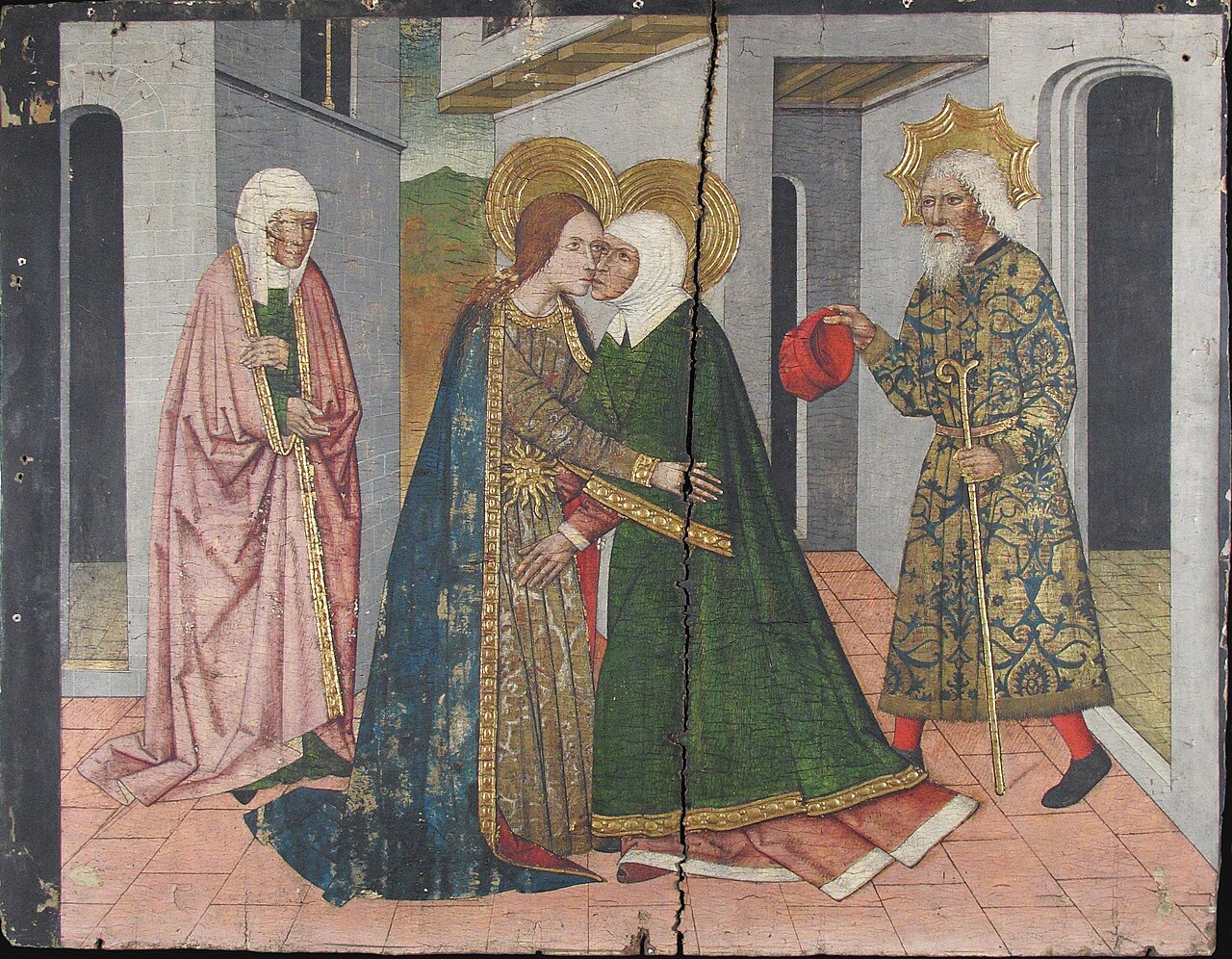
Elizabeth is criminally overlooked and under-celebrated as far as saints go.
Elizabeth is not only a prophet but also a first-rate cheerleader. In my previous book, Those Who Wait (Malcolm Down Publishing, 2017), I imagined Mary’s journey to Elizabeth, full of fear about how she would tell of her pregnancy and whether she would be believed. Elizabeth’s greeting means that before Mary has even uttered a word, she knows that she will not have to explain, let alone justify, her pregnancy.
A pettier person, realising that Mary was pregnant with a miracle baby, might have been annoyed that Mary was stealing her thunder, just when Elizabeth was shaping up to be Sarah 2.0. Elizabeth, though, is humble – ‘Why am I so favoured…?’ (v. 43) – and just bursts with delight and blessing for Mary. She has herself been blessed, and she rushes to bless others. There’s no hesitation, no shadow of suspicion, judgement, or envy, just gushing, loud, prophetic encouragement.
Meanwhile, the relationship of the two miracle mothers is paralleled by the children in their wombs. John the Baptist, still embryonic, leaps for joy as Jesus, merely a few cells dividing at this stage, enters the room. Elizabeth recognises this as a prophetic movement reacting to the Messiah’s arrival. Elizabeth is Mary’s cheerleader, John the Baptist will be Jesus’ forerunner, and what a gift they both were to the holy family.
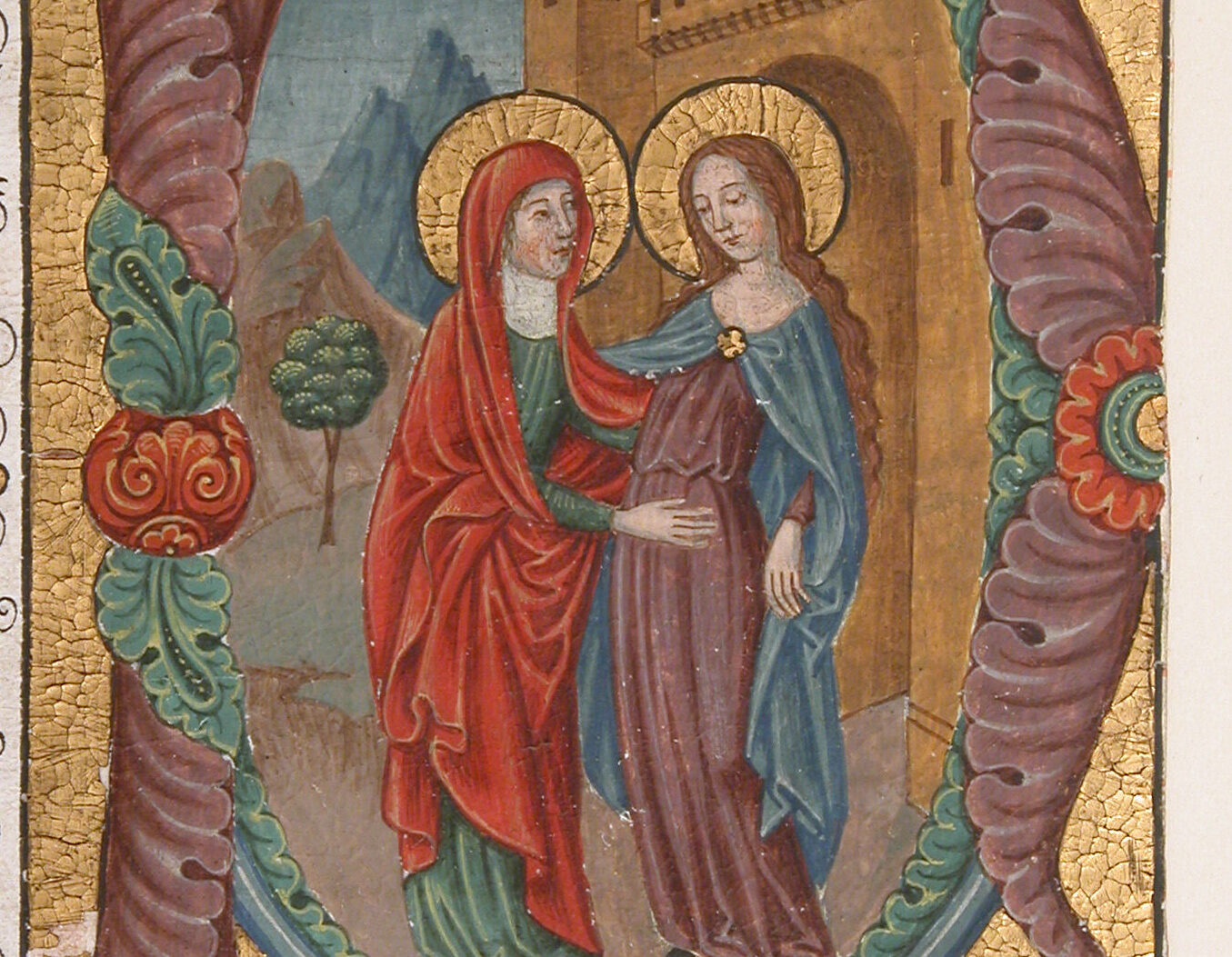
Elizabeth’s greeting means that Mary knows she will not have to explain, let alone justify, her pregnancy.
The impact on Mary is significant, as we see in the next verses. Encouraging words and prophetic insight are so powerful that they can often carry us through hard times. Mary stayed for three months of reassurance, until Elizabeth’s baby was born safely and Mary’s own pregnancy was showing.
Elizabeth’s role of cheerleader was a gift to Mary, but it was also God’s gift to Elizabeth. Even in the reading of it we sense Elizabeth’s overwhelming joy. Whenever we are like Elizabeth, recognising the presence of Jesus in other people and celebrating it, we are not only giving something precious, but receiving it ourselves. To be an encourager is not only to give a gift but to get one.
Reflect
- Consider: in whom do you delight simply for the person they are?
- Which people inspire you because of God’s work in and through them? How might you encourage them today?
- What is your ‘song of wonder’ for today?
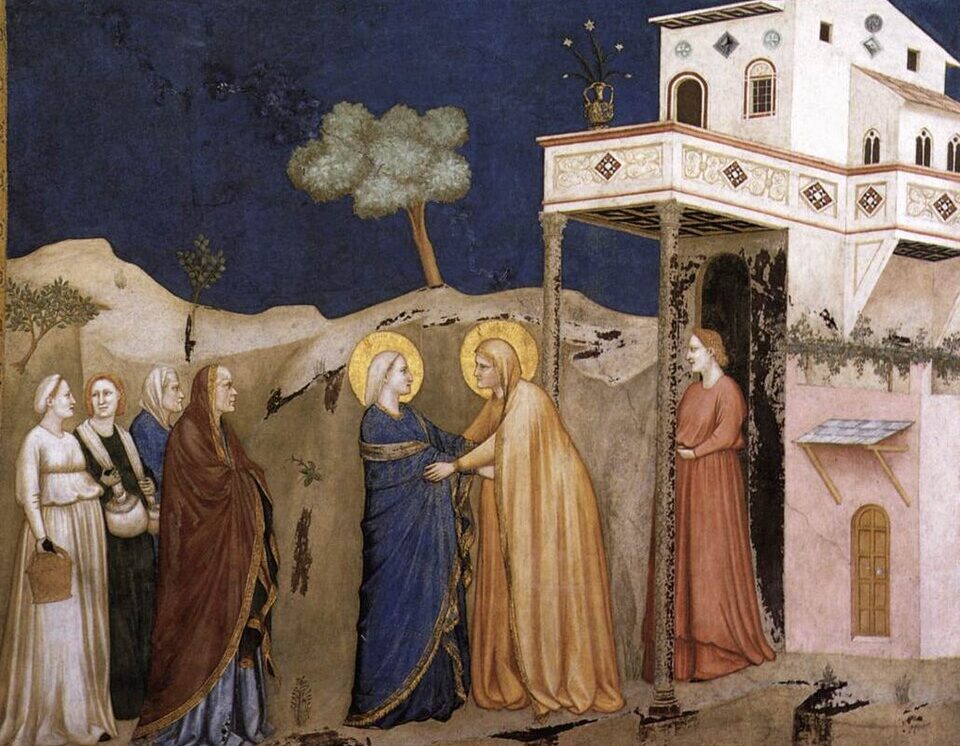
Elizabeth’s role of cheerleader was a gift to Mary, but it was also God’s gift to Elizabeth.
Mary is given a song of joy
And Mary said: ‘My soul glorifies the Lord and my spirit rejoices in God my Saviour, for he has been mindful of the humble state of his servant. From now on all generations will call me blessed, for the Mighty One has done great things for me – holy is his name.’
Luke 1:46–49 (NIV)
After Elizabeth honoured her, Mary could have been smug about her own importance. Yet Mary doesn’t even thank Elizabeth for the compliment but takes that honour and bounces it straight back up to God. When it says, ‘My soul glorifies the Lord’, the verb is literally to make bigger: the Greek word contains ‘mega’. She is utterly sincere in her gratitude.
Mary thanks God for two things – noticing her ‘humble state’ and then doing ‘great things’ for her (Luke 1:48–49). When people talk about being blessed by God on social media today, often they mean they have been granted riches, success, or fame. This is not the blessing for which Mary is grateful. She is poor and will remain so. She is young, as yet unmarried, and for all she knows, she may still be in danger.
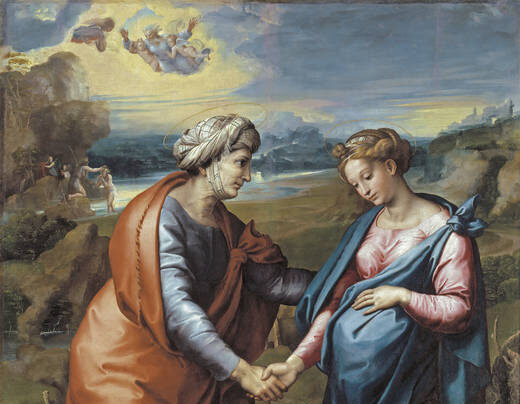
After Elizabeth honoured her, Mary could have been smug about her own importance.
It’s almost as though Elizabeth’s prophetic exclamation has taken away the veil so she can glimpse the heavenly reality and see the world through God’s eyes. She is filled with joy, and the object of her joy is ‘God my Saviour’, ‘the Lord’, ‘the Mighty One’ – over and over, she names him and thanks him.
Sheila Akomiah-Conteh has a song like Mary’s. Born in Ghana, seeing herself as very ordinary, she never imagined that God would call her to be a highly respected research fellow in theology for the University of Aberdeen and a leader in the largest church of her denomination. She can relate to Mary’s joy.
‘For me, as an African Christian,’ she explained, ‘this passage shows that God is no respecter of either wealth or non-wealth but a respecter of people, whoever they are.’ As God blessed Mary in her ‘humble state’, so today God is quietly blessing faithful believers whom society overlooks.
‘A lot of Africans resonate with the inclusion that the gospel invites and exemplifies – especially inclusion for those the world would consider poor or lowly,’ Sheila explained. ‘God can bring people from the margins to be the superstars.’

As God blessed Mary in her ‘humble state’, so today God is quietly blessing faithful believers whom society overlooks.
In the rest of her song, Mary will praise God for what this means for everyone else, but first she stops to thank God for her own blessing. She gets to be a part of God’s plan. God has noticed her in particular, as well as hearing the cries of the world in general.
We can hold this together: the personal with the universal. We can rejoice in general for God’s love for the world. Yet God also blesses individuals, notices those who think they are too lowly to really matter, and makes those on the margins superstars in God’s kingdom. I can both thank God for saving the world and thank God for loving me. The Lord has done great things for me: holy is his name.
Reflect
As you consider all that Jesus has done for us in general and you person-ally, try praying Mary’s prayer as your own, meditating on each phrase.
My soul glorifies – magnifies, increases the Lord –
and my spirit rejoices in God my Saviour –
all generations will call me blessed – because
the Mighty One
has done great things for me. Holy is his name.
Holy is your name, O Lord.
You have done great things for me. You make my soul rejoice.