

Martyn Percy reflects on remorse in this study of Judas Iscariot, taken from his challenging new Lent book The Cost of Christian Living.
15 March 2026
Remorse: a primary case study
Then one of the twelve, whose name was Judas Iscariot, went to the chief priests and said, ‘What will you give me if I deliver him over to you?’ And they paid him thirty pieces of silver. And from that moment he sought an opportunity to betray Jesus.
Matthew 26:14–16
Remorse is not an easy subject to dwell on, to be sure, but it is ironic that it should be so neglected in our world today, when shame, vilification, and regret are so amplified in our social media – and often with such tragic consequences. As one recent celebrity pleaded before taking their own life, in their final social media post to their many followers: ‘In a world where you can be anything, be kind.’
The scriptures are full of remorseful characters, and they pepper the Old and New Testaments with their biographies. Lives lived out of regret are painful to engage with, and the scriptures give us plenty of insight into this, yet as part of the overall ecology of salvation. Without question, the primary case study in remorse is Judas. In Christian tradition the name of Judas is synonymous with betrayal and possession. In Dante’s Inferno Judas belongs in the inner ring of hell along with Cassius and Brutus, the other two arch-traitors.
And yet the New Testament tells us very little about Judas, who he was, why he betrayed Jesus, and what on earth possessed him.
There is a very old tradition that Judas was the nephew of Caiaphas the high priest and persuaded to become a secret agent to plot the downfall of Jesus. In John’s gospel we are told that Judas betrayed Jesus for the money (John 12:6) and that Judas was a thief. In the other gospels the name Iscariot seems to be linked to a fanatical set of Jewish nationalists who were determined to overthrow their Roman masters. According to this tradition of possession, Judas is gripped by zealotism, and when he realises that Jesus is not going to be the new political Messiah he had hoped for, he hands him over for betrayal.
We also read in John 13:27 and Luke 22:3 that Judas was possessed by Satan – ‘Satan entered into him’ – giving us the idea that Judas is somehow taken over by the devil in order to accomplish the wickedest of deeds. One modern writer suggests that Jesus is ‘betrayed somewhere in the lost childhood of Judas’. It wasn’t his fault – blame his parents.
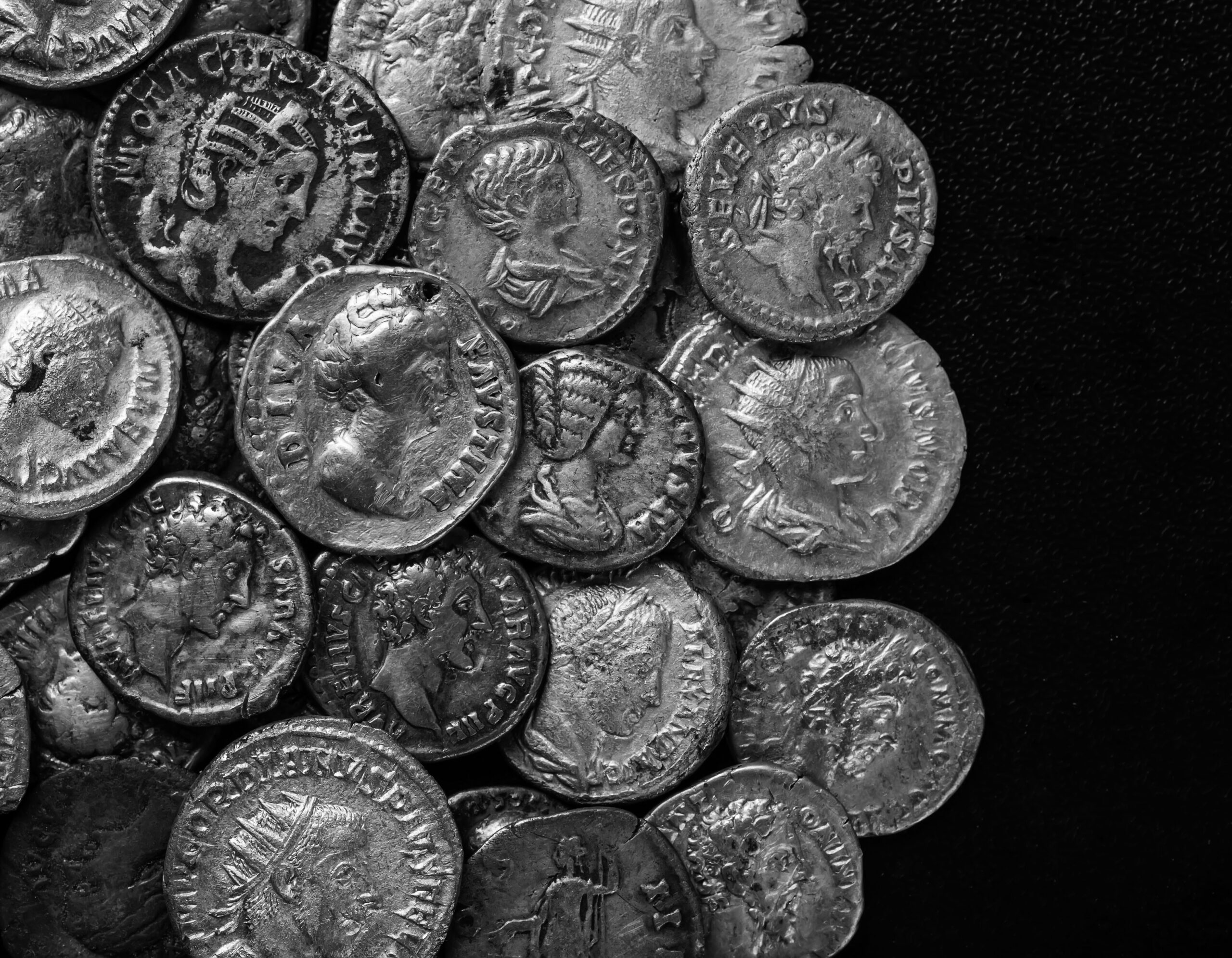
Without question, the primary case study in remorse is Judas, synonymous with betrayal and possession.
Someone to blame
Whether Judas was in it for the money, was politically disaffected, or was possessed by the devil, all the gospel writers seem to agree that he is sick and evil. Of course, these three potential motives are not in themselves competitive theories about Judas’ betrayal; they may in fact turn out to be complementary.
The point is that when a gross and evil act is committed, even the gospel writers are not above the language of blame and scapegoating. In shifting the responsibility – all too easily from a tragic and suicidal human individual on to an evil and cosmic dimension, in which Satan appears to triumph over God – they miss a trick.
Judas is part of a problematic economy in the gospels: those who are vilified by the evangelists. Even gospels of salvation name their enemies, and this problem, ironically, reaches its peak in Holy Week.
It begins in churches all over the land on Palm Sunday, with the dramatic reading of the Passion narratives. Congregations are reminded that it was the Jews who called for Jesus to be crucified: ‘His blood be on us and on our children!’ (Matthew 27:25). The readings leave us in no doubt that the blame for Jesus’ death comes partly from a Jewish crowd, baying for blood. Judas is at the end of this narrative, the arch-betrayer and instrument of Satan. Greed and disenchantment get the better of him. The Romans, strangely, are just Gentiles going about their job; Jesus’ execution isn’t their fault.
The anti-Semitic tone of some of the Passion narratives makes many Christians squirm today. This is part of our remorse for the Holocaust, and for which we bear our share of responsibility. Likewise, the treatment of Judas at the hands of the gospel writers is painful to read today. Placing blame on one race or one man seems crude, simplistic, and even primitive. Is not abrogation just as much of a betrayal?
Yet our society has not evolved as much as one might hope. Those crude instincts reflected in the gospels live on today, as any failed national sports hero or politician can bear witness. One person to blame is convenient and neat; it lets us off the hook.
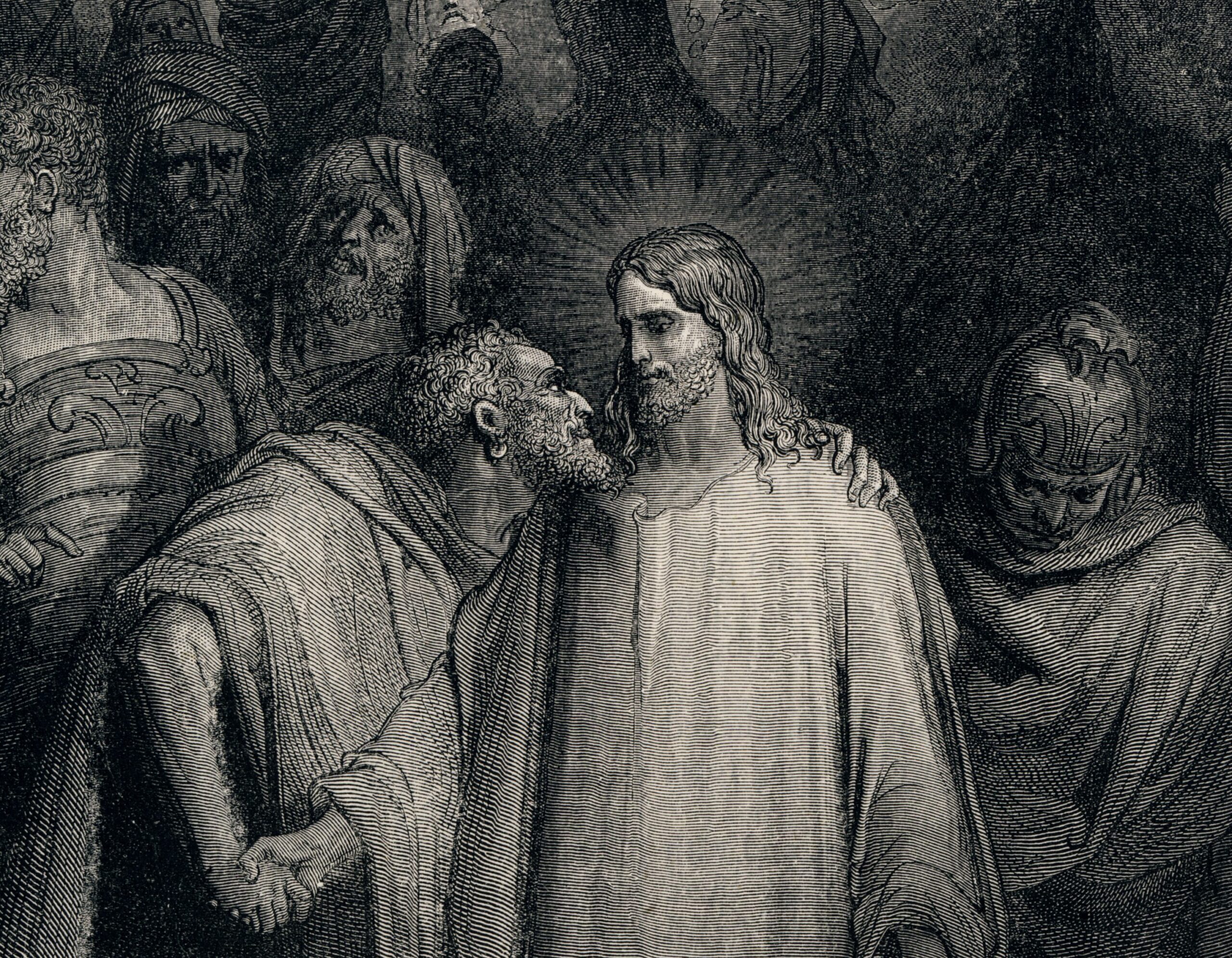
Judas is part of a problematic economy in the gospels: those who are vilified by the evangelists.
The forgiveness window
Judas is, in reality, a mirror to Jesus. He too can cry: ‘Forgive them, for they know not what they do.’ He is despised and rejected, a man acquainted with grief. He gets mixed up in the politics and passion of the week and kills himself in despair. He dies with no hope or security; like Jesus, he has been misunderstood, his mission has failed.
And, of course, Judas is not the only betrayer in Holy Week. Consider Peter, who now realises that there is nowhere to hide and no one else to go to. So, he leaves the threatening light of the fire in the high priest’s house, and goes out, not into the darkness of Judas’ damnation, but into darkness of the night – where Christ is already to be found.
Dorothy Sayers’ poem ‘The Gates of Paradise’ captures the encounter with Christ in the darkness of hell’s most powerful night. The poem tells of the journey that Judas makes in the hours immediately after his death, across a lonely desert. He meets the two thieves who died with Christ. But when they learn who he is and of what he is guilty, they refuse to accompany him. Eventually Judas encounters a grey-hooded man who agrees to walk with him to the gates of Hell and beyond.
Many years ago, the artist Sir Laurence Whistler created a set of 13 engraved glass windows for a church, consisting of twelve disciples, with the 13th being for Christ. It was the twelfth of these windows featuring Judas that was the subject of much controversy, because the parish rejected it. (The parish church in Moreton, Dorset, did eventually accept and install the window almost 30 years later, in 2014.)
What might have caused the church to reject the window? It might have been the disturbing image of a man committing suicide, or perhaps that some in the parish felt Judas did belong in hell, with Cassius and Brutus.
But Whistler drew on other Christian traditions. Julian of Norwich, for example, who in one of her showings went to hell and found no one there. Catherine of Sienna said she could not go to heaven if there was anyone in hell. Whistler’s window was nicknamed ‘the forgiveness window’, and it has Judas with a rope around his neck being pulled into heaven. As he is, the coins (blood money) fall from his hands and become petals and blossoming flowers on the ground. This is the very inversion of Dante’s vision of what befell Judas.
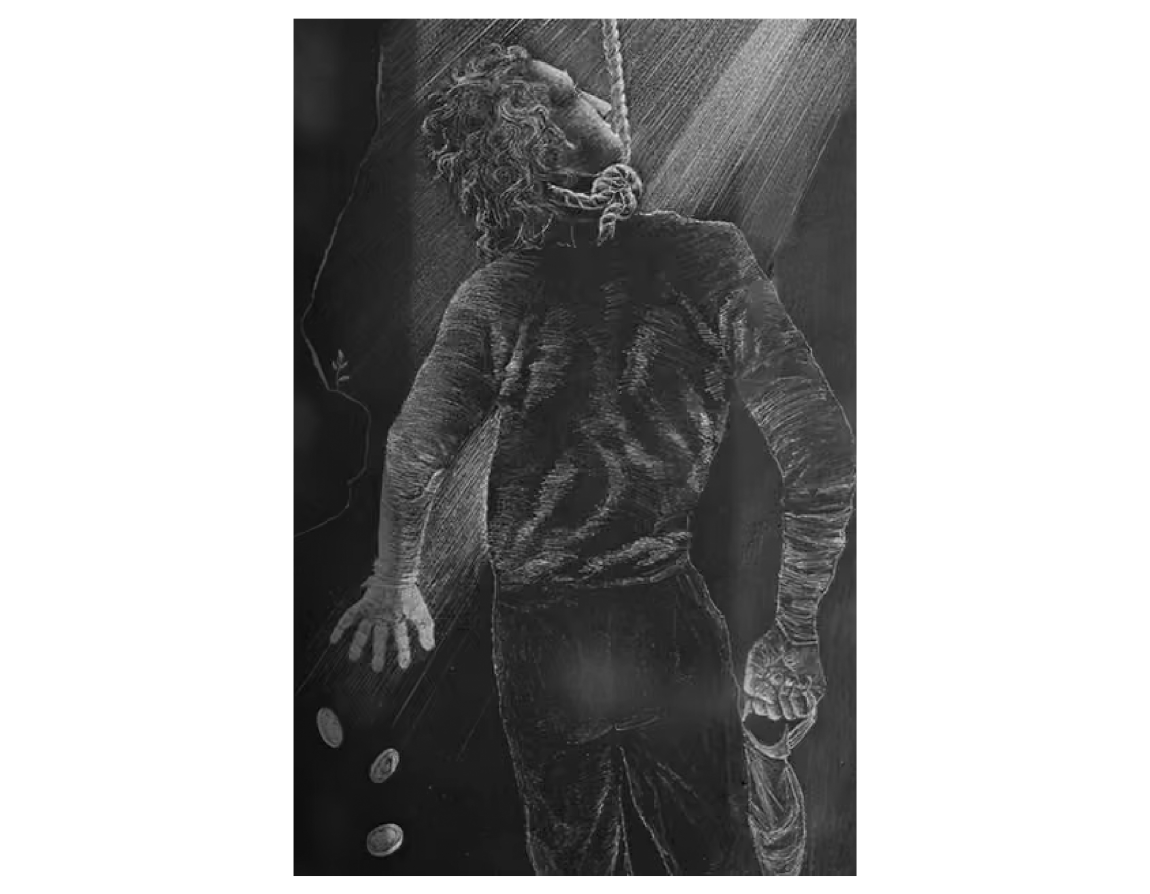
Whistler’s window was nicknamed ‘the forgiveness window’, and it has Judas with a rope around his neck being pulled into heaven.
An ecology of kindness
An ecology of kindness and grace is part of the deep core rubble that forms the foundations of God’s love. Judas’ remorse is an extreme mirror of what could befall any of us. We all make mistakes. We all have regrets. We can all be imprisoned by remorse. We can then, all too easily, travel the road to deeper despair, instead of being drawn into the route and home of abiding, abundant love.
Understanding remorse, but knowing we can’t let it shape the rest of our lives, is what allows the prodigal son to take one step back towards home.
So, to the despised and rejected, God says, through Christ, that he too will know something of that rejection. The scripting and patterning of this in the life of Jesus is as important for the story of salvation as is the cross. You have to see it as a whole. Sometimes the rejection is active, and sometimes quite passive, but Jesus is sensate to both. This is integral to God’s incarnation: the Word became flesh. God knows precisely what it is to be human. Jesus is, after all, the body language of God. Jesus enacts what God would do with our shame and remorse. So, Jesus touches the untouchable; sees the unseen; hears the unheard; speaks for and to the unspoken; embraces the excluded. This includes inculcating our own deepest pains, which are often not only imprinted on the body, but also in the soul and heart.
To understand Judas properly within the context of God’s economy, we must appreciate something obvious but seldom stated enough: God’s love is complete, total, free, overwhelming – so much so, that it is, in human terms, irrational. The currency of God’s kingdom flows, and it is abundant and buoyant. God is to be praised, not to be appeased, because God loves us totally and enjoys us as we are, remorse and all.