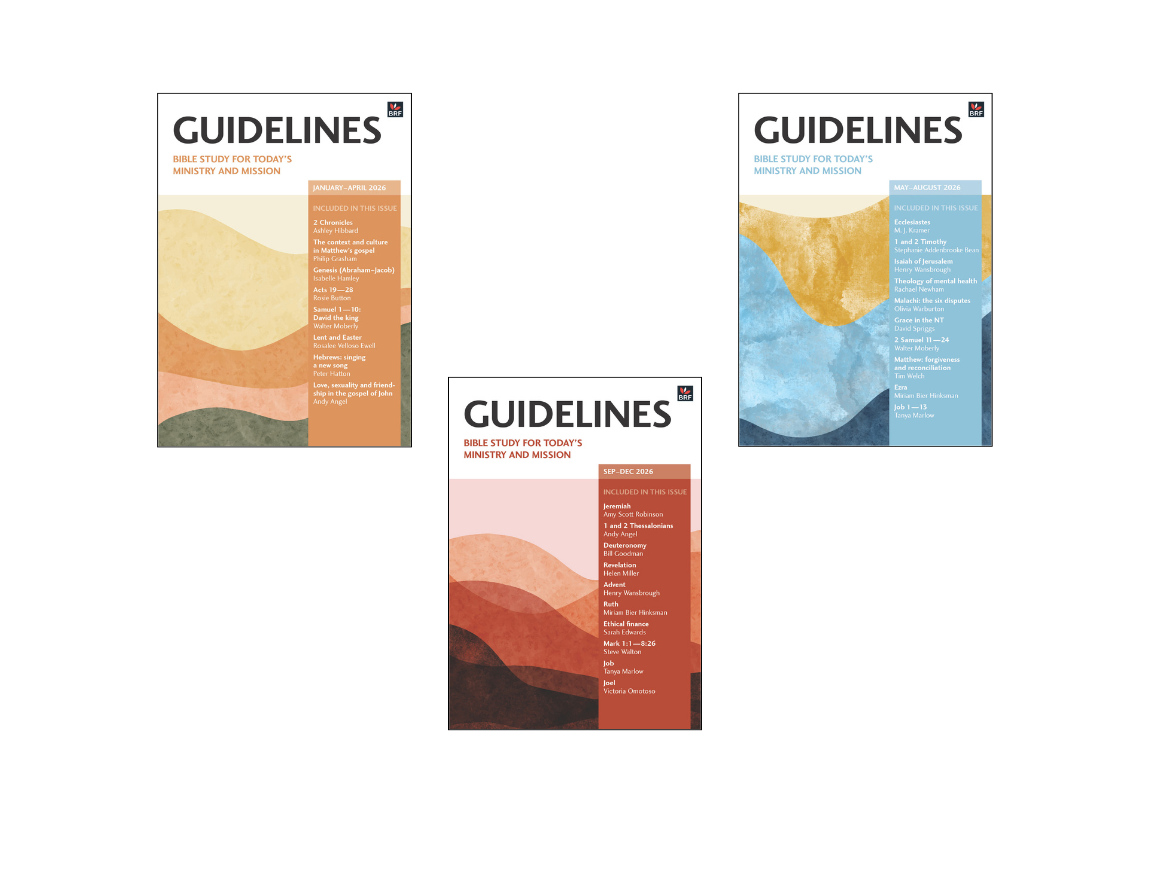

This week we highlight our Guidelines Bible study notes, with an extract from new contributor Rachael Newham’s reflections on the theology of mental health. Her series begins tomorrow.
7 June 2026
Mental health: an issue as old as humanity
Mental health is being spoken about more now than ever. We have awareness weeks, campaigns, and courses designed to enable us to see our health as more than physical, to try to dismantle the stigma around mental illness.
And yet when we look for it, we see that scripture has been talking about mental health and addressing the lack of support for it for millennia. The creation narratives offer us a vision of what positive mental health can look like, and throughout the biblical story, we see people experience and struggle with their emotions; whether that be the despair that David describes in so many of his psalms, how the community of Israel dealt with their homesickness in exile, or how Jesus himself wrestled with his emotions.
The beauty of the way the Bible approaches mental health is that it not only demonstrates the way creation is set up to aid mental health (Genesis 2) but also recognises the importance of our emotions by giving us models of how to bring them to God in lament while holding on to the hope that is to come. Not only that, but Jesus brings new hope for life lived to the fullest and draws us to the ultimate hope we have in a recreated world where we have redeemed hearts, bodies, and minds.
These readings are a journey through how our minds and hearts are meant to flourish, how far they’ve fallen, but also the hope we have in what is to come, so I pray that we can see how scripture not only supports our mental health but meets us when health feels like a distant dream.

Scripture has been talking about mental health and addressing the lack of support for it for millennia.
Shalom
Thus the heavens and the earth were completed in all their vast array. By the seventh day God had finished the work he had been doing; so on the seventh day he rested from all his work. Then God blessed the seventh day and made it holy, because on it he rested from all the work of creating that he had done.
Genesis 2:1–3 (NIV)
The creation narratives are often overly familiar to us, so I invite you to read with new eyes. Look for what it says about how God created us and the world we live in, with conditions that allowed us to flourish, but also what it can tell us about how to live well in these fallen, sometimes dark days.
As you read, consider how the elements of shalom, which is often simply translated as ‘peace’, is far richer and more nuanced, and the word which probably comes closest to our contemporary understanding of mental health. Shalom means wholeness in body, mind, and soul, but it extends beyond individual mental health; it also includes how communities can function at their best with everything working together towards flourishing.
God rested on the seventh day, and it’s a reminder that God did not rest from the work of creating because he was tired (for God is inexhaustible), but because it is what is right for humanity, and he’s modelling that.
We cannot have anything close to full shalom, wholeness in our mental health, without a rhythm of rest that restores us. The work we are called to do is to be from a place of rest, rather than us resting just because we are exhausted and have no choice. This rhythm is easier when we think of sabbath as the start of our week, as our Jewish friends do, rather than something we limp towards after our work is completed.
We also see all the elements for positive mental well-being set before us – from the ‘trees that are pleasing to the eye and good for food’ (v. 9), which represent our need not just for nourishment but also for beauty, to the importance of relationships, not just through Adam and Eve but also as a reflection of the triune God, and the way they walk through Eden free from shame.
It’s also important to remember that work and purpose were part of our needs from the very beginning. Work isn’t merely the result of the fall – we were made to take part in God’s creative endeavour. Shalom is not just related to paid work, but anything that contributes to the world.
The story of creation shows us that we matter because we were crafted by the King, with purpose and love, to be a part of the world for his pleasure. It is due to the King’s love and our God-given purpose that we can have shalom and know we are loved.
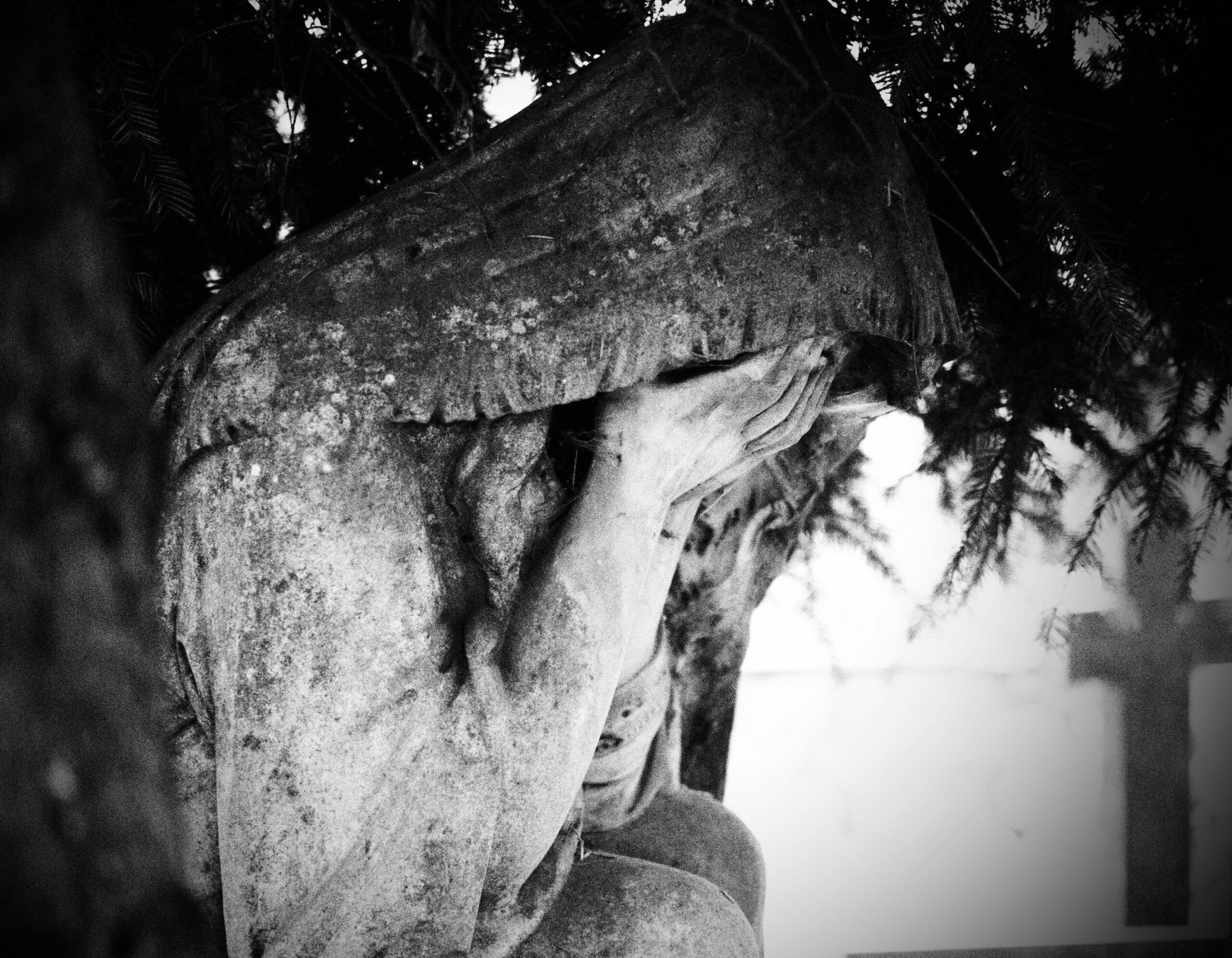
Amid mental anguish, there is often an inability to orient yourself to God.
Lament
From my youth I have suffered and been close to death;
I have borne your terrors and am in despair.
Your wrath has swept over me;
your terrors have destroyed me.
All day long they surround me like a flood;
they have completely engulfed me.
You have taken from me friend and neighbour—
darkness is my closest friend.
Psalm 88:15–18 (NIV)
Psalm 88 is unique in many ways. It is relentless in its complaint and, unlike other psalms of lament, it contains no resolution. There is no turning point at which the psalmist finds comfort in an element of God’s character or by remembering a past victory.
And yet that is precisely why it reflects the spiritual nature of mental health struggles so accurately. For, amid mental anguish, there is often an inability to rationalise or orient yourself to God. This may be because of destructive thought patterns, fatigue, or unrelenting hopelessness. It can feel as if past victories were a fluke or that your best days are behind you.
The hope in this psalm, however, is its very inclusion in the Bible. A text that ends with such stark bleakness, ‘darkness is my closest friend’ (v. 18), is not deemed unacceptable to God or outside of his loving care.
Lament is woven throughout scripture and, put simply, is the practice of bringing what hurts to God. But what makes it an act of faith is that these words are not just uttered into the ether, but addressed to the creator of the universe. As theologian J. Todd Billings (who himself lives with incurable cancer) writes in Rejoicing in Lament:
We only fully enter lament when we realise that we’re not just expressing ourselves to a human observer but bringing our burdens before the Lord, the Creator, the Almighty who – in light of our distress – is our Deliverer.
Despite the lack of resolution and the absence of words of rescue or hope, the writer of Psalm 88 and those who faithfully compiled the Bible show us that we can bring whatever darkness we face and need not hide these feelings from our heavenly Father.
Sometimes prayers like this one may result in deliverance from a painful situation. Still, in every situation, we can be assured that we will not be left to face the darkness alone, because voicing our hopelessness invites the God of all hope to be with us.