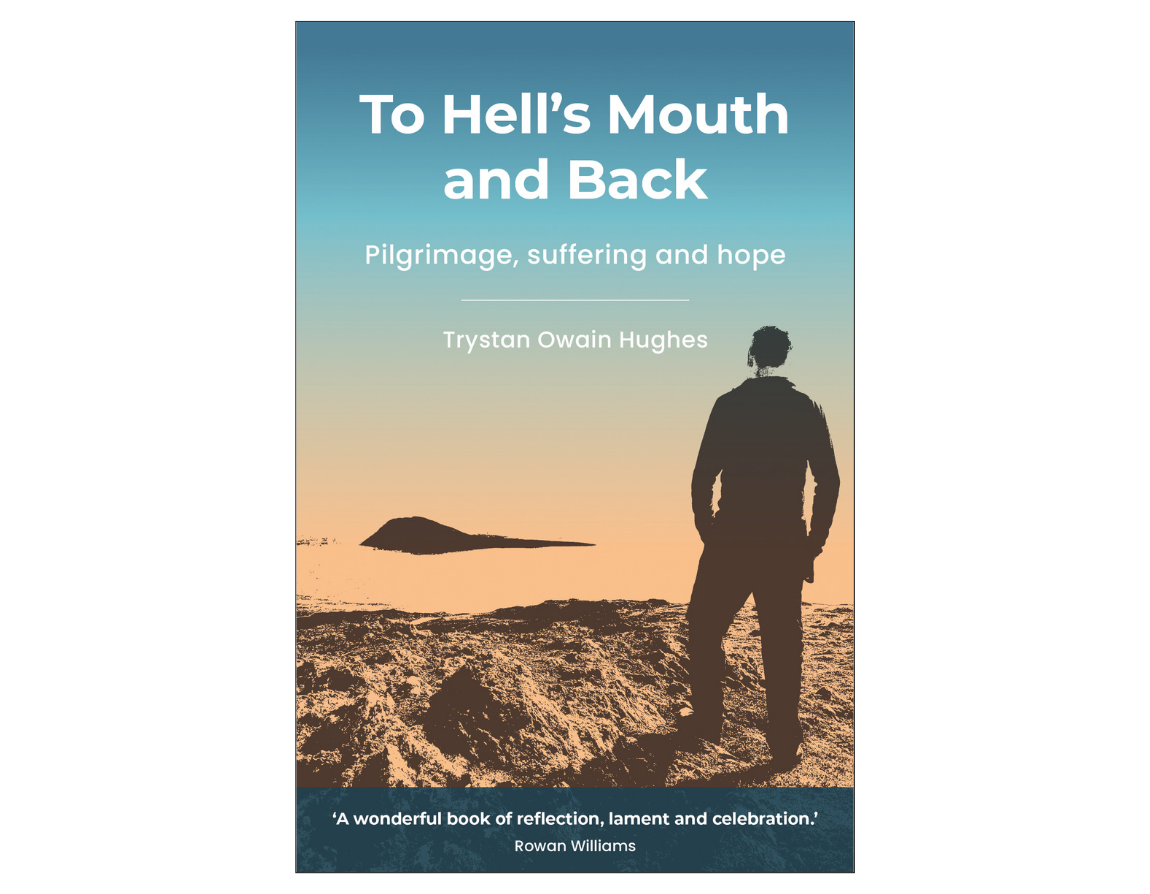

A second extract from Trystan Owain Hughes’ To Hell’s Mouth and Back: Pilgrimage, suffering and hope, chosen as the Archbishop of Wales’ Lent book for 2026. After a gruelling 140-mile pilgrimage across the rugged terrain of North Wales, Trystan finds himself facing another, very different pilgrimage as he recovers from a serious injury sustained on the walk. This week, he sets out the six key experiences which define pilgrimage, whatever form the journey takes.
1 March 2026
Joy, then despair
In hindsight, it was apt that the pilgrimage began in the twelfth-century Basingwerk Abbey.
On the one hand, its impressive frame is a testament to the beautiful rich tapestry of faith held by our ancestors. On the other hand, the abbey is now an empty shell, which intimates only something small of its glorious past. As such, its crumbling walls are a stark reminder of the inhumanity, pain, and suffering of the past, not least in the dissolution of the monasteries during the 16th-century Reformation.
Such ruins, as travel writer Nick Mayhew-Smith puts it, ‘bear witness to just as much anger and destruction as they do to love and devotion; they are places with a history of death, of mourning, of desecration’.
My pilgrimage was to mirror the history of Basingwerk Abbey. The walk was not to be about joy and wonder alone. Rather, it was to take me to dark, distressing, and depressing places. Furthermore, in the months after hiking the Pilgrim’s Way, I would be forced to tread a second journey in which I would face a very different ‘Hell’s Mouth’.
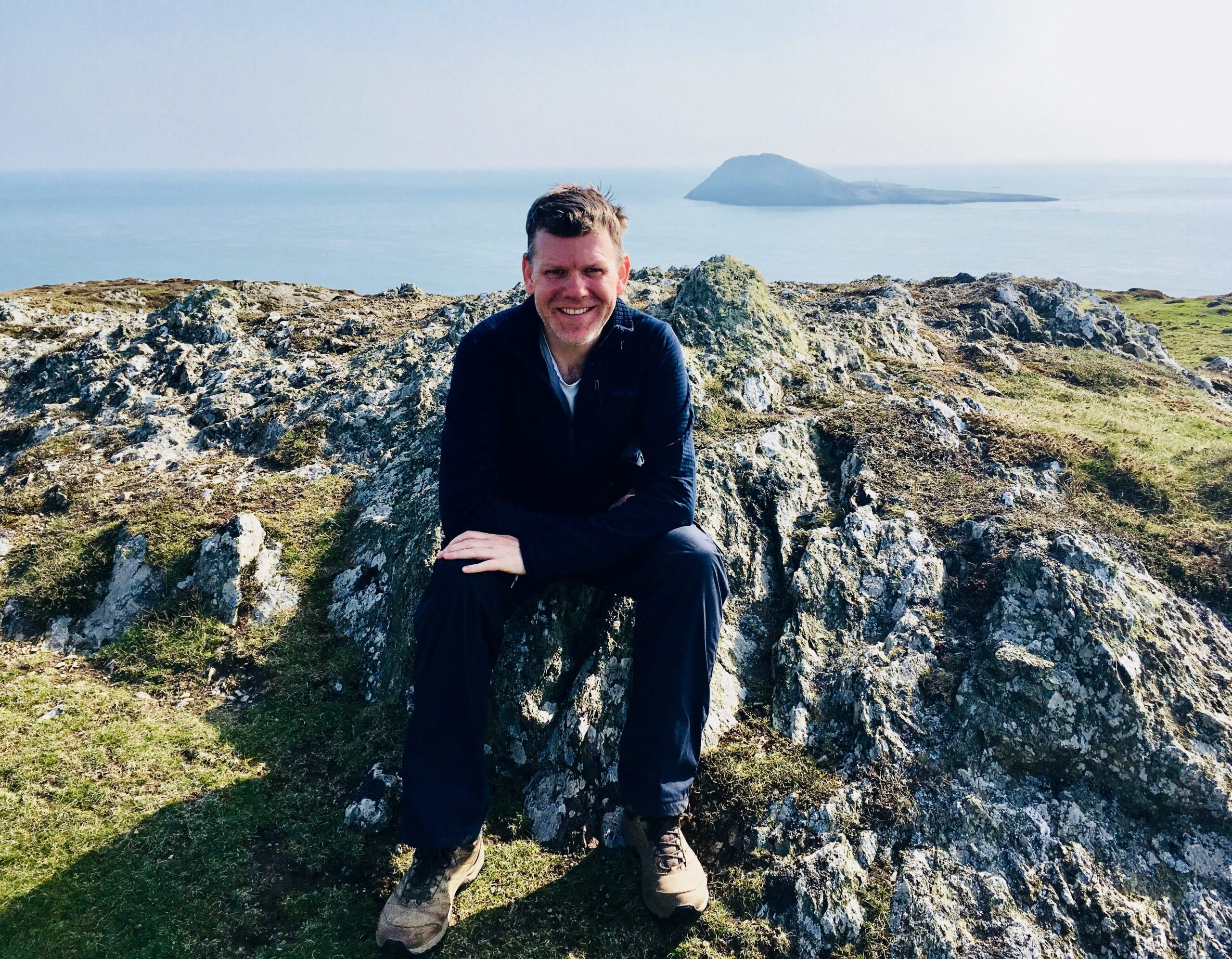
As my North Wales pilgrimage came to an end, I crossed to Ynys Enlli on a calm and crystalline sea. I had no way of knowing the storms that would await me upon my return home. Very soon I was forced to confront a serious relapse of my spinal injury, a struggle made heavier by the looming shadow of depression and anxiety that so often accompanies the loss of health. The peace of Enlli felt distant as I was pulled into the depths of pain, uncertainty, and helplessness.
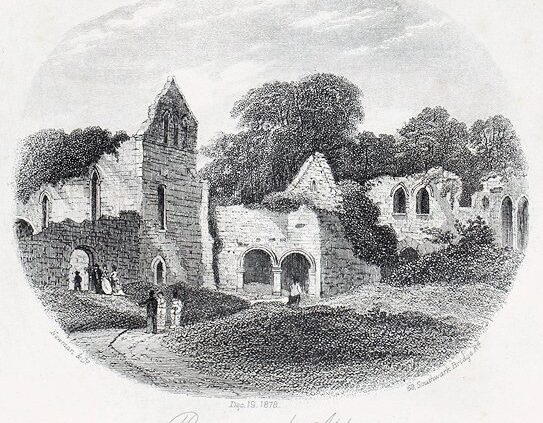
My pilgrimage was to mirror the history of Basingwerk Abbey… it was to take me to dark and depressing places.
Sacred travels
I have come to see that second journey of injury and recovery also as a pilgrimage. Spiritual journeys, after all, share certain core elements. While the depth of pilgrimage cannot be fully contained, there are six distinct experiences that could be said to define such sacred travels: suffering, wonder, signs, company, dependence, and hope.
To Hell’s Mouth and Back is not, therefore, a chronological memoir, unfolding as a narrative, full of twists and revelations. Instead, it takes a reflective approach, exploring each of these six pilgrimage experiences in turn. By doing so, it will invite us to attune our eyes and ears to God’s presence in our own journeys.
The chapters are shaped by my two very different pilgrimages: the first, the physical journey across North Wales, and the second, a journey of healing undertaken from the confines of my sofa.
We begin with adversity and suffering, which can so often permeate pilgrimage. If we were to end there, though, it would leave us with a bleak picture of life’s journeys. Thankfully, suffering is only part of the story. Pilgrimage offers other experiences that are vivid, life-transforming and filled with grace.
In turn we will explore the sense of wonder found in our journeys and consider how the beauty of the natural world and sacred places stirs something deep within us.
Then we focus on signs, those unexpected moments when God’s presence breaks through, lifting us and leaving us awestruck.
Signs are followed by the significance of company, celebrating the often-unlikely mix of friends and strangers who journey with us. These people remind us of the central role of love and support in our lives.
Building on this, we go on to reflect on our dependence on others and the importance of gratitude as we navigate our lives.
And finally, we arrive at hope, which lies at the foundation of all our journeys. Hope weaves through our joys and struggles, infusing even the most ordinary moments with meaning and purpose. Hope is the thread that holds our journeys together.
While the depth of pilgrimage cannot be fully contained, there are six distinct experiences that define such sacred travels.
Embracing our own pilgrimages
In exploring these six profound experiences that shaped my two journeys, I invite you to see your own paths as sacred and transformative pilgrimages. At times, you may be taken over literal mountains and through literal valleys, as you embrace physical pilgrimages. More often, though, the landscapes you navigate will be the unseen terrain of life’s journeys.
So, take time to consider the journey you are on right now.
Perhaps it is a journey through illness or recovery, where uncertainty and struggle weigh heavy. Or the path of vocation, as you seek to discern God’s calling. Or the daily rhythm of work, where you strive to find meaning in your labour. Or the journey of education, as you stretch your mind and grow through study. Or the passage of faith, as you wrestle with questions and deepen your beliefs. Or the journey of family life, as you pour yourself into the people you love.
Or perhaps you are simply focused on another Lent, using the season to set aside a little more time than usual for reflection and prayer.
All of your journeys can be seen as pilgrimages in themselves, shaping and transforming you, and you will recognise the six experiences explored in this book shining through them. You will be encouraged to encounter the struggle of suffering, the wonder of God’s presence, signs that guide you, strength from those who walk beside you, and humble reminders of your dependence on others. And through it all, you can open yourselves to the hope that redeems each step you take.
By recognising these experiences in our own journeys, we not only come to understand ourselves more deeply, but we also begin to see where the light of God’s grace is breaking through to illuminate our paths. In those moments, transformation happens, and we are drawn ever closer to becoming all that God intends us to be.

By recognising these experiences in our own journeys, we begin to see where the light of God’s grace is breaking through.
Journeys of transformation
Kierkegaard compared Abraham’s arduous journey up and down Mount Moriah (Genesis 22:1–19) to a pilgrimage. The patriarch’s travels, which included that shocking divine instruction to sacrifice his beloved son Isaac, involved much anxiety, struggle, and suffering. But he eventually, in Kierkegaard’s words, ‘headed home joyously, cheerfully, with trust in God’. It was a profoundly transformative event that left an indelible mark on him. He returned to Beersheba with a transformed perspective on relationships, not least his relationship with the transcendent. He had, after all, witnessed God’s provision firsthand, and this reaffirmed his trust and faith in God as Father.
Similarly, I found myself profoundly transfigured through both my North Wales pilgrimage and my journey of injury and recovery. My ordinary, everyday life was deeply affected by the people I encountered, the experiences I underwent and the places I visited, both literally and metaphorically. My journeys involved struggle and suffering, but, like Abraham’s ascent and descent of Moriah, they also paradoxically reinforced my trust in God’s care, love, and provision.
As such, on so many levels, philosopher Charles Foster’s description of pilgrimages as ‘the ultimate otherness’ rings true. Both of my journeys felt like surreal desert experiences, marked by exhilarating highs and crushing lows. Both pushed me beyond the familiar, forcing me to wrestle with life’s deepest questions. They challenged me to confront, and even question, my intimate relationship with God.
Yet, in both, he met me in my wilderness, bringing redemption, renewal and the promise of resurrection. My whole being was awakened as his love reached me in such unexpected ways. And, slowly but surely, the barrenness of Lent and the agony of Holy Week gave way to the triumphant, life-affirming hope of Easter Sunday.