
To mark the new Festival of Creation in Christ, Margot Hodson reflects on the urgent necessity of caring for creation after a summer in which the reality of the climate crisis we all face has become dramatically apparent. Christopher Irvine and Timothy Howles introduced the new festival in the Church Times: ‘The idea of God’s creative work is deeply and intentionally woven into Christian liturgy: in our prayers and in eucharistic worship, in the way we use material elements, and in the rhythm and structure of the church year itself. In recent years, however, many around the world have advocated something more: a dedicated liturgical celebration held on a common date across worldwide denominations.’
This dedicated liturgical celebration has now been added to the church’s calendar. The Festival of Creation in Christ will be celebrated annually across the world on 1 September or the first Sunday in September.
6 September 2026
Caring for creation in a time of crisis
The horror of the floods in Nepal and Tibet, and the death and destruction left in their wake, continues to cause shock and distress around the world. For communities directly affected, the trauma is unimaginable. A huge international effort will be needed to rebuild the country’s fragile infrastructure, yet as glaciers grow increasingly unstable in our warming climate, future, even greater, disasters threaten.
In light of Nepal’s suffering, our own oppressively hot, dry summer seems almost insignificant, yet it clearly is not.
‘We need to pray for rain!’ It was the middle of August and I was giving Communion at the altar rail in our church, when one of our members said this to me. I knew exactly what she meant: it had been impossibly hot; wildfires were in the news for days, and farmers were struggling, not only to grow crops but also to harvest them safely in our tinderbox fields. Without rain, our crops don’t grow. As the climate crisis deepens globally, food shortages are a reality in many parts of the world and could become an issue in the UK.
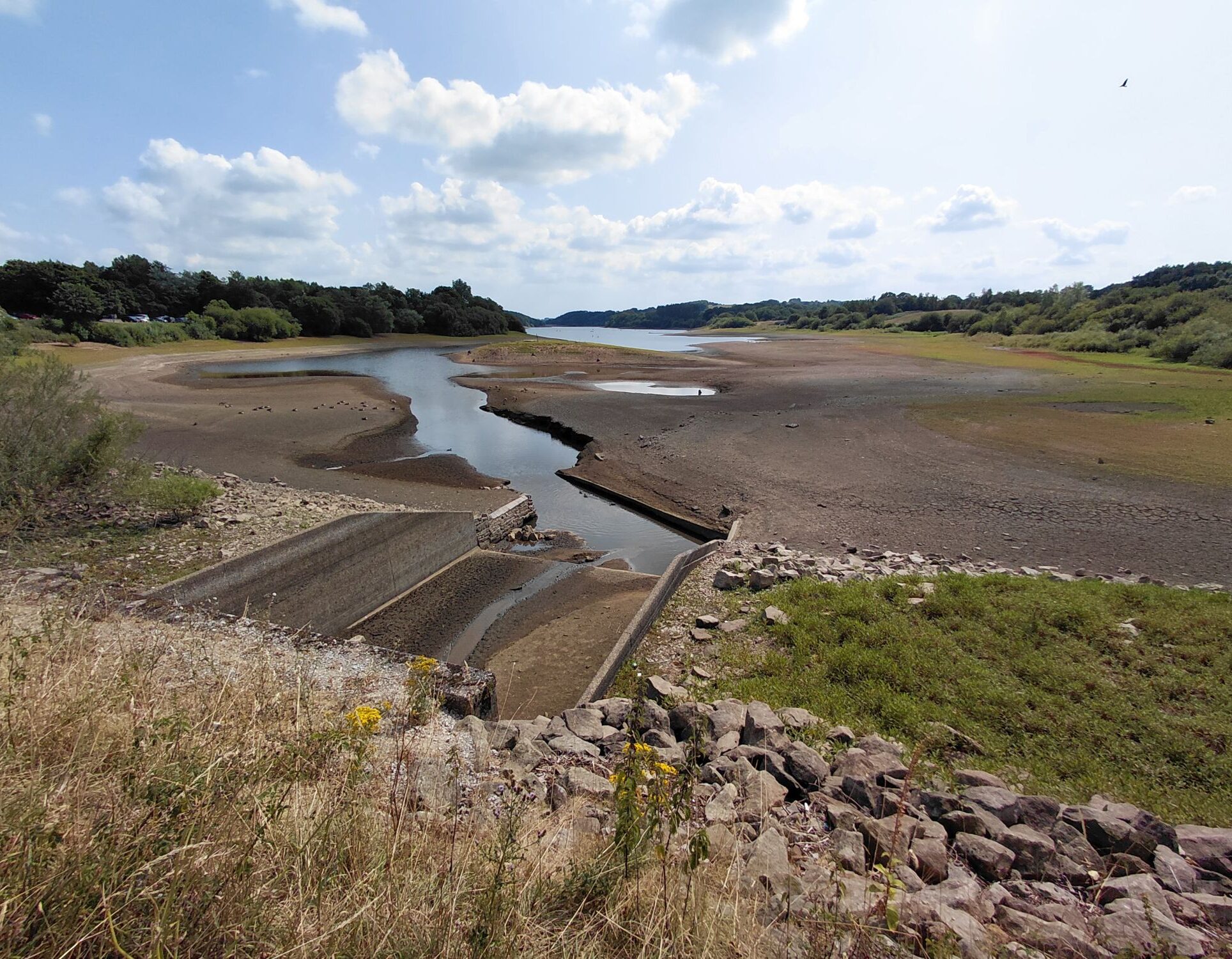
As the climate crisis deepens globally, food shortages could become an issue in the UK.
Left: Tittesworth Reservoir in a drought by Stephen Craven, CC BY-SA 2.0, via Wikimedia Commons; cropped.
Remember the farmers
As I write, The Met Office has confirmed that the UK has had its hottest summer since records began in 1884. It seems fitting, then, that the theme for the Season of Creation 2026 is ‘Living Water’. As we reach this season in the church’s calendar, we are called to reflect on the words of Ezekiel 47, where the salt water becomes fresh (verse 9) and food and healing flow from the river of life:
On the banks, on both sides of the river, there will grow all kinds of trees for food. Their leaves will not wither nor their fruit fail, but they will bear fresh fruit every month, because the water for them flows from the sanctuary. Their fruit will be for food, and their leaves for healing.’
Ezekiel 47:12 (NRSV)
The Season of Creation runs from 1 September to 4 October, and overlaps with harvest festivals for many church communities. This is normally a time to give thanks for the year’s harvest and to pray for an abundant harvest in the coming year. This year we need to be especially mindful of our farmers, not only with the huge challenges they have faced this year, but also in their decisions about future crops and livestock as they struggle to predict what might be possible in our changing climate.
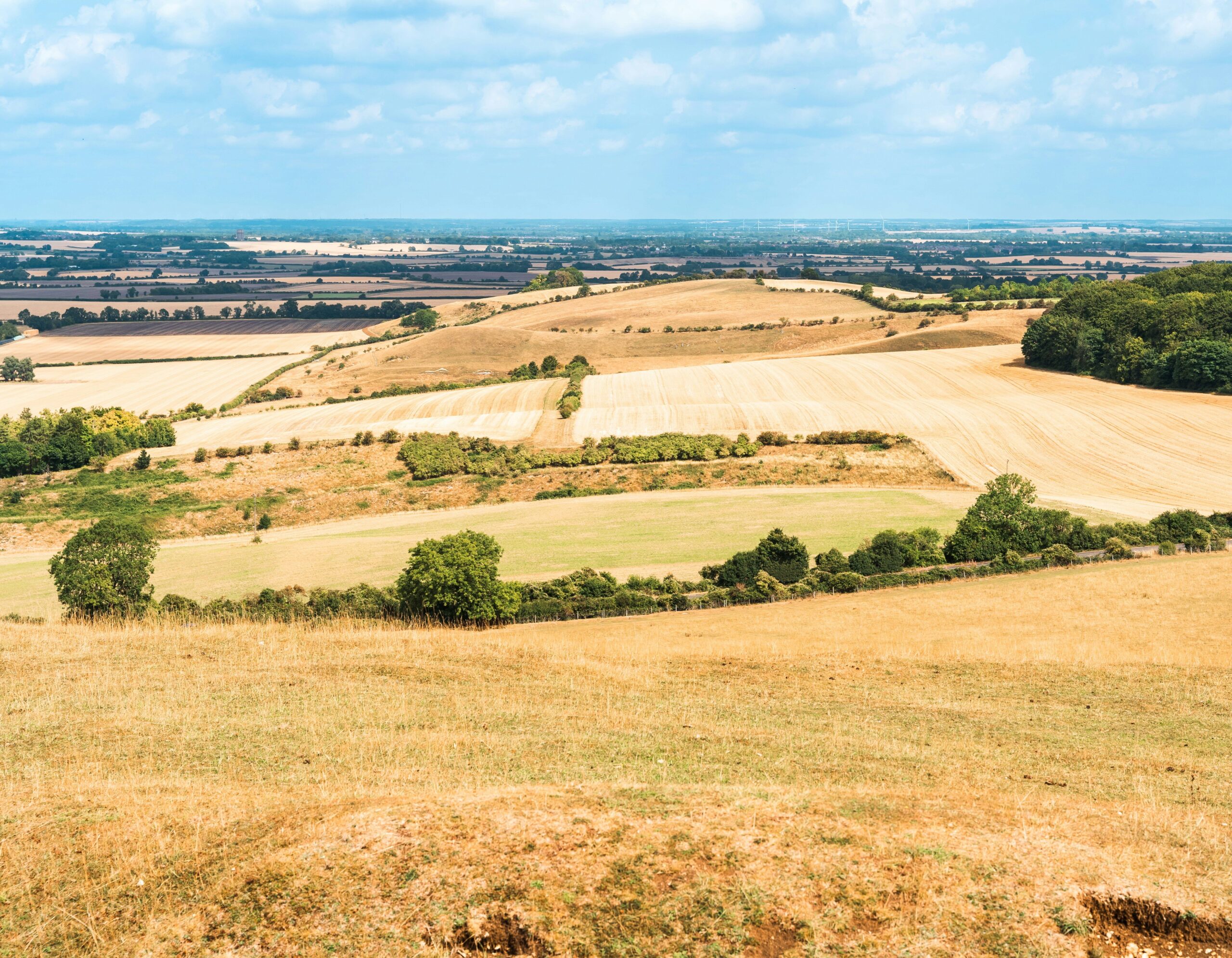
This year we need to be especially mindful of our farmers, as they struggle to predict what might be possible in our changing climate.
The pathway of hope
We could simply despair and lose hope as we look at the seriousness of our current situation, but the Bible challenges us to take the pathway of hope. Ezekiel was not living in an Eden-like paradise with lush forests and flowing rivers. He was in Mesopotamia, which was highly arid and even the irrigated land had been poisoned, as evaporation made it progressively salty. Yet, Ezekiel’s vision was of salt-water made fresh and arid lands made fertile. Overall, it is a message of healing.
As we enter fully into this Season of Creation, we need to find a resilient hope. Not an unrealistic one, when we try to pretend that there is not a problem, nor an otherworldly one, when we simply look to Revelation and wait! We need to be resourced and encouraged by our future vision of creation restored; to be galvanized in the present to find our role as Christians in our changing world.
The Archbishop of Canterbury, Dame Sarah Mullally, writes in the Living Water resource:
‘In the Season of Creation, we turn again to Christ, through whom all things were made and in whom all things hold together. In his incarnation, death, and resurrection, God’s love is revealed not only for humanity but for the whole created order. To care for creation is therefore an essential expression of Christian discipleship and an integral mark of the Church’s mission: to strive to safeguard the integrity of creation, and to sustain and renew the life of the earth. As we follow Christ, we are called to share in his reconciling work, seeking justice, healing, and hope for the earth and for all who dwell within it.’
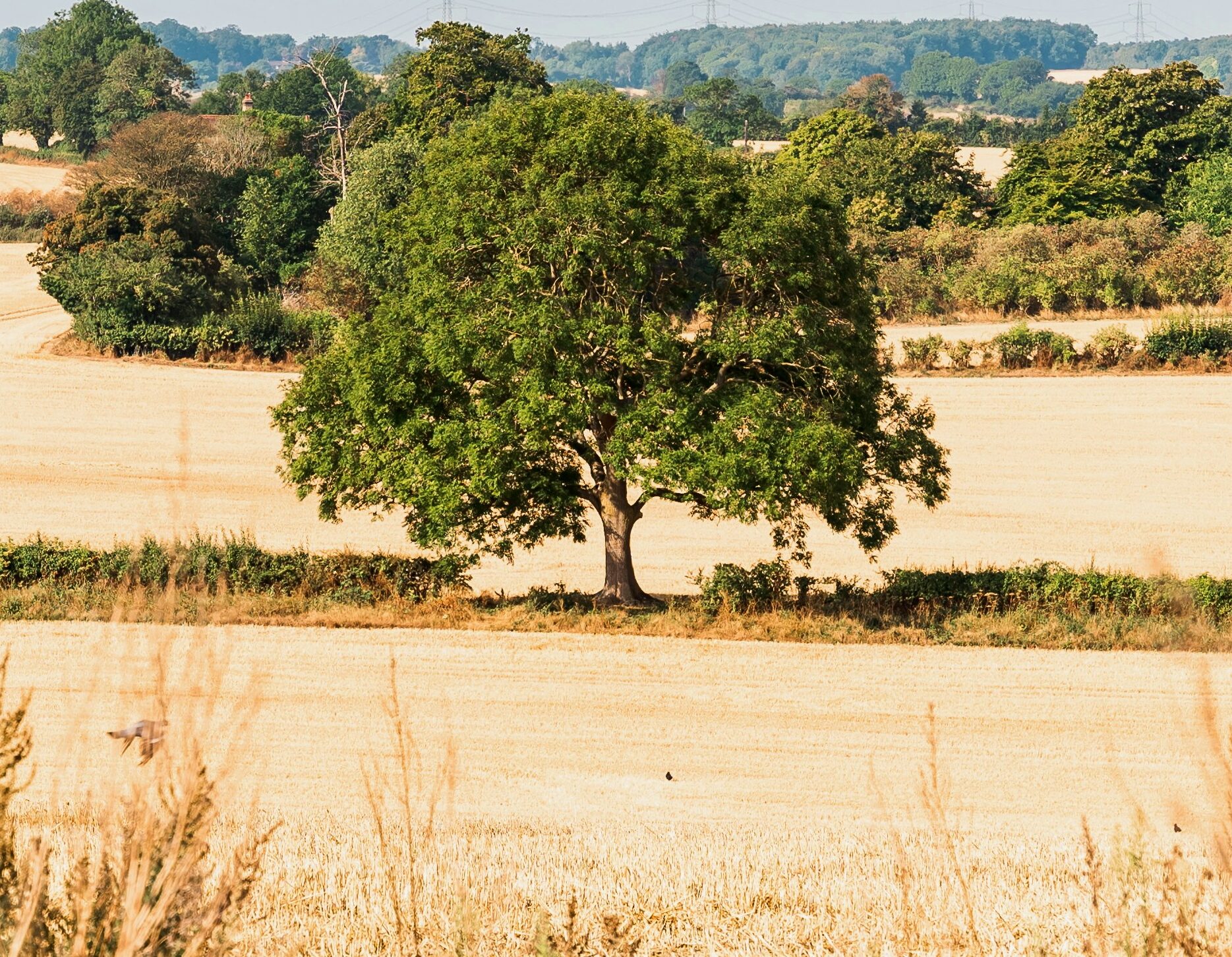
As we enter fully into this Season of Creation, we need to find a resilient hope.
Understanding connections
Hope for all Creation is a new teaching document from the Church of England bishops. This takes the Colossians 1 theme of interconnectedness, quoted by Dame Sarah, and guides us in ways where we can be resourced by our faith to respond to the climate and ecological crisis. It provides a scientific and theological exploration of the current situation at an accessible level, as well as giving practical ways forward in response.
As we face drought this year, we can better understand our interconnectedness with many regions around the world where this has been a regular occurrence. When we realise the impact of our burning fossil fuels on communities, swept away by melting glaciers or super-charged monsoons, we understand that our interconnectedness gives us a responsibility to support those nations.
Yet, if we grasp the truth that Christ ‘reconciles to himself all things… by making peace through his blood, shed on the cross’ (Colossians 1:20), we can be part of Christ’s reconciling and healing work in our care for creation.
As mentioned in the introduction, the Season of Creation begins in a new way this year, as a new Christian festival, the Feast of Creation in Christ, has been added to the liturgical calendar, to be celebrated on 1 September or the first Sunday of September. This has long been a day when Christians have gathered to pray for God’s creation and our role in caring for it. As we reflect on our summer and what might be ahead, we first need to focus on prayer:
Creator God, every living creature depends on water for life and health. We confess to you our abuse of this world and ask for your streams of living waters to heal lands that are parched and return balance to those overwhelmed by floodwater. Give us strength to follow you in this changing world and bring healing and hope to those in need. Amen.