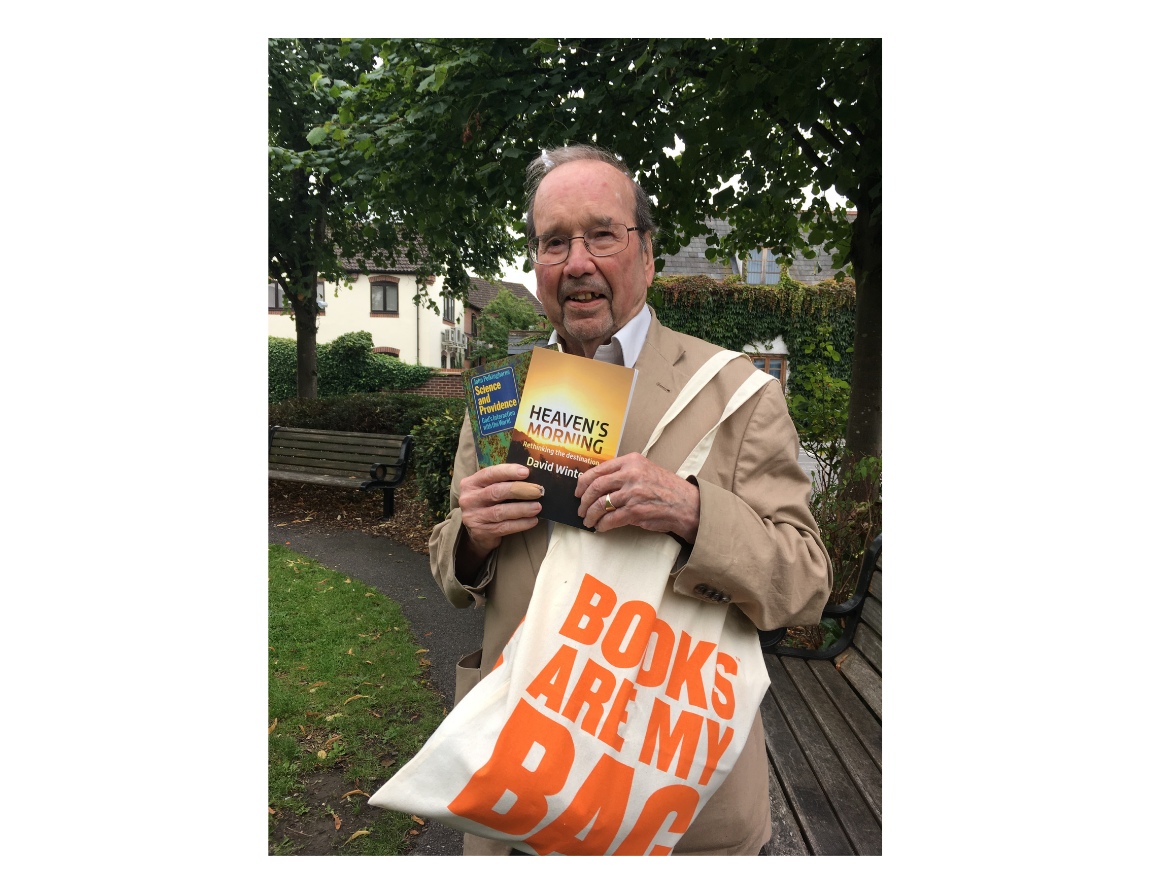

A special tribute to Canon David Winter, one of our most loved and respected authors and contributors, who has died at the age of 96.
13 September 2026
Our CEO Richard Fisher writes:
‘We were very sorry to hear of the death of Canon David Winter. David had a long association with BRF Ministries, starting in the early 1990s when he became a BRF trustee. He joined the team of writers for New Daylight and quickly became a much-loved regular contributor.
‘When New Daylight’s editor Shelagh Brown died suddenly in 1997, David kindly stepped in at no notice to become editor, a role he continued for many years.
‘A wonderfully gifted communicator and Bible teacher, David wrote numerous books for BRF during his long association with us and was also one of the joint editors of The People’s Bible Commentary series. Alongside his writing, he led regular quiet days and retreats for BRF, all of which were inevitably fully booked! To many, David was regarded as part of the extended BRF family. We give thanks for his life, his ministry, and his many gifts. May he now rest in peace and rise in glory.’
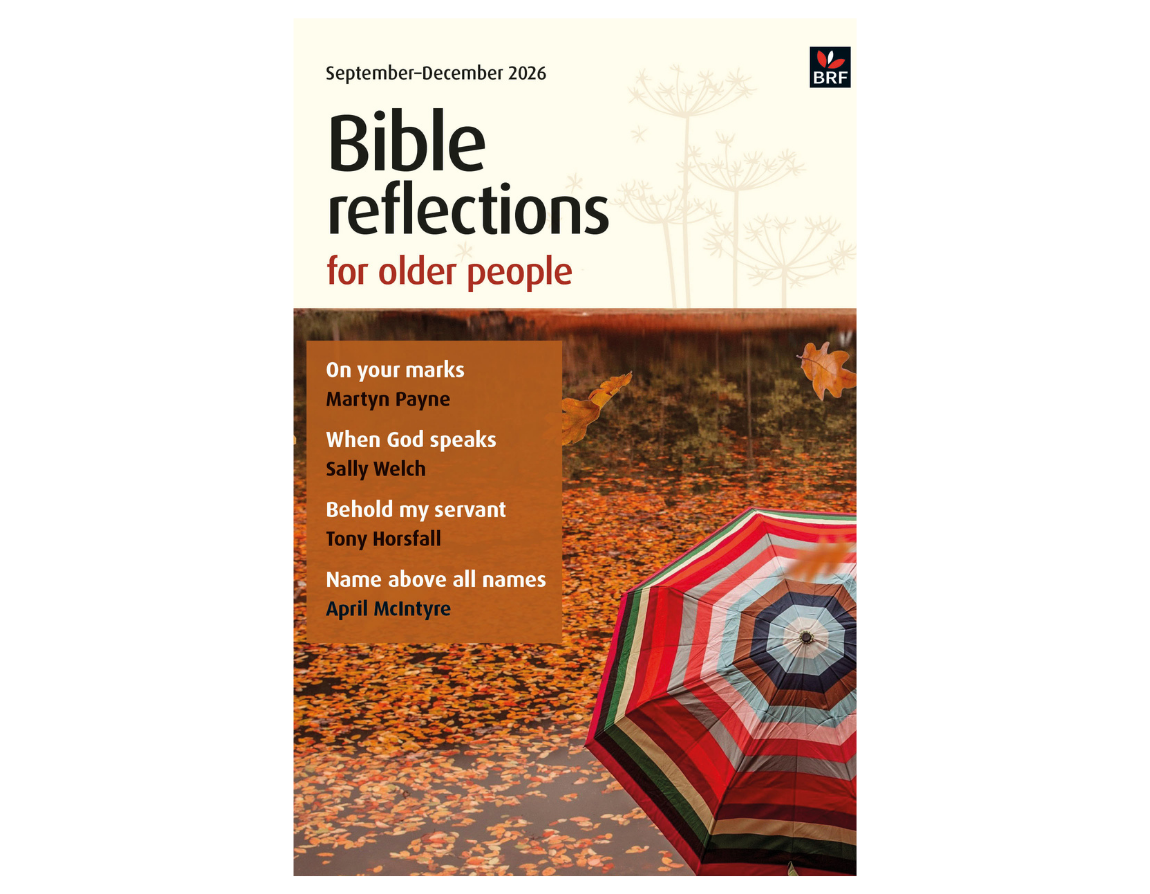
One of the last things David wrote for us was a series of reflections for Bible Reflections for Older People May–August 2018. Entitled ‘The thankful life’, we republish an extract here, in honour of our much-missed friend and colleague.
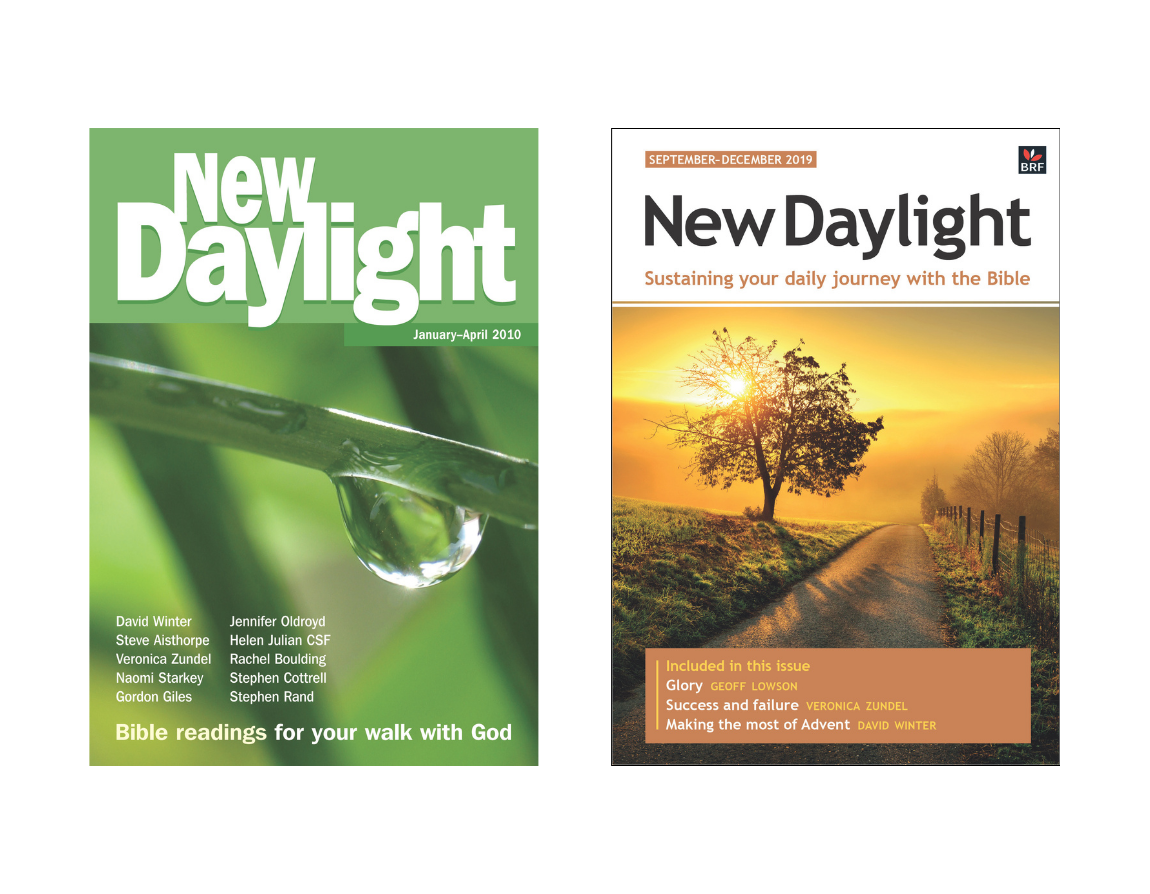
David joined the team of writers for New Daylight and quickly became a much-loved regular contributor.
The thankful life
‘Say thank you to Grandma’ – that was probably the first command we were given, when we were about two. Saying ‘thank you’ is a necessary courtesy of life, but actually being thankful is much more than that. It’s a key element of the truly fulfilled life.
When we think of people we have known and admired for their inner serenity and sense of joy, invariably a key part of their character has been this precious gift of gratitude.
An elderly friend who died recently had narrowly survived the war-time blitz in London, lost her first husband, a soldier, a year after they married, had two grown-up daughters who died before reaching 40 and finally lost her second husband. What, you might ask, did she have to be ‘thankful’ for? Yet at her funeral the repeated theme was the joy expressed in her characteristic sense of gratitude. It was a wonderful reminder that an ‘attitude of gratitude’ can transform darkness into light.
Of course, life has its dark moments – the ‘valley of the shadow’. The Bible, and our experience, tell us that it is not ‘roses, roses’ all the way. But life itself is gift, in all its glorious complexity. So is fun and laughter, music, the garden, the beauty of nature, and the surpassing joy of human love.
For the gifts of our creator God, gratitude is the only appropriate response.

A wonderfully gifted communicator and Bible teacher, David wrote numerous books for BRF.
Remembering the benefits
Bless the Lord, O my soul, and all that is within me, bless his holy name. Bless the Lord, O my soul, and do not forget all his benefits – who forgives all your iniquity, who heals all your diseases, who redeems your life from the Pit, who crowns you with steadfast love and mercy.
Psalm 103:1–4 (NRSV)
This is the psalmist in full ‘thank you’ mode. He’s not suggesting that each of us will be healed of all diseases and be saved from death (‘the Pit’), but that every time we are healed or delivered from disease or danger, the Lord is the one we should be thanking. God is, he asserts, in the ‘blessings’ business – they are his ‘benefits’ for us.
Of course, people get sick and die – in biblical times, as now. But just as sins can be forgiven, so sickness and infirmity can be occasions when we experience the ‘steadfast love’ that the Psalms so often speak of.
Indeed, this ‘steadfast love’ – sometimes translated as ‘loving kindness’ or ‘faithful love’ – is the absolute hallmark of God’s nature. As the apostle Paul says: ‘Neither death, nor life, nor angels, nor rulers, nor things present, nor things to come, nor powers, nor height, nor depth, nor anything else in all creation will be able to separate us from the love of God in Christ Jesus our Lord’ (Romans 8:38–39).
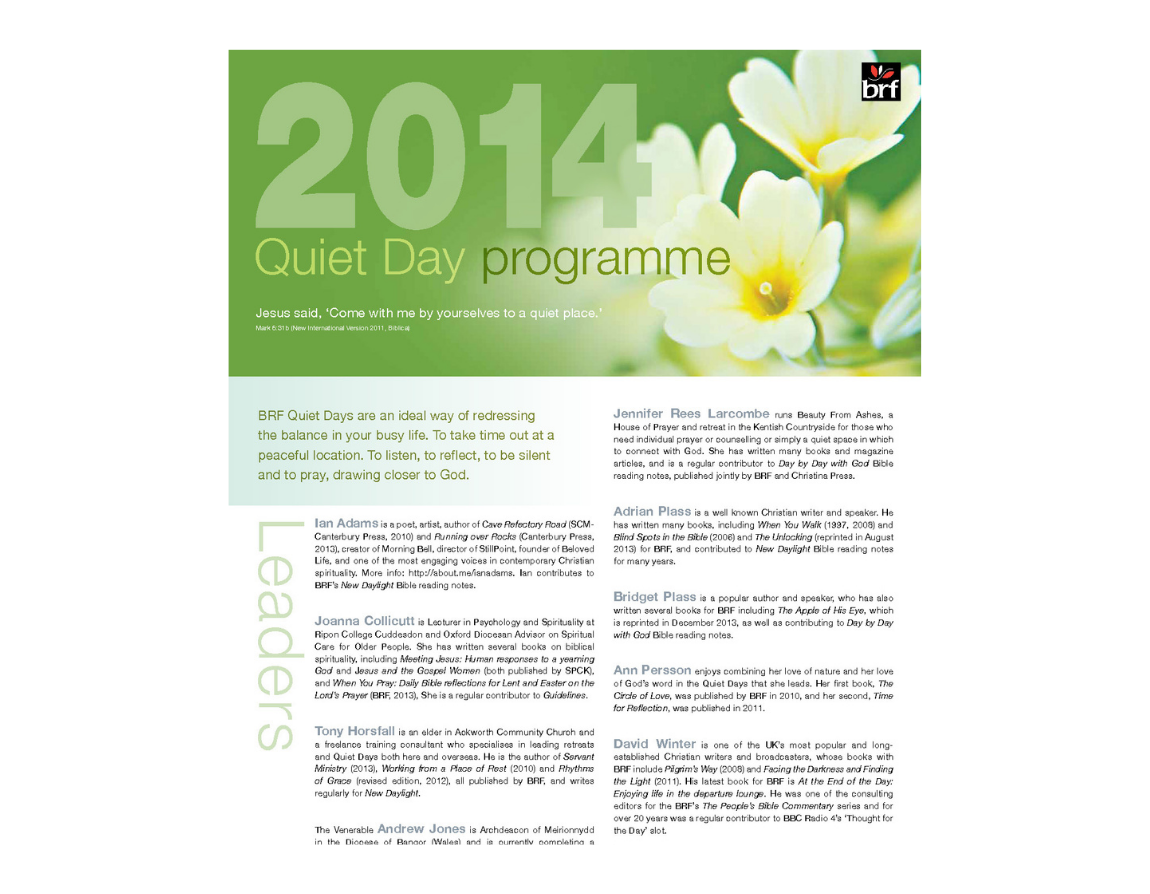
Alongside his writing, David led regular quiet days and retreats for BRF.
In times of trouble
I will give thanks to the Lord with my whole heart; I will tell of all your wonderful deeds… The Lord is a stronghold for the oppressed, a stronghold in times of trouble. And those who know your name put their trust in you, for you, O Lord, have not forsaken those who seek you.
Psalm 9:1, 9, 10 (NRSV)
I had a very dear friend and colleague 30 years ago, a Christian minister and broadcaster of rare gifts, who in his early 40s was diagnosed with terminal liver cancer. He told me that one night in bed he was overwhelmed with a ‘horror of great darkness’.
He thought of what lay ahead – his three young children all under ten, his lovely wife, all the hopes for the future dashed. For a moment, he said, the sense of panic was overwhelming. And then it was as though he heard a voice. ‘Listen! You’ve preached to others. Can’t you believe it for yourself? I will be with you, whatever lies ahead.’
Then, he told me, a great sense of serenity engulfed him – and stayed with him, as I can testify, all through two years of advancing weakness until his death. ‘I knew,’ he said, ‘that I would never be abandoned’. I have remembered his words, ‘never abandoned’, ever since.

David’s early career was in teaching and journalism, becoming the BBC’s highly respected head of religious broadcasting (radio).
Photo: BBC Broadcasting House, Portland Place at the head of Regent Street, London
Steadfast love
Enter his gates with thanksgiving and his courts with praise. Give thanks to him; bless his name. For the Lord is good; his steadfast love endures forever and his faithfulness to all generations.
Psalm 100:4–5 (NRSV)
One of the loveliest words in Hebrew, the language of the Old Testament, is chesedh. Our Bibles offer at least three translations of it, but you will quickly recognise them, because they occur over and again in the Psalms: ‘loving-kindness’, ‘steadfast love’, and ‘faithful love’. Between them, they seem to me to summarise the very heart of our gratitude to God in all circumstances.
‘Loving-kindness’ speaks of a warm and affectionate concern, like a reassuring cuddle for a tearful child. ‘Steadfast love’ speaks of a love that doesn’t change, which is why we can speak of God’s ‘eternal’ love. This is a love that endures forever. Then ‘faithful love’ speaks of a love that remains true whatever is happening around us, or within us, that never lets us down or leaves us in the lurch.
Over and over again the psalmists sing of God’s chesedh, and this is what they mean: a love that is gentle, reliable, and utterly faithful.
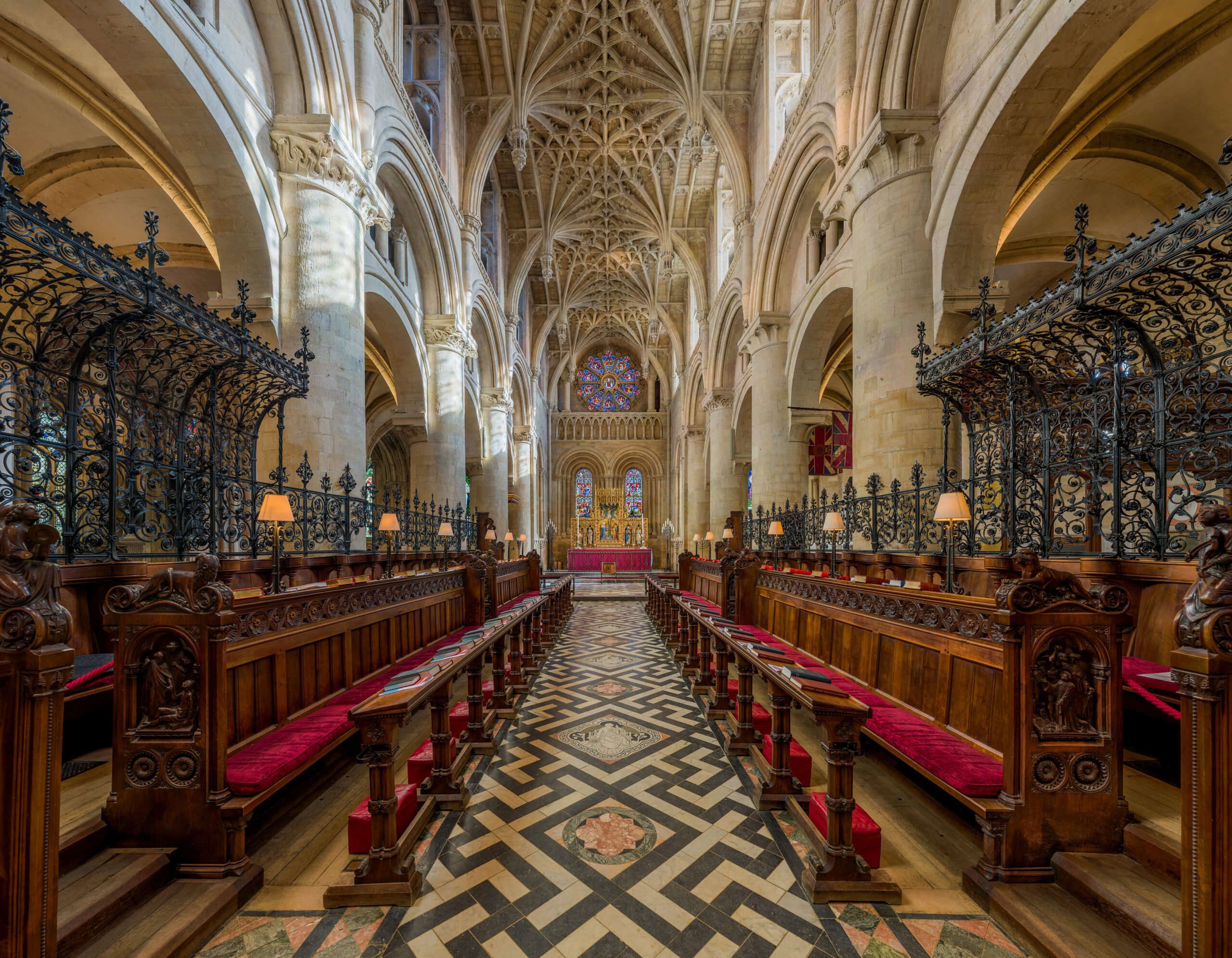
David was appointed Honorary Canon of Christ Church, Oxford in 1995.
Photo: Christ Church Cathedral interior by Diliff, CC BY-SA 3.0, via Wikimedia Commons; cropped.
Whatever you do
Let the word of Christ dwell in you richly… and with gratitude in your hearts sing psalms, hymns, and spiritual songs to God. And whatever you do, in word or deed, do everything in the name of the Lord Jesus, giving thanks to God the Father through him.
Colossians 3:16–17 (NRSV)
‘Whatever’, your teenage grandson says. Of course, he means ‘Who cares?’ But actually ‘whatever’ is a very specific word. It is all-encompassing, offering no exceptions. ‘Whatever you do’, therefore, is an all-inclusive command. Here the apostle Paul puts it in the setting of Christian discipleship.
The ‘word of Christ’ – his teaching, his example – is to ‘dwell’ in us, make its home there. We are to sing with joy and gratitude our songs of worship to God.
And then, just to cover any possible exceptions, we get ‘whatever’. ‘Whatever you do, in word or deed’ is to be done ‘in the name of the Lord Jesus’. There is the crucial test. Can I say this word, take this action, spend this money ‘in the sacred name’?
You won’t be surprised, either, that all of this is to be done with ‘gratitude’, ‘giving thanks to the Father’. We are to seek to live the thankful life.