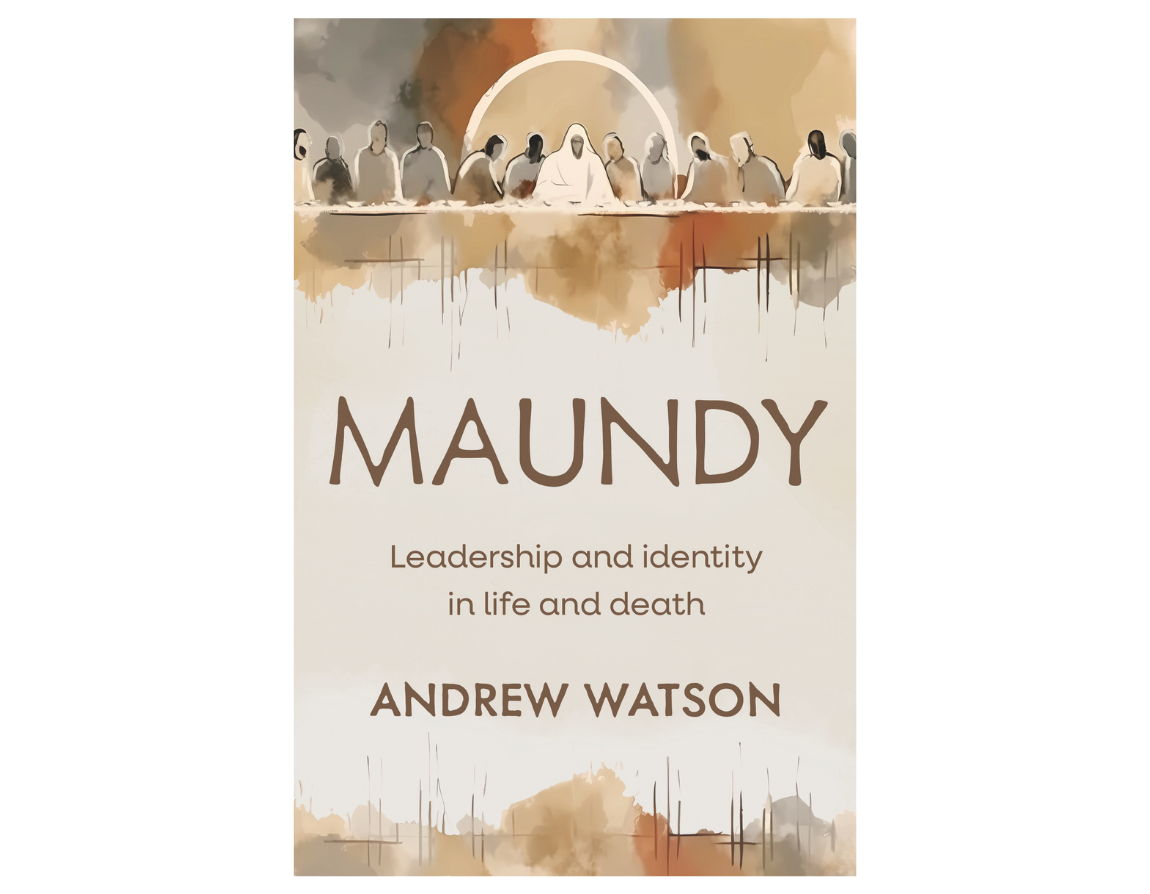

It is a privilege for BRF Ministries to introduce Bishop Andrew Watson’s final work. Following his diagnosis with terminal cancer in January, Bishop Andrew entrusted us with his manuscript, comprising the sermon he preached at his installation in Guildford Cathedral, his ten Maundy Thursday Chrism service sermons, and ‘Four Last Songs’. He died on 3 March, less than a week after asking Archbishop Stephen Cottrell if he would write the Foreword. Maundy: Leadership and identity in life and death was published on Friday. There is no better introduction than Archbishop Stephen’s, shared here in full.
21 June 2026
Foreword
by Stephen Cottrell, Archbishop of York
On 26 February, and, as it turned out, just five days before he died, Andrew Watson wrote to me, with typical understated faithfulness, asking whether I might write a Foreword for this book of sermons he had put together in his last weeks.
‘Stephen,’ he wrote, ‘I’ve not been entirely idle since receiving the diagnosis, though realistically I do seem to be getting a little weaker as the days go by. I’ve written a small book based around the ten sermons I’ve preached at Chrism Eucharists… I was just wondering whether there was any chance of a Foreword from you?’
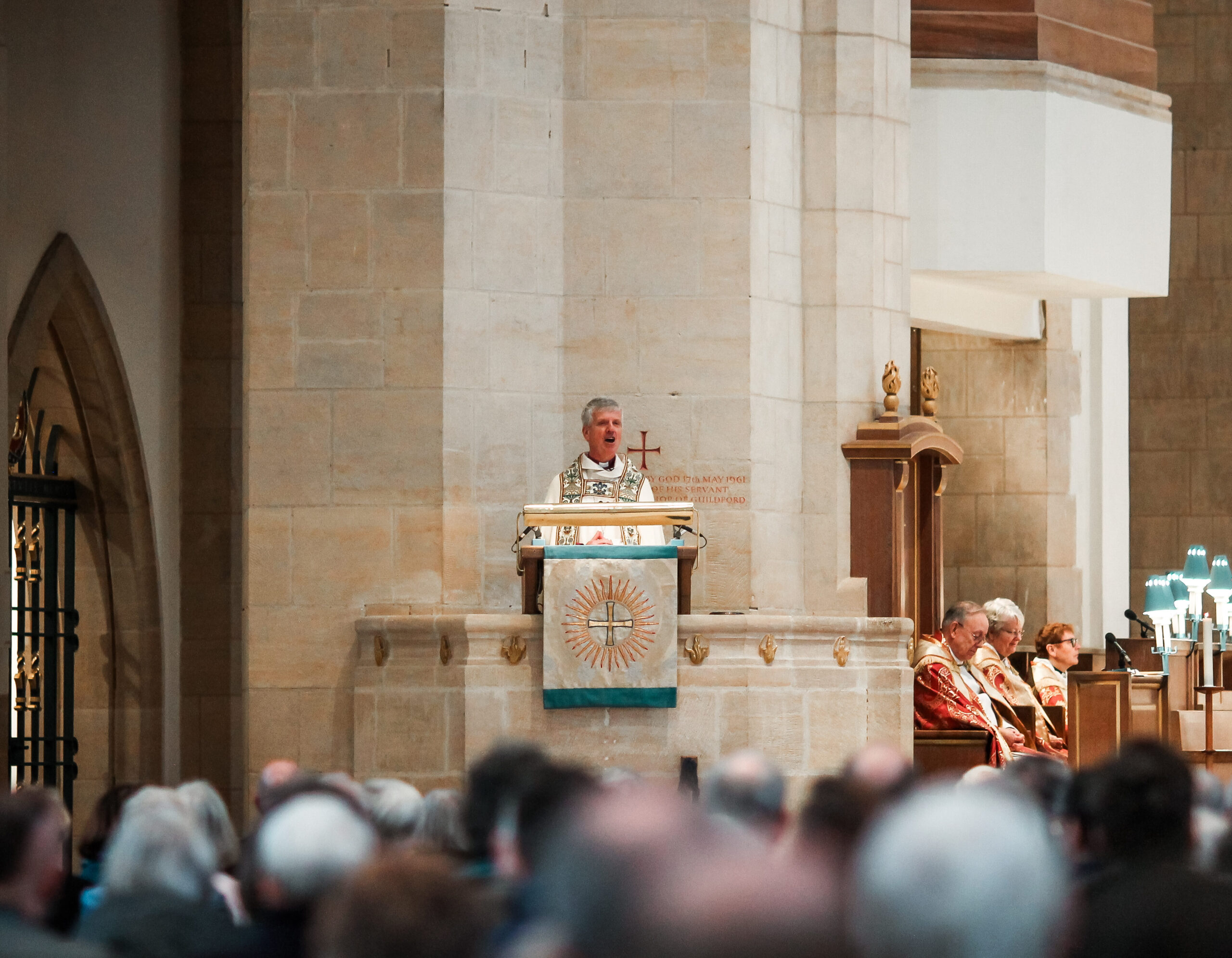
Andrew spoke about the more beautiful music of the gospel of Jesus Christ.
A shared belief in preaching
I was incredibly moved to receive this request. Andrew and I were good colleagues, who loved and respected each other, though we were never close friends. Therefore, I was both honoured and slightly surprised to be asked.
I think what may have prompted it is our shared belief in preaching. When, like so many of us, I received his letter on 19 February telling the diocese of his terminal diagnosis, I wrote to him and reminisced about a sermon I heard him preach at least 20 years ago. It was a beautiful and powerful sermon preached at the annual inauguration service for the College of Evangelists. The sermon drew on Greek mythology and the story of the sirens, whose intoxicating music lured hapless sailors to their destruction on the rocks, and how Orpheus was able to navigate a safe passage by playing a more beautiful song.
In the sermon, Andrew spoke about the more beautiful music of the gospel of Jesus Christ and how it not only drowned out the siren voices of the world, but was something so beautiful that we were drawn to follow it instead, and that this music would sustain us, no matter what, even through death itself.
I wanted to remind him of this sermon. How it had spoken to my heart. And how I hoped it would help him to hear it again and that he would be sustained and led by the beautiful music of the gospel; and that he may know the presence of Christ, who is both the singer and the song.
I also confessed to having crafted my own version of his sermon in the intervening years. After all, there is nothing new under the sun, and those of us who are preachers are forever looking for ideas and stories to borrow.
Each of these reflective and carefully crafted sermons is deeply moving.
The nature and purpose of Christian ministry
So I happily agreed to write this Foreword and have been deeply moved to read these ten profound reflections on Christian ministry and learn more about what made Andrew’s discipleship tick and the things he shared with the clergy he served.
I was also encouraged to find that he, too, as well as borrowing material, reuses it, and there in the first sermon he ever preached as Bishop of Guildford was this arresting image from Greek mythology and Jason inviting Orpheus to take up his harp and sing a more beautiful song.
Each of these deeply reflective and carefully crafted sermons on the nature and purpose of Christian ministry and of the gospel we are called to share is deeply moving. They will serve as a great testimony to Andrew’s ministry as a bishop in the church of God and of his love and service to the Diocese of Guildford. But for those of us who knew him and loved him and worked alongside him, I think it is his ‘Four Last Songs’ that end this book that are the most powerful: a wonderful confirmation sermon, the final one he preached; a reflection for Ash Wednesday; and then the two letters he wrote to Guildford diocese before he died.
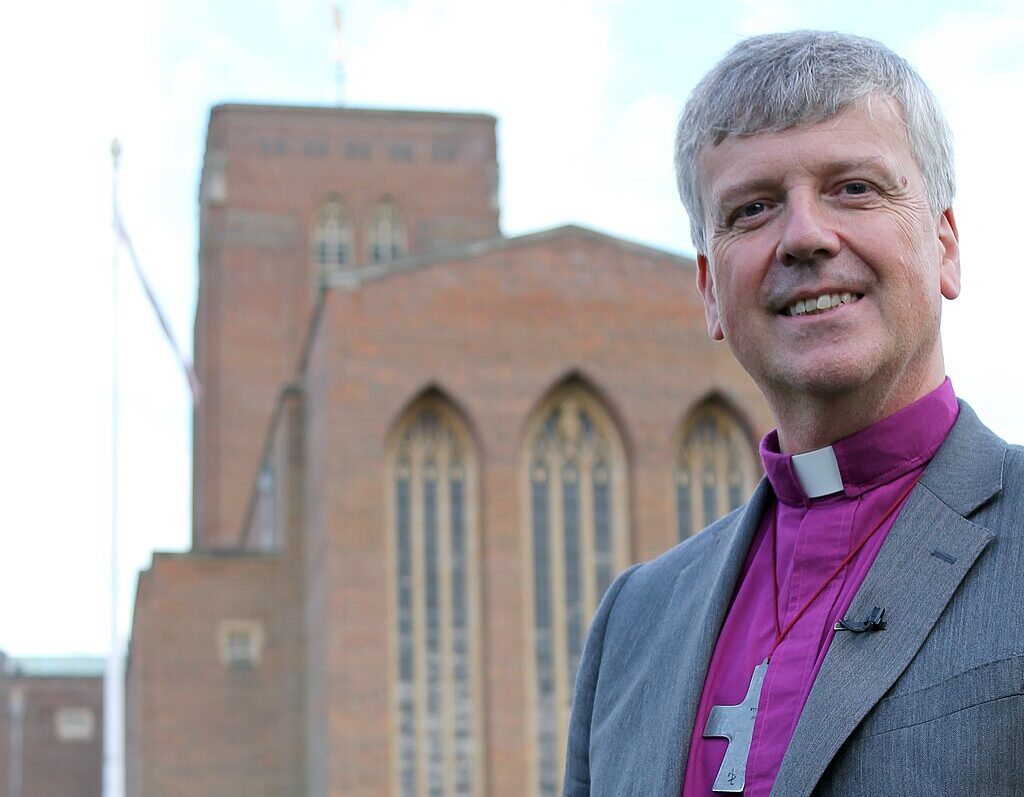
Andrew’s testimony shows how we might cheerfully persist in our faith until we are called to meet the Lord face to face.
A journey home to the God who made us
In the confirmation sermon, he says this of his identity in Christ:
That through Christ I have been adopted into the family of God; that through Christ, and despite all my flaws and failings, I’ve received the Holy Spirit and therefore know myself loved, called and blessed beyond measure.
This faithfulness and the words of Eugene Peterson that he borrowed, about ‘cheerfully persisting in living in the hope that nothing separates us from Christ’s love’, shines through these final letters and have given me, and many, many others, an inspiring lesson in dying well.
The Church of England’s Ordinal tells us that one of the main duties of a priest is to prepare the dying for their death. Having read these Four Last Songs and thought deeply about Andrew’s testimony in his final days, I think, perhaps, I want to say it is the only task.
Our whole life is a journey home to the God who made us, who loves us and who, in Christ, has come to set us free from bondage to sin and death. His death on the cross is for the forgiveness of sins and is the gateway to eternal life, where Christ has gone before us to prepare a way and a place. By his resurrection, God shows us our future, and Andrew’s simple testimony shows how we might cheerfully persist in our faith until the day when we are called to meet the Lord face to face.
With characteristic faithfulness, the fourth of Andrew’s Four Last Songs ends with a quotation from scripture, the beautiful words at the end of Paul’s first letter to the church in Thessalonica. Andrew always gives the last word to God.
It will be hard to read these last things without tears, and I certainly wept as I read again this last letter. So, forgive me, Andrew, for giving you the last word in this little Foreword to your lovely little book.
In your Chrism Eucharist sermon of 2017, you mused on all the different adjectives we use in the church to describe ourselves and sometimes define ourselves against one another. However, you remind us that whatever adjective we use, ‘the noun is always Christian’.
So, go forth upon your journey good and faithful Christian soul. Thank you for helping us to know Christ. And thank you for helping us to approach death with faithfulness and put to our trust, like you, in him who ‘loved us and gave himself up for us’ (Ephesians 5:2).