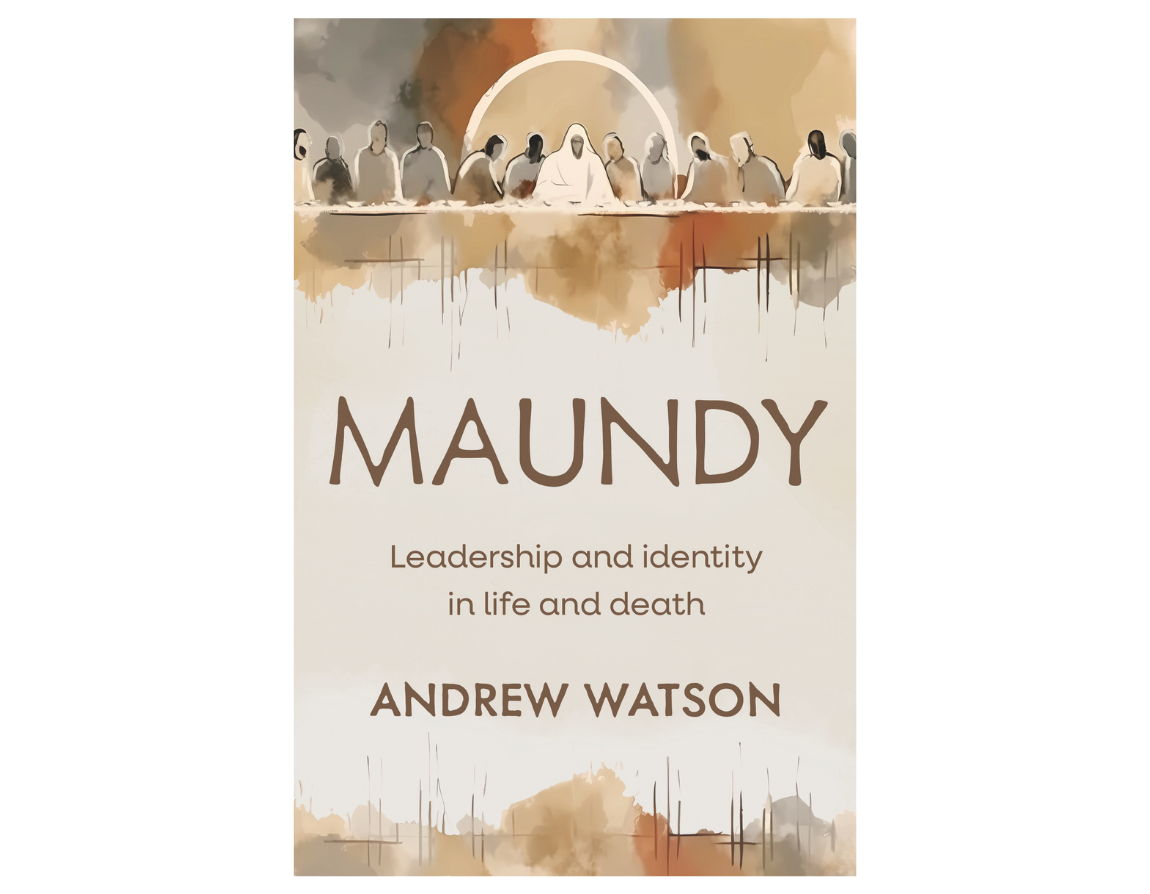

It is a privilege for BRF Ministries to introduce bishop Andrew Watson’s final work, Maundy: Leadership and identity in life and death, published this month. Following his diagnosis with terminal cancer in January, Bishop Andrew entrusted us with his manuscript, comprising the sermon he preached at his installation in Guildford Cathedral, his ten Maundy Thursday Chrism service sermons, and ‘Four last songs’. He died on 3 March 2026. This is a shortened version of his last Chrism service sermon, delivered in the cathedral on 17 April 2025.
28 June 2026
Get thee to a nunnery
‘The Spirit of the Lord is on me,
because he has anointed me
to proclaim good news to the poor.
He has sent me to proclaim freedom for the prisoners
and recovery of sight for the blind,
to set the oppressed free,
to proclaim the year of the Lord’s favour.’Then he rolled up the scroll, gave it back to the attendant and sat down. The eyes of everyone in the synagogue were fastened on him. He began by saying to them, ‘Today this scripture is fulfilled in your hearing.’
Luke 4:16–21 (NIV)
Well, of course, I’ve preached on it many times before, and so have most of you. I’ve preached on it at confirmations, ordination retreats, as part of a sermon series and every year that Luke comes around in the lectionary. At least two of you invited me to preach on it at your licensing services, as a kind of defining text for your ministry, just as several Birmingham clergy did before you.
And yet this year I had the experience of what we might call ‘preacher’s block’ as I tried to make fresh connections between Luke 4 and this Chrism Eucharist. ‘How does Jesus’ first recorded sermon relate to Jesus’ last recorded meal?’ was the question I was struggling with. And it wasn’t long before the pressure was building, the days were ticking by, and this awesome privilege of preaching to quite so many gifted preachers on quite such a special day in the church’s year, was beginning to wear a little thin.
And so I took Hamlet’s advice to poor Ophelia to ‘get thee to a nunnery’: more specifically to the Ladywell Convent outside Godalming, where I gave myself the luxury of spending several hours just pondering this text and praying that somehow my reflections on it might bring you hope and encouragement this morning.
And quite how or whether those prayers were answered is, of course, up to you to judge.
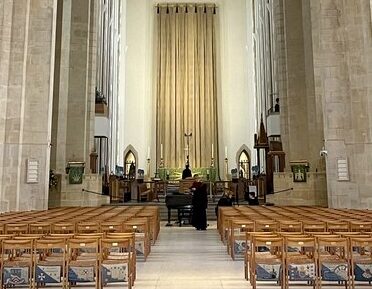
I had ‘preacher’s block’ as I tried to make fresh connections between Luke 4 and this Chrism Eucharist.
A dusty village
Nazareth: that’s where the story starts – a place name that appears 29 times in the Bible, more than half of them in the writings of Luke.
Nazareth matters to Luke, in other words, and perhaps it’s the sheer ordinariness of the place – a dusty village set on a hilltop, roughly halfway between the Sea of Galilee and the Mediterranean – which appealed to a man who regularly highlighted ordinary people in his two-volume work.
Jesus had been away from his hometown for a couple of months or more, and it had been quite a journey in every sense. That journey had taken him to the River Jordan, where he’d witnessed the stirrings of a national revival, as crowds of his compatriots were being baptised at the hands of his cousin John the Baptist. It had led him next to his own baptism, where the Holy Spirit descended on him like a dove, along with that heavenly pronouncement, ‘You are my Son, the Beloved; with you I am well pleased’ (Luke 3:22, NRSV).
Jesus had then been led into the Judean desert, and an intense period of prayer and fasting, as the full implications of what it meant to be ‘My Son, the Beloved’ were examined and tested. What extraordinary powers lay within Jesus’ reach: power to satisfy his every appetite, to vanquish his every enemy, to stun the world!
And yet Jesus recognised those ambitions for what they were: not the promptings of the Holy Spirit but quite the reverse. And as he emerged from the desert, physically frail from the fasting but filled with the power of the Spirit, Jesus began teaching in the Galilean synagogues, culminating in this return to Nazareth and to what we might call his sending parish.
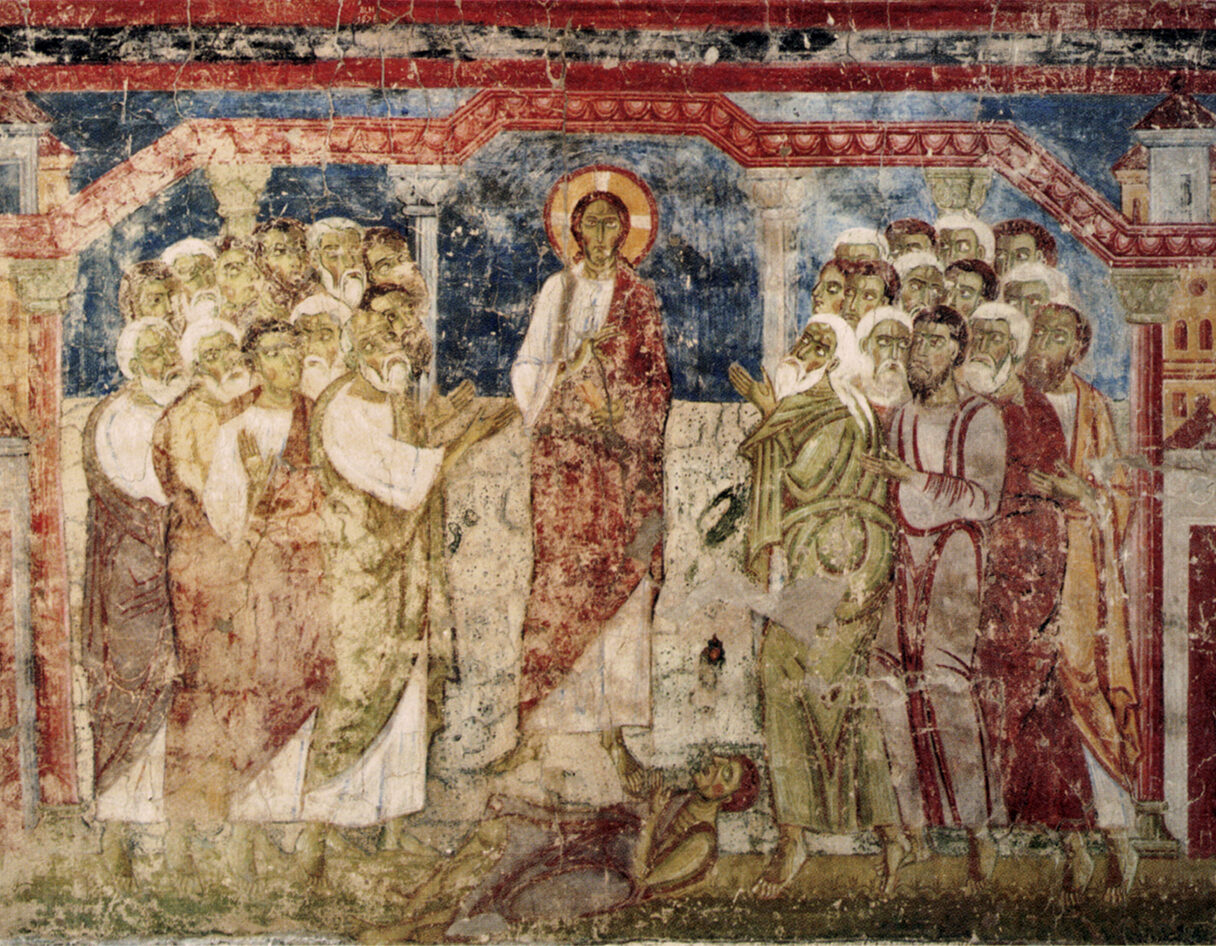
He sat down, and there was that electric moment when the eyes of all were fixed upon him.
Invited to speak
Synagogue teaching was interactive, with plenty of come-and-go between speaker and listeners; there was no preaching rota, but rather an invitation to those who so wished to share a message. Given Jesus’ growing reputation, it wasn’t long before he was handed a scroll of the prophet Isaiah and invited to teach. And note the verbs here: that Jesus stood, took the scroll, unrolled it, read it, rolled it up again, handed it back, sat down, then spoke.
‘The Spirit of the Lord is upon me’, he read, ‘because he has anointed me to bring good news to the poor. He has sent me [as some Greek manuscripts add] to bind up the broken-hearted, to proclaim release to the captives and recovery of sight to the blind, to set free those who are oppressed, to proclaim the year of the Lord’s favour’ (Luke 4:18–19, NRSV).
And then he sat down, and there was that electric moment when the eyes of all were fixed upon him, before he simply continued: ‘Today this scripture has been fulfilled in your hearing’ (v. 21).
For us, as readers of Luke’s gospel, we get it. In the desert Jesus discovered what we might describe as his ‘uncalling’ – what he was not being called to do as God’s Son, the Beloved: to satisfy his every appetite, vanquish his every enemy, stun the world.
In the synagogue he articulated his calling – what he was being called to do as God’s Son, the Beloved: to preach good news to the poor, release to the captive and so on.
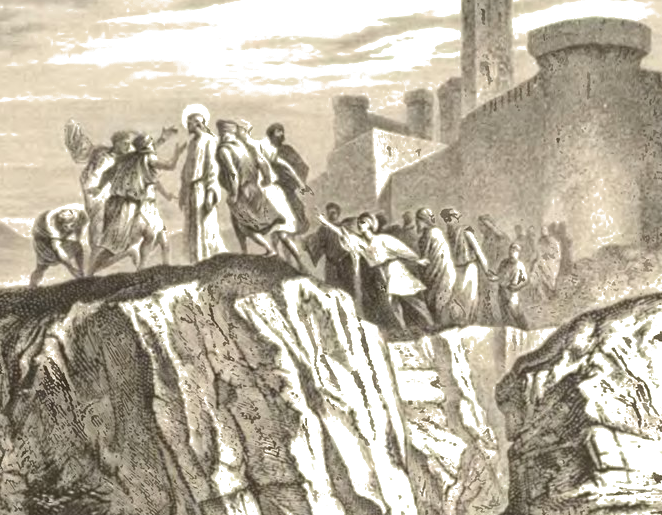
Once Jesus began to speak of the scope of that ‘good news to the poor’, admiration turned to fury.
Good news to the poor
And at first his message was well received, as the electric charge of that word ‘Today’ coursed through the veins of his hearers. But electricity is a dangerous thing, and once Jesus began to speak of the scope of that ‘good news to the poor’ – specifically that it applied to Gentiles just as much as to the people of Israel – there was a click of the switch and admiration turned to fury; indeed, to the first attempt on Jesus’ life since King Herod dispatched that hit squad to Bethlehem 30 years’ earlier.
So just what is the scope of Jesus’ good news to the poor? That’s the big focus of Luke’s gospel, with poverty encompassing everyone with a low status in the world of Jesus’ day. Women had that low status, and feature regularly in the gospel as disciples and role models. Children were the same. Foreigners, whether Romans, Samaritans or those strange Gerasenes who lived on the far side of the Sea, were treated with the greatest respect, while those who worked in dirty or disreputable professions – shepherds, soldiers, tax collectors, even prostitutes – took their place among Jesus’ followers and around his table.
The unclean or infectious came close and were touched and healed, while, in Jesus’ masterful story-telling, good Samaritans, repentant tax collectors, prodigal sons and persistent widows were compared favourably with unfeeling priests, pompous pharisees, whining older brothers and unjust judges, with fatted calves killed for all the wrong kinds of people.
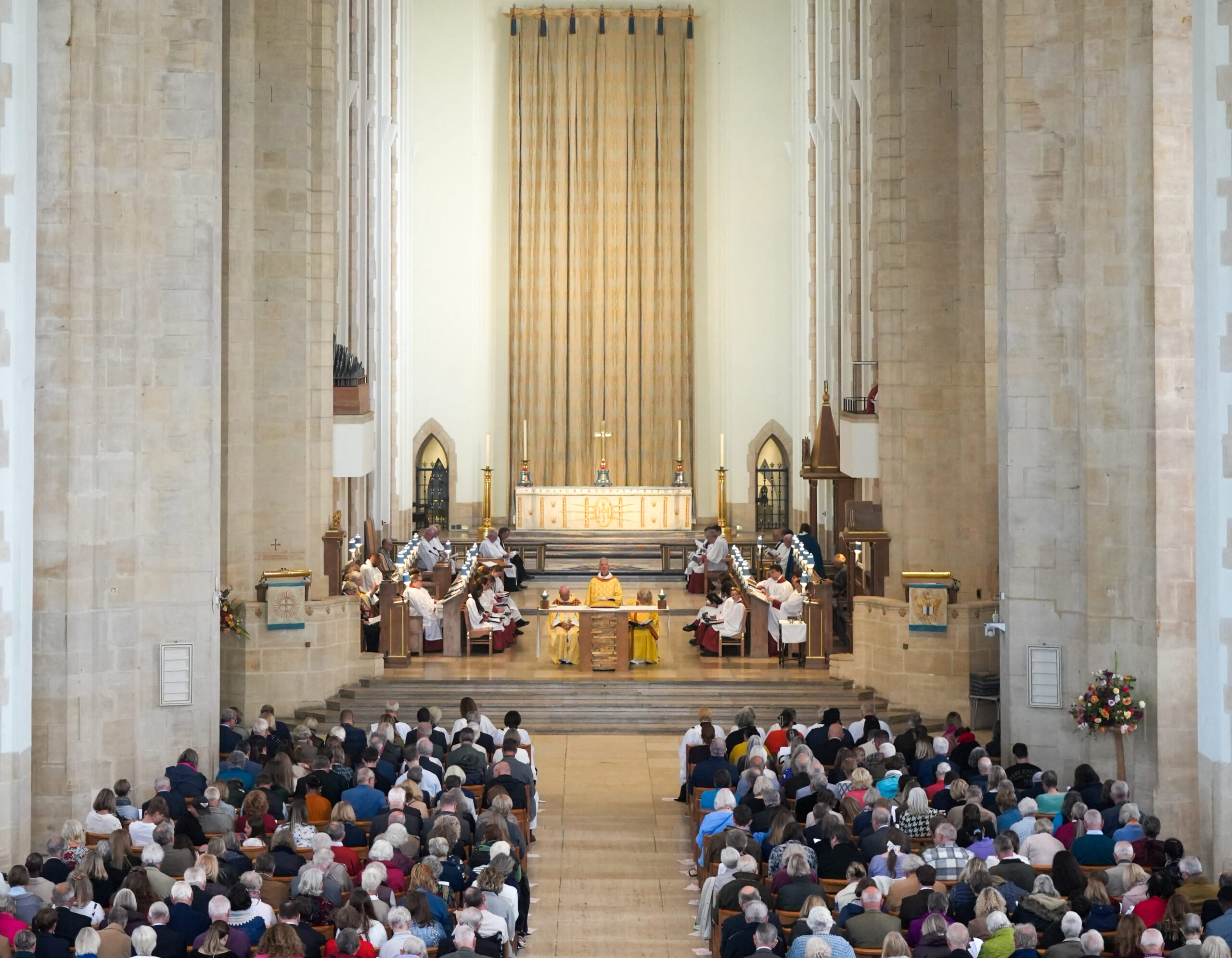
Priests today are given the awesome responsibility of taking the written word of God and breaking it open for others.
First sermon, last meal
But back to that specific question with which I wrestled for several hours in my nunnery: how does Jesus’ first recorded sermon relate to Jesus’ last recorded meal? And here I came up with three answers.
One is Lent, of course – those 40 days in the desert that immediately precede today’s reading, where Jesus’ identity and calling were profoundly tested. And I hope and pray that the Lent that has just passed has been a rich if maybe testing time for you too, not least in confirming your own identity and calling as a child of God ‘in the Beloved’ and a minister, whether lay or ordained, within his church.
So there’s the Lent connection here, and then there’s the Maundy Thursday connection too. For those verbs as Jesus takes the scroll in Luke 4 strike me as similar to the verbs as Jesus takes the bread and the wine 18 chapters later: ‘take’, ‘bless’, ‘break’, ‘give’.
The priests among us today are ministers of both word and sacrament. We are given the awesome responsibility of taking the written word of God and breaking it open for others to be blessed and nourished through its power. And we are given the equally awesome responsibility of taking the bread and wine of the Eucharist, and breaking them open for others to eat, to drink and to receive God’s blessing afresh.
And let’s never lose sight of either responsibility or the amazing privilege of this ministry, amid the undoubted challenges and pressures that live alongside it.
So there’s Lent. And there’s Maundy Thursday. But perhaps the most moving insight I received as I got me to a nunnery was the connection between Jesus’ first sermon and Good Friday: not just the obvious connection – the dangers of electricity, and how admiration can turn to fury at the click of a switch – but something deeper than that, about Jesus’ complete identification with the objects of Isaiah’s great prophecy.
Because the truth is, of course, that the one who proclaimed good news to the poor himself became the poorest of the poor – nailed to a cross, with soldiers casting lots for his one remaining possession, the clothes he had been standing up in.
The one who proclaimed release to the captives was himself the most captive of captives, bound and frog-marched to his execution.
The one who proclaimed recovery of sight to the blind found himself in total darkness, crying out from the depths of his being, ‘My God, my God, why have you forsaken me?’
The one who proclaimed the binding-up of broken hearts himself had his heart broken at Judas’ denial, Peter’s betrayal, the sight of his grieving mother and worst of all that moment of dark abandonment.

Perhaps the most moving insight I received was the connection between Jesus’ first sermon and Good Friday.
Only in retrospect
Yes, even here there are tiny hints of hope: the cross was certainly good news for Barabbas, and a release of this captive, as Jesus literally died in his place. And in those words – ‘Today you will be with me in paradise’ (Luke 23:43) – Jesus was indeed proclaiming the year of the Lord’s favour to another who appeared quite undeserving of it. But it’s only in the light of the glorious resurrection morning that everything began to make any kind of sense.
‘You know the grace of our Lord Jesus Christ’, wrote St Paul, ‘that though he was rich, yet for your sake he became poor, so that through his poverty you might become rich’ (2 Corinthians 8:9). ‘We do not have a high priest who is unable to sympathise with our weaknesses’, reflected the writer to the Hebrews, ‘but we have one who in every respect has been tested as we are’ – [‘And some!’, we might add] – ‘yet without sin’ (Hebrews 4:15, NRSV).
And these are doubly powerful truths, reminding us both that Jesus is with us in the sufferings we undergo – he understands, because he has been there himself – and that Jesus can use those sufferings, however debilitating they may feel at the time, to make us better people, better pastors, those who can help others out of the pit because we’ve been there ourselves or at least perilously close to the edge. That’s certainly been my experience through 50 years of Christian discipleship.
And all those decades later, I can just begin to grasp Paul’s teaching that we should rejoice in our sufferings.
Not because suffering is anything other than awful at the time, but because, as he continues, ‘suffering produces endurance, and endurance produces character, and character produces hope, and hope does not disappoint us, because God’s love has been poured into our hearts through the Holy Spirit that he has given to us’ (Romans 5:3–5).
I’ve preached on it many times before – but how rich is our gospel reading this morning, as we pray afresh for the Spirit of the Lord to come upon us and to anoint us to live and proclaim the good news of God’s beloved, incarnate, crucified, risen, conquering Son to all who know their need of it!
For the Lord is here. God’s Spirit is with us. Amen.