
As the quality and supply of fresh water becomes an increasingly urgent issue across the world, Jenny Sanders reflects on the significance and symbolism of some wells in the Bible, in a series of meditations coming up in Day by Day with God later in the summer.
24 May 2026
Wells in the Bible: places of conflict, blessing, and provision
When I was growing up, one of our neighbours had a whimsical ornamental well in her front garden. It had a gabled, red-tiled roof atop a circular wall of stones and, in the space between, a bucket fixed to a pulley, complete with a handle for winding.
In the UK, we simply turn on the tap to access water. Even with the climate changes we’re experiencing, a temperate climate with high rainfall makes everything flourish: green fields, lush pastures, and sturdy trees. Gardens prosper and footpaths become over-grown. Even in times of drought, when we’re urged to save water, take showers rather than baths, and obey the hosepipe bans, we know that autumn and winter will come soon enough. Despite serious issues with some of our water companies, we’re complacent about the luxury of hot and cold running water in our homes.
But before the invention of indoor plumbing, wells were the major water source for everyone. In biblical times, wells were significantly less pretty than that of our neighbour but were far more useful. Where the landscape was mostly desert – rocky, arid, and challenging – communities relied on hard labour to dig deep into the unforgiving earth to reach below the water table where vital, life-sustaining water could be found for people, livestock, and crops.
The Hebrew words for well suggest two different types. Be’er would be the most familiar to us. This is an artificial pit, dug deeply enough to access an underground water source and accumulate it. A bor refers to a man-made cistern where rainwater could be collected and stored.
In these reflections, we’ll be visiting some biblical wells, loitering at the community meeting place, learning the lessons of power-plays and conflict over resources, and enjoying their symbolism as places of blessing and provision.
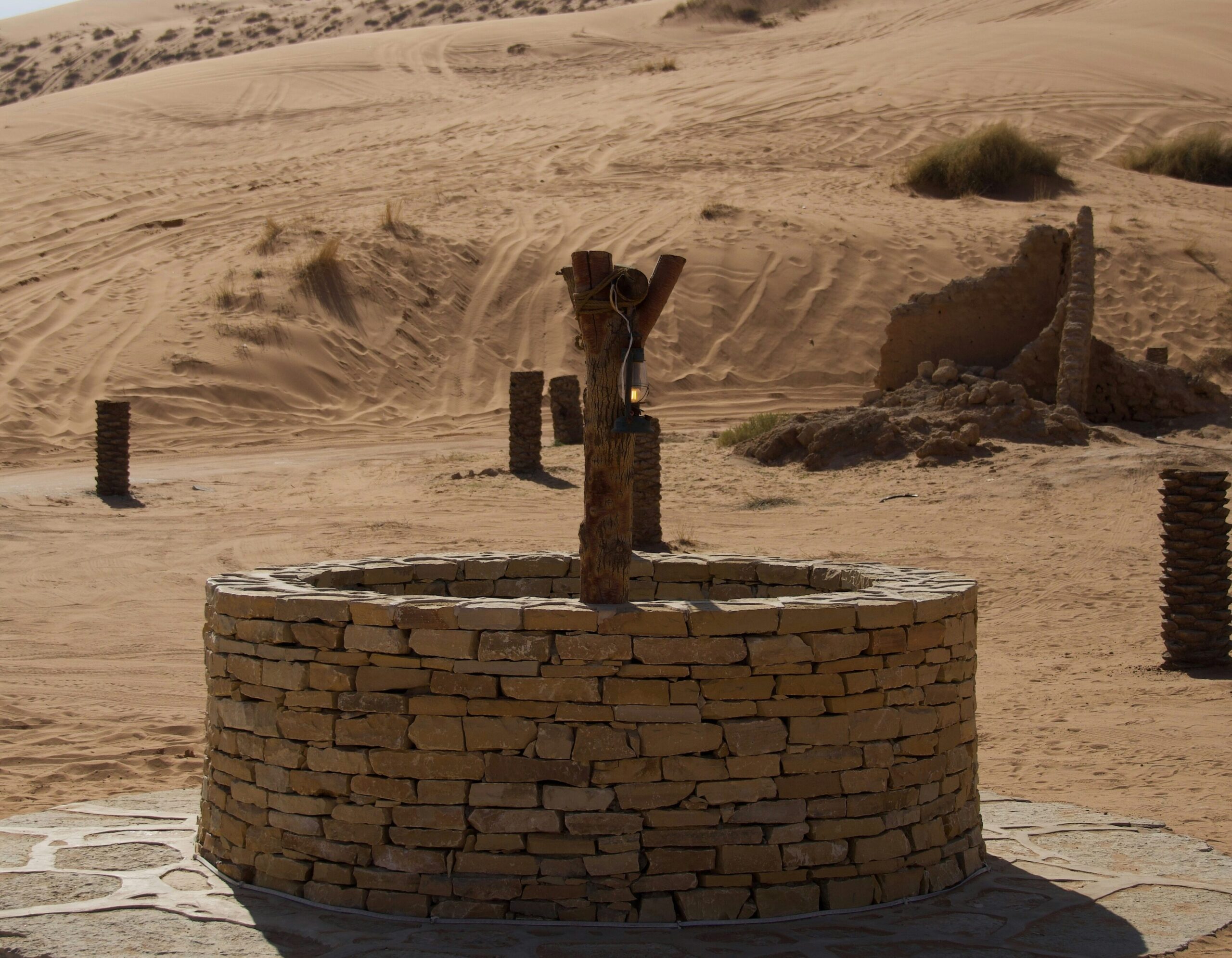
In biblical times, wells were significantly less pretty than that of our neighbour but were far more useful.
Abraham’s well
Accept these seven lambs from my hand as a witness that I dug this well.
Genesis 21:30 (NIV)
Around the time that Isaac was born, a quarrel broke out between the households of Abraham and Abimelek over ownership of a well. Abraham had been living in an area under King Abimelek’s jurisdiction. There had been conflict between them since the king took Sarah under his care, believing that she was Abraham’s sister, not his wife.
Abimelek’s servants falsely claimed the well was theirs, which avoided the strenuous work of digging their own and indicates some jealousy over Abraham’s flourishing flocks and herds. Their master claimed ignorance of the matter, but Abraham initiated a treaty to settle the argument and usher in a time of peace. A deal was made and sealed by setting apart seven ewe lambs from Abraham’s flocks. These are the most valuable since they carry the reproductive value of a flock, remaining fertile for a good seven to ten years.
Seven has always been regarded as the biblical number of complete-ness and perfection, appearing many times throughout the Bible, including the seven days of creation.
Abraham’s lambs foreshadow the lamb of God who, in his perfect holiness, has brought peace between God and humanity through his sacrificial death, resurrection, and ascension. Abimelek chose to accept the lambs. We also have a choice to make regarding accepting the lamb
Abraham’s well, or the ‘well of seven’, still stands in Beersheba. Verse 33 says that ‘there [Abraham] called on the name of the Lord, the Eternal God’. What a wonderful example of connecting us with God our Father and Jesus our peace.
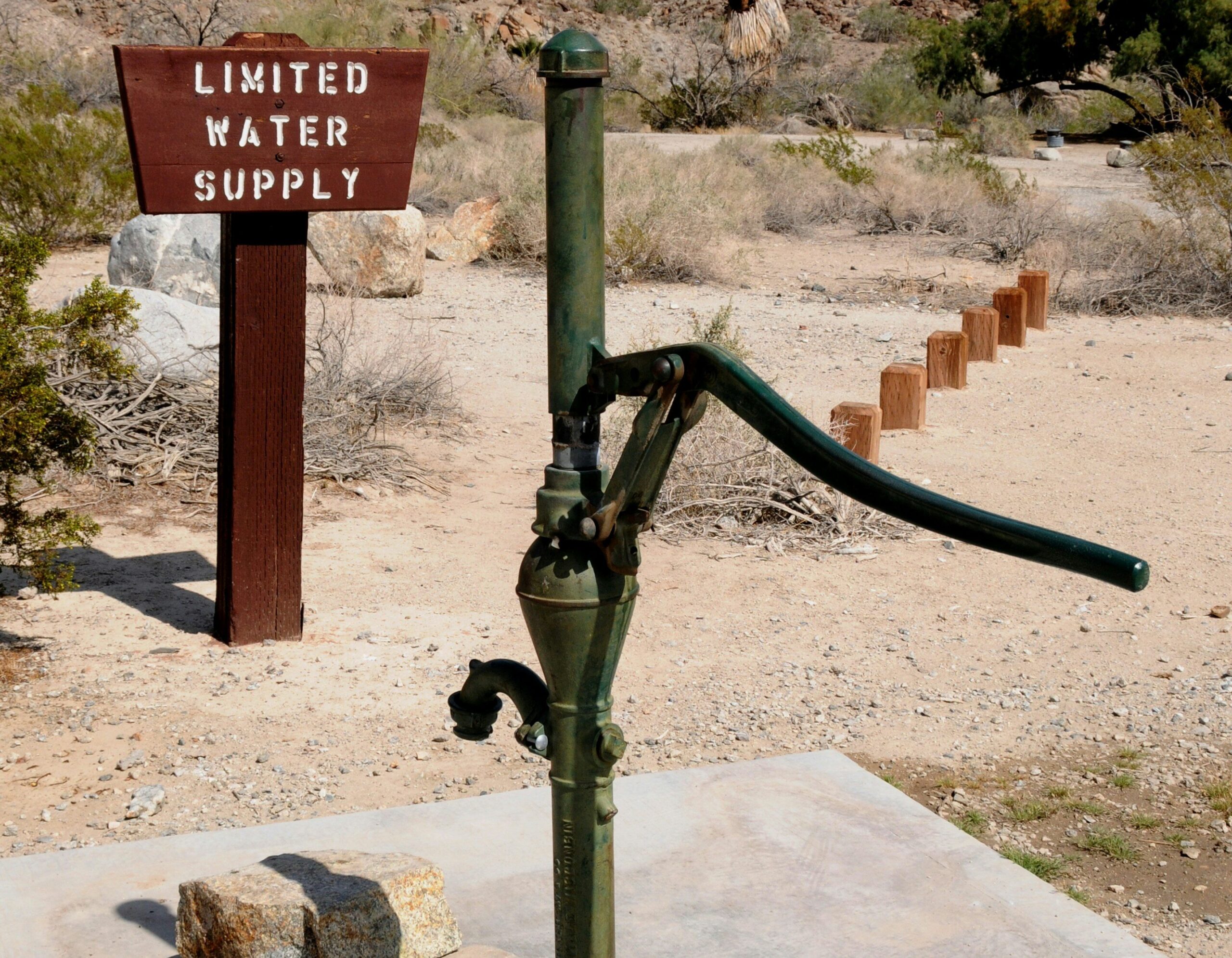
What impedes the flow of fresh Holy Spirit ‘water’ into our lives?
Blocked wells
So all the wells that his father’s servants had dug in the time of his father Abraham, the Philistines stopped up, filling them with earth.
Genesis 26:15 (NIV)
Whoever owned the wells – or had access to the supply of water – held both power and control. Isaac had grown so wealthy that he was now considered a threat by the Philistines, who retaliated by sabotaging the wells his father had used. Using stones, wood, rubbish, even dead animals, they effectively plugged the lifeline, hoping to force him away, to give up the land he occupied and the pastures he used. This was an effective strategy often used by Israel’s enemies. 2 Kings 3:25 records how the Midianites destroyed towns, fields, and blocked wells in Elisha’s day.
If fresh water symbolises the living water of life in Christ, a stopped-up well stands for a cutting off or interruption of resources which must bring spiritual death. What impedes the flow of fresh Holy Spirit ‘water’ into our lives?
Perhaps we’ve neglected our relationship with Jesus. Relationships require time and effort if they’re to flourish but also to endure through challenging seasons. Maybe we’ve compromised somewhere at home or at work in what we’ve chosen to read, hear, or watch and are finding it difficult to hear God’s voice.
It could be that a crisis has occurred – medical or financial – a bereavement or a betrayal of trust which has thrown us off kilter. Instead of living in a place of peace, we can find ourselves overwhelmed with anxiety and doubt as we retreat from God instead of run towards him.
Remember, it’s our enemy, Satan, who seeks to ‘steal and kill and destroy’ (John 10:10), our trust, our hope, our joy, our assurance, even our faith. He loves to see us disempowered, cut off from our loving heavenly Father. Peter encourages us to be alert to the devil’s schemes and resist him with all our might (1 Peter 5:8–9).
Can you identify wells in your life which have become blocked recently? Take some time to bring this before God and pray for his wisdom and insight. Let today be the day they are unblocked.
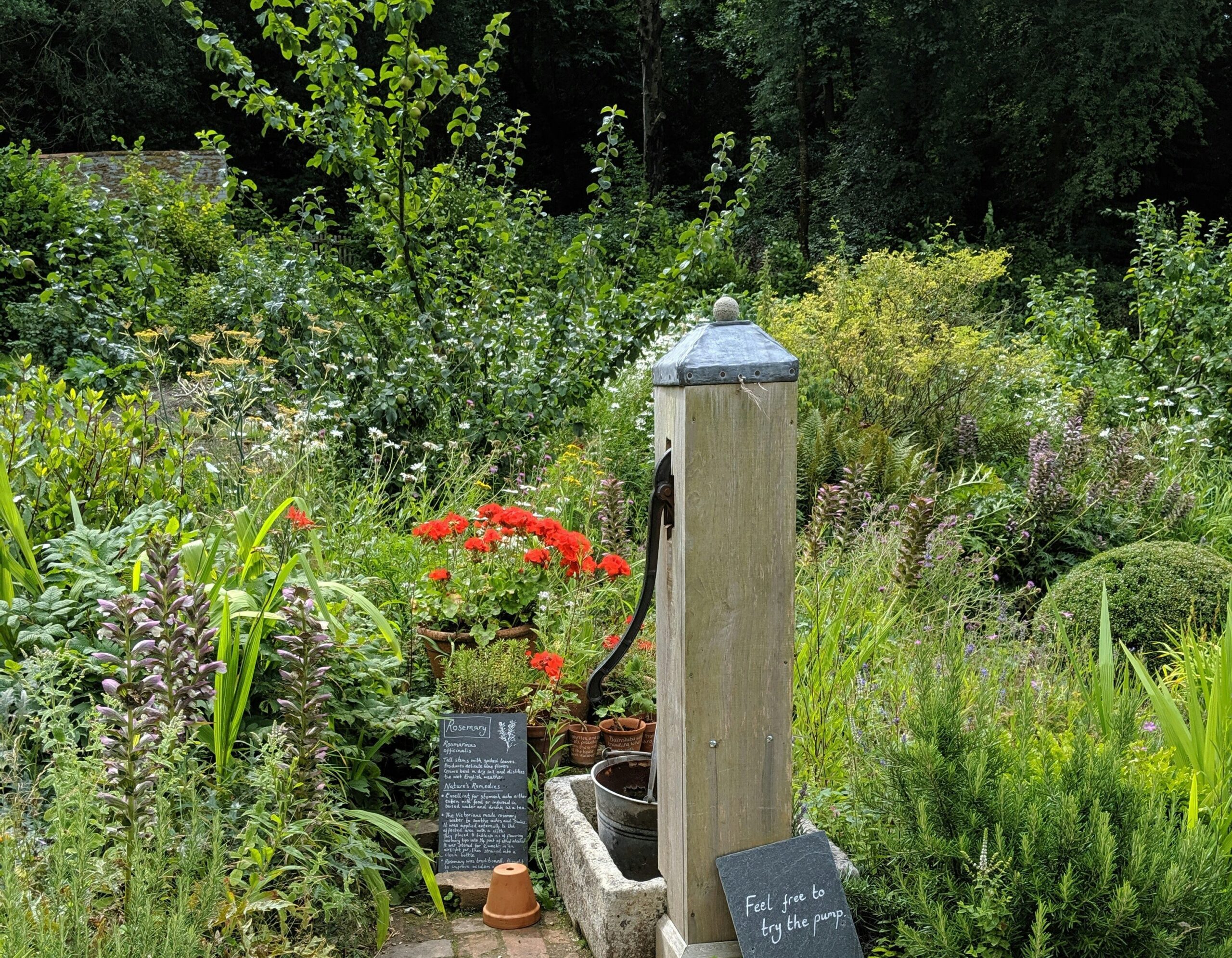
God’s promises and his living water are just as available as they ever have been.
Reopening the wells
Isaac reopened the wells that had been dug in the time of his father Abraham, which the Philistines had stopped up after Abraham died, and he gave them the same names his father had given them.
Genesis 26:18 (NIV)
If Isaac hadn’t believed that there was still water in the old wells, he wouldn’t have bothered to reopen them. Having been instructed by King Abimelek to move on, he relocated to a valley – often symbolic of a place of trial and suffering. His father’s wells were not only reopened but given their original names – a mark of ownership, value, and respect.
Isaac’s men found new water sources and dug two wells, but their ownership was contested. Finally, a third well went unchallenged.
Isaac’s perseverance led to an encounter with God in which the promise his father had carried in his heart was reiterated.
That night the Lord appeared to [Isaac] and said: ‘I am the God of your father Abraham. Do not be afraid, for I am with you; I will bless you and will increase the number of your descendants for the sake of my servant Abraham.’
Genesis 26:24 (NIV).
It’s the first time we see Isaac build an altar where he ‘called on the name of the Lord’ (v. 25) for himself.
God blesses families of believers. The plan has always been that God’s life, God’s words, and God’s promises would pass on from one generation to another. There’s a sense of overflow, of passing on a baton of faith from the older to the younger, a continuation of the walk with God that illustrates the solidity and consistency of his enduring promises. The Abrahamic covenant was for all generations, which includes us (Genesis 17:7). By utilising the same names of the wells that his father had used, Isaac acknowledged Abraham’s close walk with God.
Whether you’re a first-generation Jesus-follower or a thirty-first one, God’s promises and his living water are just as available as they ever have been. Wells that were closed off can be reopened.
This is an edited extract from Jenny Sanders’ series of reflections in the May-August issue of Day by Day with God, Sunday 26 July–Saturday 8 August.