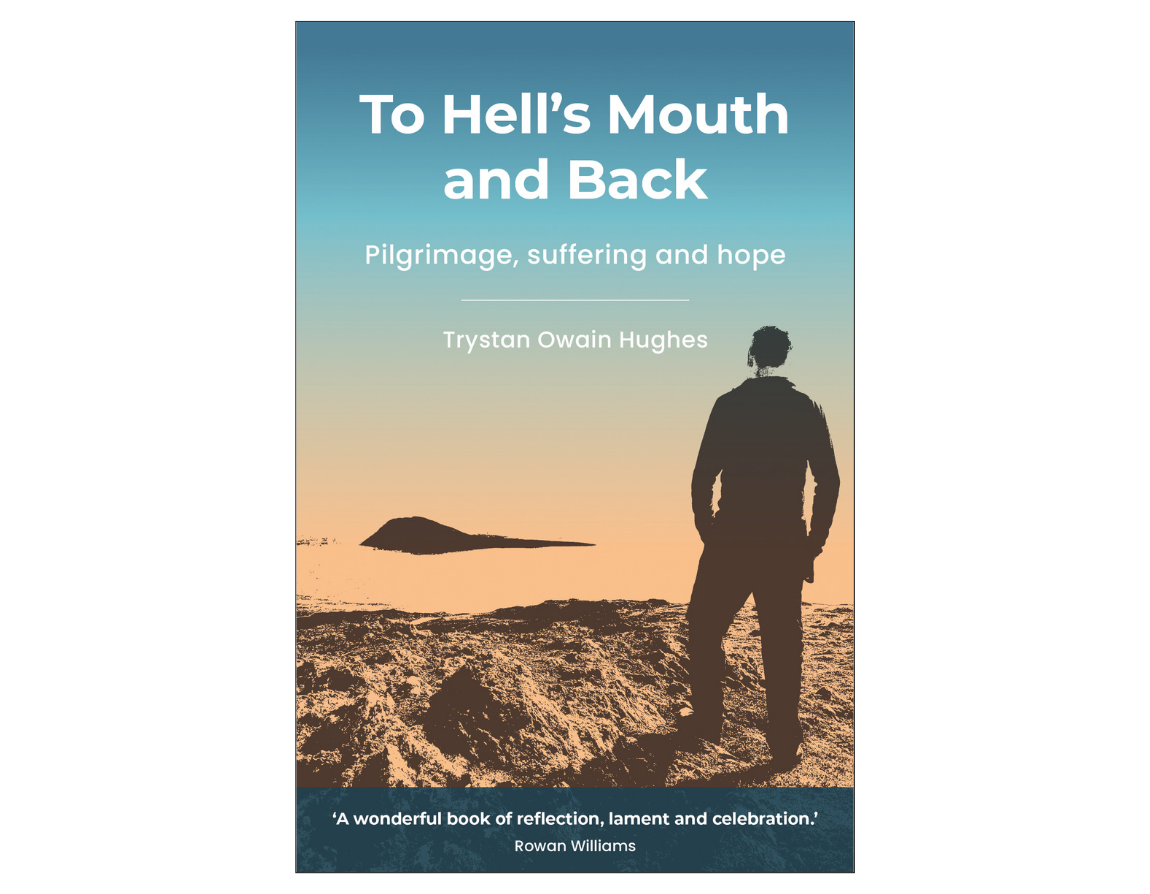

An extract from the prologue to Trystan Owain Hughes’ To Hell’s Mouth and Back: Pilgrimage, suffering and hope, chosen as the Archbishop of Wales’ Lent book for 2026. In this compelling exploration the author reflects on his own experience of suffering and how he clung to hope through both a gruelling 140-mile pilgrimage and a second ‘pilgrimage’ through a long recovery from a serious back injury.
22 February 2026
Thanne longen folk to goon on pilgrimages
In recent years, pilgrimage has experienced a remarkable resurgence, capturing the interest of people from all walks of life. This revival has been particularly evident in my own country of Wales, where significant investment has been made to restore and develop ancient pilgrim routes, drawing more walkers than at any time since the Reformation. Beyond the physical and mental rewards of these journeys, there is something deeply moving about following in the footsteps of saints who walked these paths centuries ago.
The renewed fascination with pilgrimage has even made its way on to our screens. The BBC documentary series Pilgrimage has brought the experience to an even wider audience, as celebrities from diverse backgrounds lace up their boots, shoulder their backpacks, and set out on famous routes. Along the way, they share their stories, wrestle with questions of faith, and explore whether these age-old paths still hold meaning for believers and non-believers today.
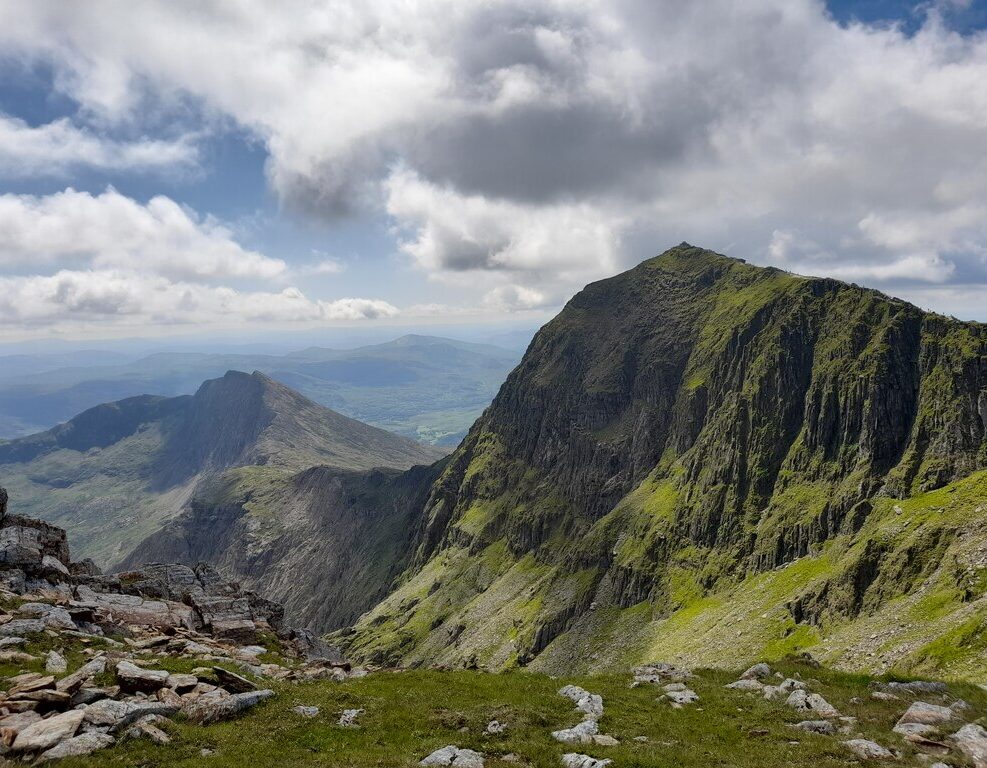
The revival of pilgrimage has been particularly evident in my own country of Wales, where significant investment has been made to restore and develop ancient pilgrim routes.
Photo: A View of Mount Snowdon by David Bremner, CC BY-SA 2.0, via Wikimedia Commons; cropped.
Deep in our DNA
Anthropologists suggest that spiritual journeys stretch back far beyond the well-worn paths we walk today. Some even argue that pilgrimage has evolutionary roots, echoing the ancient migrations of birds and animals. From humanity’s earliest days, journeying was essential, whether for survival, as our hunter-gatherer ancestors roamed in search of food and warmth, or for faith, as seen in sacred texts like the Old and New Testaments. Pilgrimage reached its height of popularity in the west during the Middle Ages, when the church encouraged believers to travel in search of divine connection, forgiveness, and atonement. In fact, even the modern package holiday owes its origins to religious travel, with 19th-century entrepreneur Thomas Cook building his global travel empire by organising trips for Christian pilgrims to the Holy Land.
Pilgrimage, though, has not always been welcomed and encouraged. From 16th-century Protestant reformers to 20th-century communist leaders, powerful figures have tried to suppress it. Still people found ways to journey, whether by visiting ancient shrines secretly and without fanfare or by taking secular pilgrimages to places like Lenin’s tomb in Red Square or Mao Zedong’s mausoleum in Tiananmen Square. No matter the obstacles, pilgrimage has endured. It seems to be woven into the fabric of who we are.
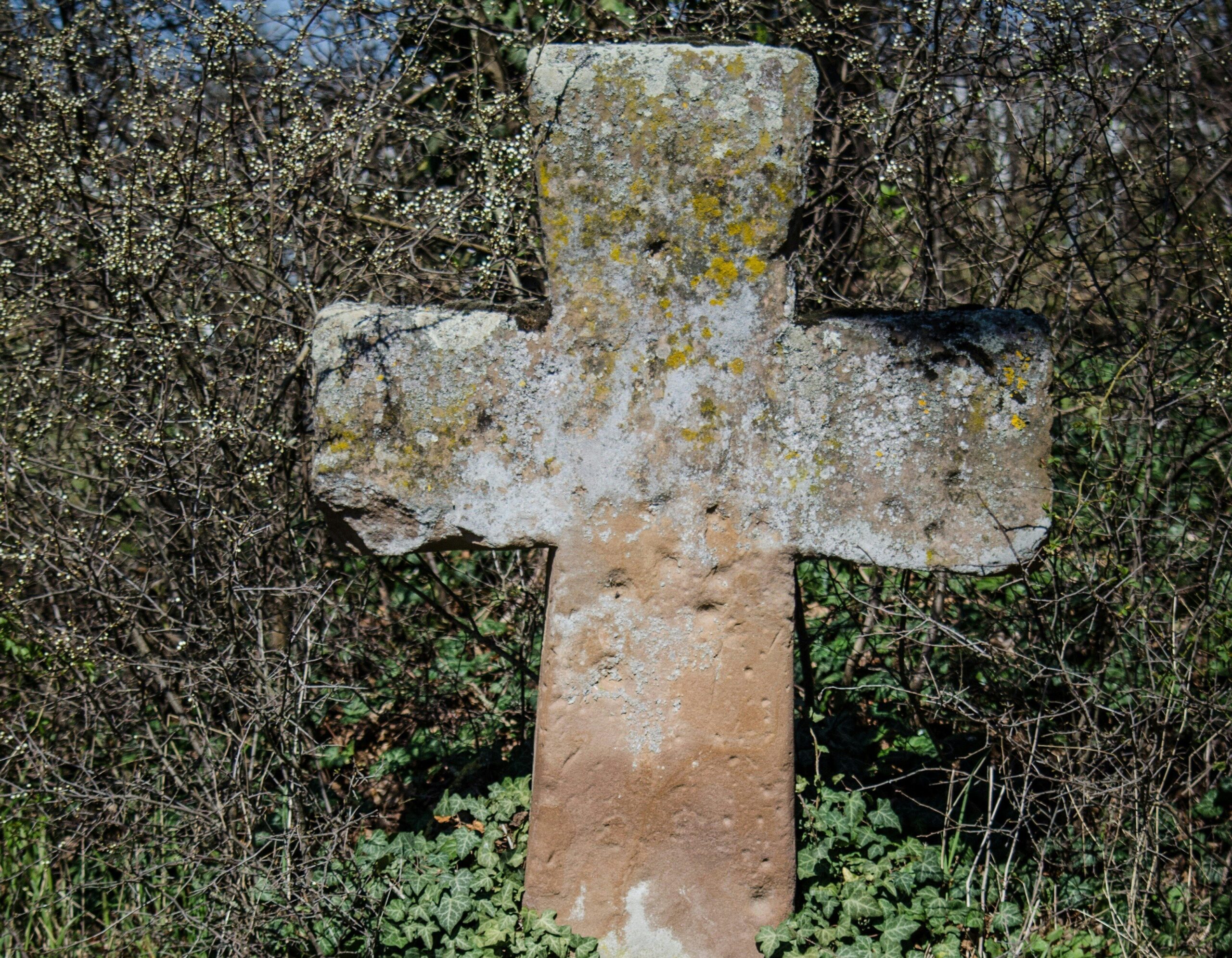
Pilgrimage reached its height of popularity in the west during the Middle Ages, when the church encouraged believers to travel in search of divine connection, forgiveness, and atonement.
Sacred ground
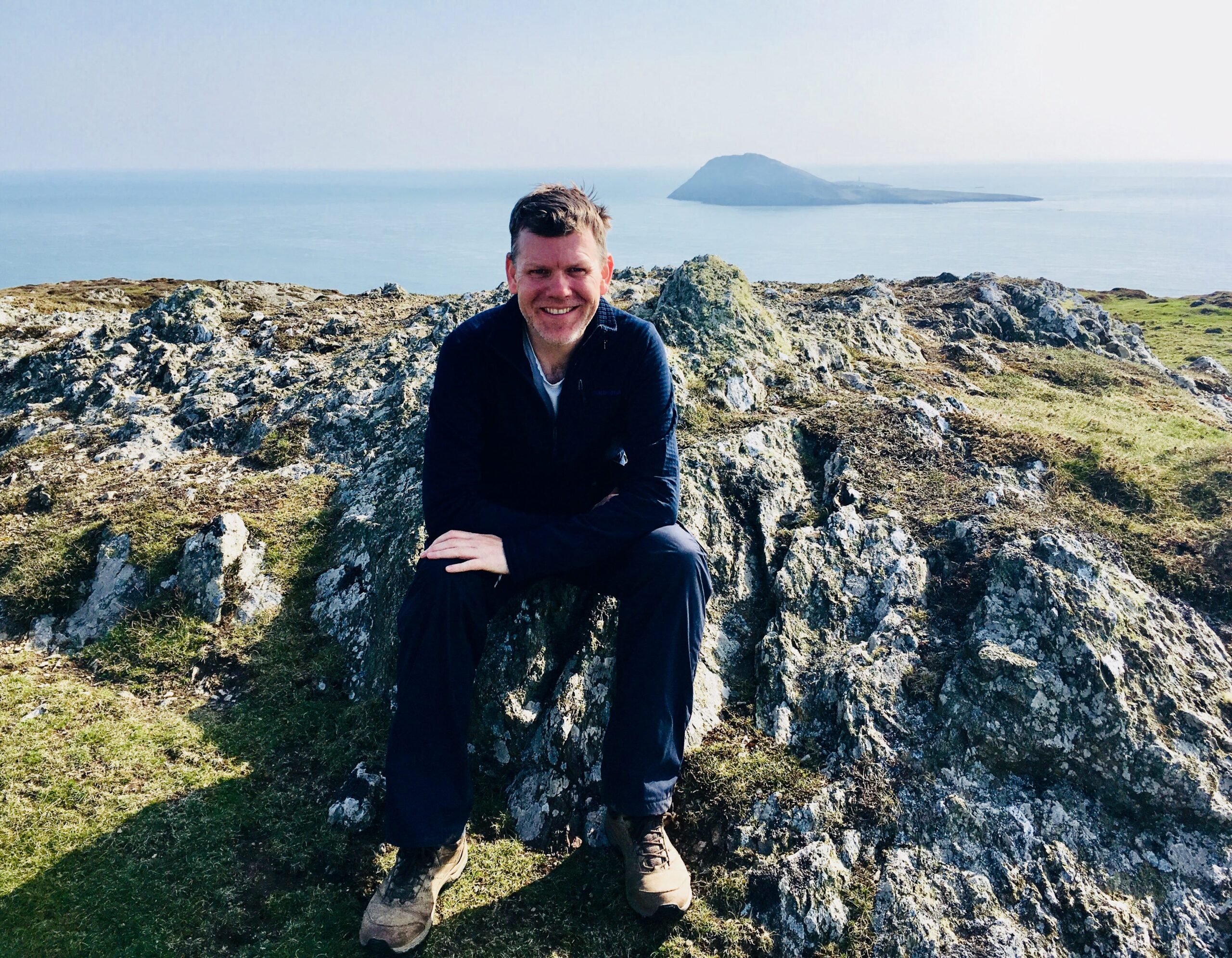
The Pilgrim’s Way in North Wales was a path I had longed to tread for many years. As a teenager I was obsessed with surfing. Growing up on the North Wales coast, my favourite surf spot was the breathtaking four-mile sandy bay called Porth Neigwl, located on the far western tip of North Wales, at the end of the Llŷn Peninsula. I would camp with a friend at the top of the cliff, waking early to clamber down to hit the huge waves that would pound the shore. The English name for the bay is Hell’s Mouth, as it appears as an ominous orifice and has been, historically, a place of great danger to sailors during storms. After an exhilarating day’s surfing, my friend and I would then drive up to the top of the not-so-imaginatively named Mynydd Mawr (Big Mountain) to watch the sun setting on the beautiful Ynys Enlli (Bardsey Island).
This isolated island became a magical and mystical place in my mind – my dad would talk about going there on pilgrimage in his youth and my ornithologist brother would encamp there to track bird migration. As I began to study history at university, I became fascinated with the island’s ancient past. Neolithic people lived in stone huts on the island over 4,000 years ago, and it almost certainly already held spiritual significance by then.
Its importance as a Christian site began when early persecuted Christians were said to have hidden there to escape pagan oppressors. By the end of the sixth century, St Cadfan had established his monastery there. In the Middle Ages, Pope Callixtus II declared the island to be one of the most holy sites in Britain. It was considered so sacred that dying on the island was believed to guarantee sainthood and immediate entrance into heaven. There were even times when coffins were carried over in relays to the island, in the hope that being buried in its soil had the same effect as dying there.
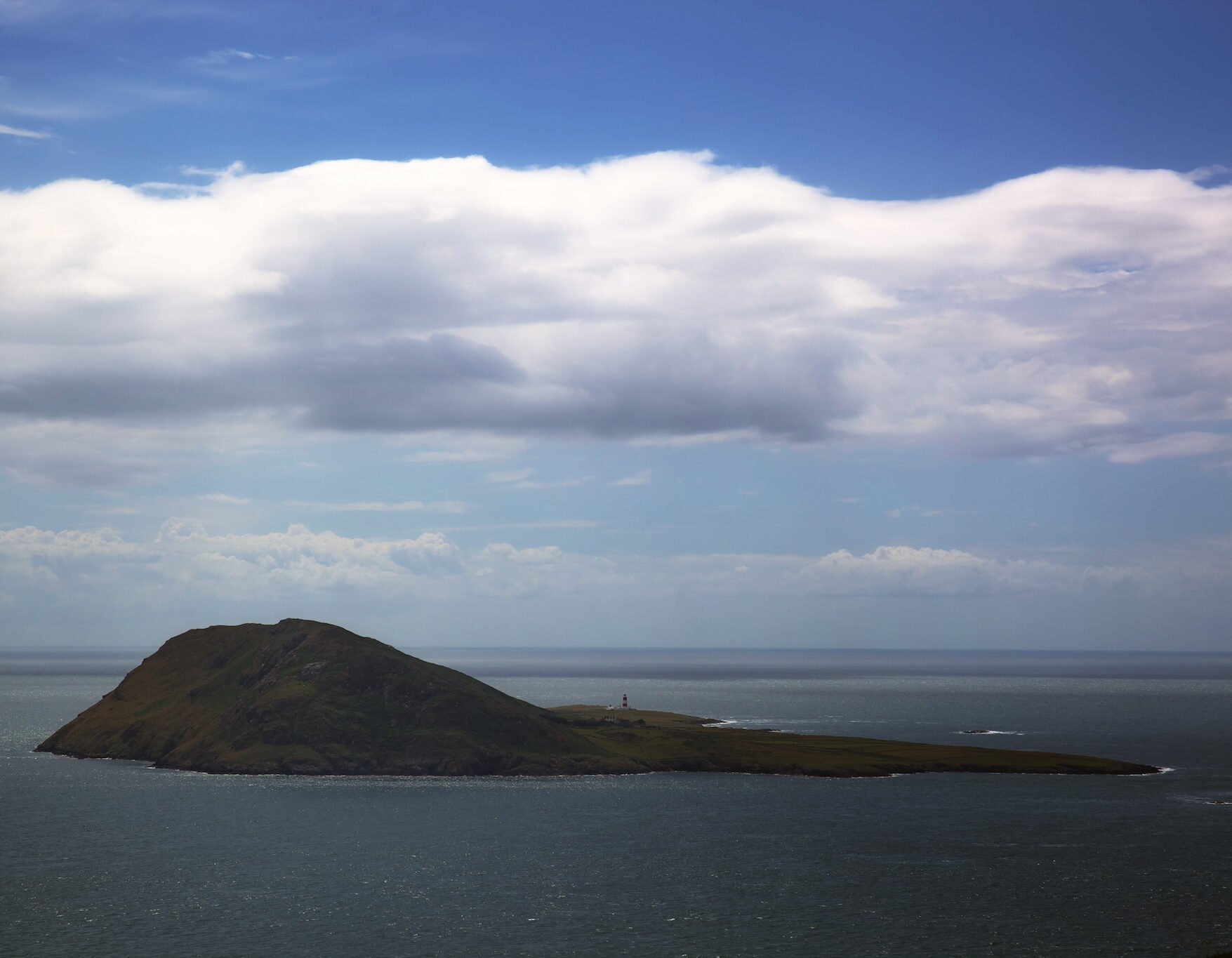
Ynys Enlli was considered so sacred that dying on the island was believed to guarantee sainthood and immediate entrance into heaven.
Photo: Ynys Enlli (Bardsey Island), by Stray Croc, CC BY-SA 2.0, via Wikimedia Commons; cropped.
The Pilgrim’s Way
It was during my surfing years when I first heard about the Pilgrim’s Way. This is a medieval pilgrimage route running along the top of North Wales, from Basingwerk Abbey, the medieval monastery near Holywell, to Ynys Enlli, off the coast of Hell’s Mouth. As a teenager, I felt certain that one day I would tread in the footsteps of those early pilgrims.
As it transpired, it was to be many years before I was able to undertake that journey. At first, work got in the way, as I was unable to secure three consecutive weeks of leave to complete the journey. Soon, though, it was neither time nor work but my injured body that prevented me from embarking on this endeavour. In my early 30s, I had suffered a serious back injury and underwent spinal surgery. A titanium bolt was inserted in the base of the spine to stabilise my back.
Two years later, the excruciating pain was continuing to impede almost every part of my life, and I was hospitalised again in the Royal National Orthopaedic Hospital in London. There I undertook a four-week course of intensive physiotherapy, pain management, and occupational therapy, which included being taught such basics as how, in light of a back disability, to clean the bathroom, vacuum the house, and wash dishes. While I was subsequently able to live a relatively normal life, my spinal trauma resulted in daily chronic pain and continuing disability, with standing still or sitting for any length of time causing considerable discomfort.
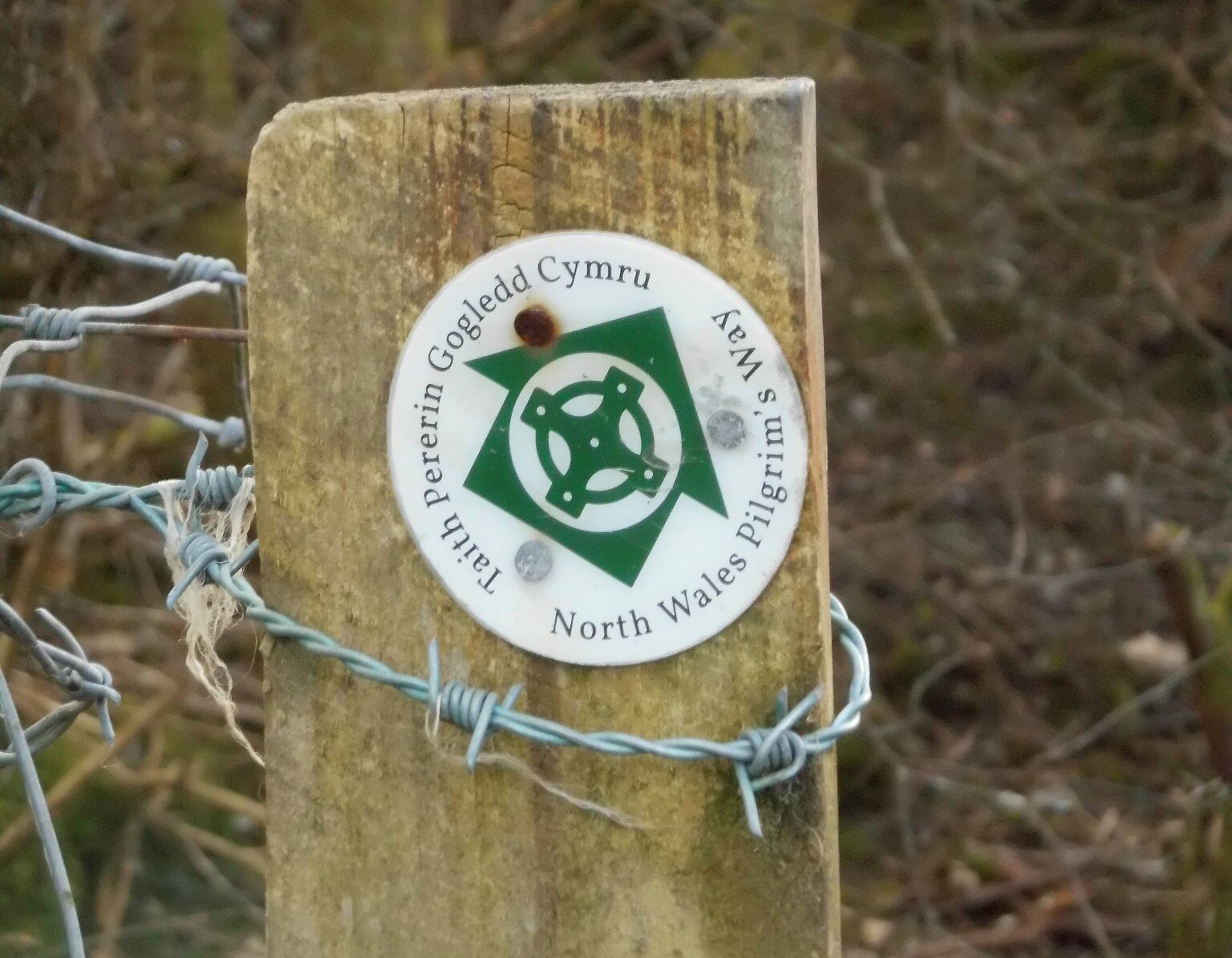
As the Pilgrim’s Way had recently been relaunched, it was an opportune time to take up its challenge.
Photo: Taith Pererin Gogledd Cymru / North Wales Pilgrim’s Way waymark disc, Llanllechid by Meirion, CC BY-SA 2.0, via Wikimedia Commons; cropped.
Pilgrimage preparation
Eventually, in building up fitness through hiking, Pilates, and physiotherapy, I arrived at a place where my back seemed sufficiently strong to embark on the journey I had longed to undertake for decades. I also had the incredible opportunity to apply for a three-month sabbatical from work, a chance I could not pass up.
As the Pilgrim’s Way had recently been relaunched, it was an opportune time to take up its challenge. White waymarker disks had been erected intermittently along the trail, making use of existing public rights of way. The path traverses the dramatic, rolling hills of the Clwydian Range, the sweeping Conwy Valley with its majestic river, the breathtaking Eryri (Snowdonia) National Park in the shadow of the highest peak in England and Wales, Yr Wyddfa (Snowdon), and the spectacular sea views of the Wales Coast Path. The trail also takes in countless ancient stone churches, dedicated to prominent Celtic saints, which provide shelter and rest along the way.
My plan was ambitious, yet I was sure it would be deeply fulfilling. I was to spend the first three weeks walking the 140-mile Pilgrim’s Way, immersing myself in its history and spiritual significance. Then, with two whole months ahead of me, I would embark on an exhilarating journey across the country, visiting ancient religious sites from Lindisfarne to the Orkneys. Having three months away from work felt like an extraordinary gift, and I could not wait for the adventure ahead. I was certain this time would be both inspiring and spiritually transformative.
And so it was that I committed myself to undertaking this arduous trek on foot. I prepared as best I could.
But we all know what happens to the best laid plans… find out what happened in To Hell’s Mouth and Back, details below.