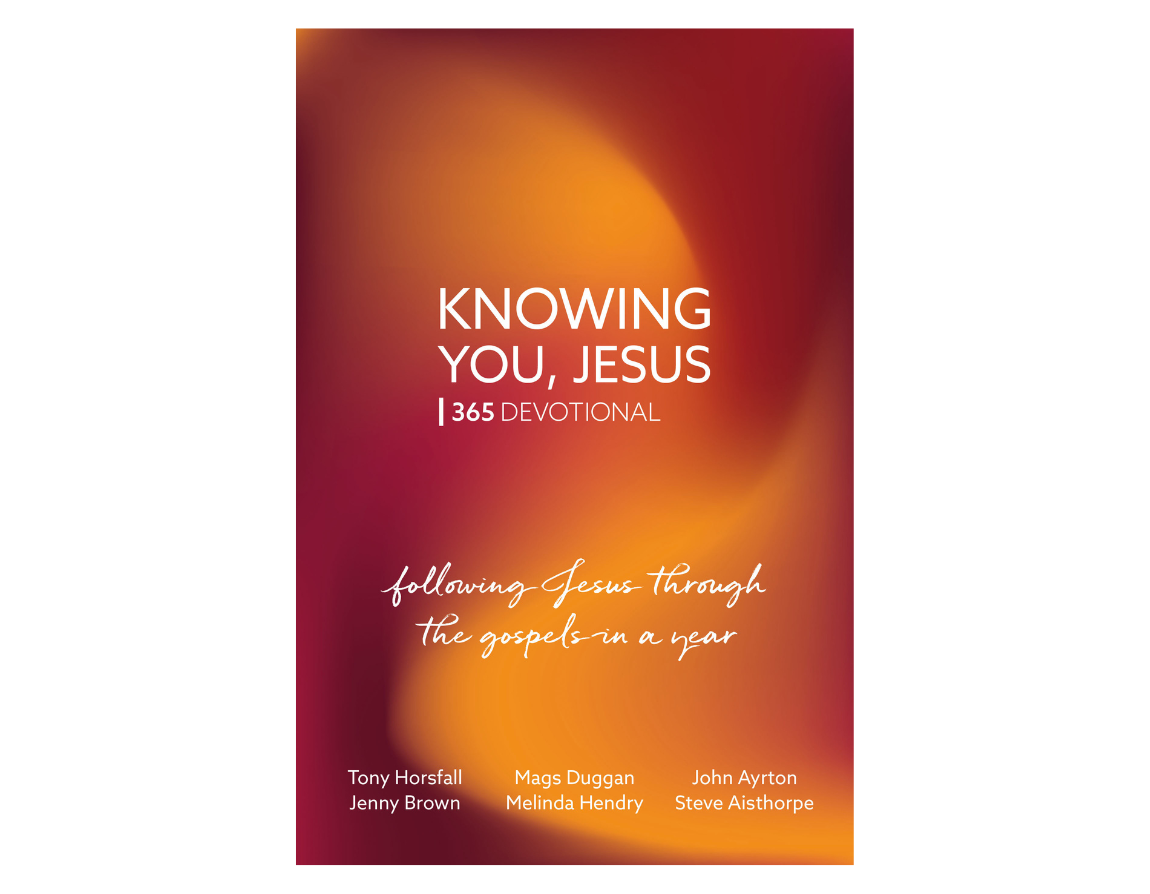

Prayer and Bible reading go hand in hand, and one way to grow in prayer is to immerse ourselves in the Bible, especially the gospels. Our 365-day devotional Knowing You, Jesus was written to help readers deepen, even transform, their faith. This week’s article is taken from the preface and introduction to this wonderful collaboration from six experienced pray-ers, deeply versed in the gospels and the life of Jesus: Tony Horsfall, Jenny Brown, Mags Duggan, Melinda Hendry, John Ayrton, and Steve Aisthorpe.
25 January 2026
To follow you more nearly
Do you long to know Jesus more deeply?
Do you want his example and teaching to shape you, to discover what being a follower of Jesus means today?
Well, here is an opportunity for you, an invitation to spend a year reading the gospels slowly and prayerfully so you can grow in your relationship with Jesus. Whether you have been a Christian for many years or are new to faith, these daily readings will inspire you as you grow in love, knowledge and understanding.
Knowing You, Jesus is not a commentary. It will not explain every question that arises in the text or comment on everything of note. Neither is it an exposition, carefully explaining every point of interest in the text. It is a devotional guide with an emphasis on spiritual formation. Its purpose is to bring you face-to-face with the life and teaching of Jesus every day for a year, and then to see what happens. If you meet him with openness and honesty, the whole process is likely to be highly transformative.
The inspiration for this approach is a 13th-century prayer from Richard of Chichester (1197–1253), a bishop well known for his godliness and care of the poor. In words that much later became popularised through the musical Godspell (could he ever have imagined that?), he expressed his own longing for spiritual growth like this:
Thanks be to you, my Lord Jesus, for all the benefits you have given me, for all the pains and insults you have borne for me. O most merciful redeemer, friend and brother, of you three things I pray: to see you more clearly, love you more dearly, follow you more nearly, day by day.
Our invitation is for you to make this prayer your own, asking God that as you read and pray you may come to understand Jesus more fully (see), be attached to him more deeply (love), and apply his teaching to your life more completely (follow).
To help you interact with the text for yourself, we have included simple guidelines on four of the main ways we may do this – Bible meditation, reading the gospels prayerfully, imaginative reading of a passage, and lectio divina.
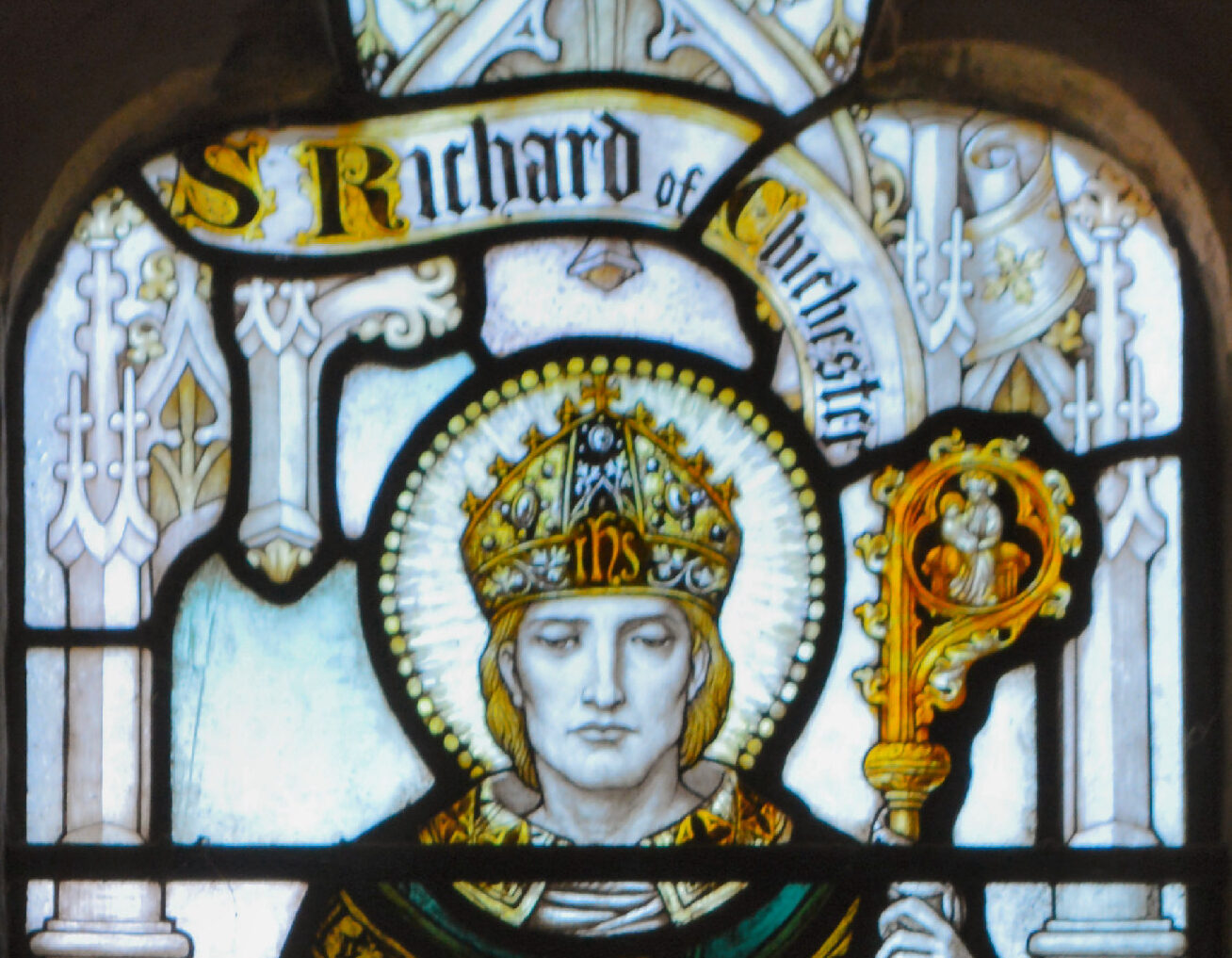
Our invitation is for you to make this prayer from Richard of Chichester your own.
Bible meditation
In Bible meditation, we take a small portion of the word of God and chew it over in our minds, seeking both to understand it and to apply it to our lives in a very personal way. It is a process by which the truth sinks down from our heads into our hearts, and information becomes transformation.
- It is helpful to begin by memorising a chosen verse. Repeat the words over and over again to yourself until they are fixed in your mind.
- Next, begin to think about the individual words. Savour each one, asking God to reveal to you their meaning and significance.
- Consider then how these words touch your life. How should you respond to them? Do they challenge you to change in some way? Do they contain a promise that you can take hold of? Is there an encouragement for you, or a warning? Seek to apply them to your life. Personalise the verse, especially the pronouns.
- Turn your thoughts into prayer and worship. Ask God to make this scripture a reality in your life. Thank him for the truth it contains.
- Live in the light of your meditation. Act in line with the truth you have discovered. Speak in a way that is consistent with what you have learned. Do whatever is necessary to apply the word personally.
- It may be helpful to continue meditating on the same scripture for several days, asking the Holy Spirit to reveal its significance and application to you.

In Bible meditation, the truth sinks down from our heads into our hearts, and information becomes transformation.
Praying the gospels
A helpful way to interact with scripture is to turn the words we are reading into prayer, both for ourselves and others. The gospels are steeped in both prayer and teaching about prayer, and the example of Jesus, who continually withdrew in order to pray, is especially motivating.
- Read scripture as a dialogue between yourself and God. Turn your thoughts into prayer. Have a conversation with God as you read. Allow your prayers to be formed and shaped by what you are reading.
- Pray the Lord’s Prayer, the basic pattern for prayer as taught by Jesus. (See Matthew 6:9–13; Luke 11:1–4.)
- Pray the promises. Notice when Jesus makes a promise and make it your own. Personalise it, put your name there and remind him in prayer of what he has said.
- Pray the stories. Look for examples to follow or avoid. Let them inspire you to ask for greater faith, to avoid certain temptations, to stand fast during trials or persevere under persecution, and so on.
- Pray the prayers of Jesus, making them your own. See, for example, Matthew 26:39–42; Luke 22:31–32; John 11:41–42; 17:1–26.
- Listen and respond to any commands to pray, or instructions about prayer, and put them into practice – for example, Matthew 5:44; 6:6; 9:38.
- Use any prompts to prayer that are given to you in the daily notes.
The gospels are steeped in both prayer and teaching about prayer.
Using our imagination in prayer
Jesus constantly painted pictures with words. He drew his audience into his stories with vivid descriptions of mountains moving into the sea, of thorn bushes bearing figs and briers bearing grapes, of sons covered in pig muck and fathers who picked up their skirts and ran down the road, flinging their arms around their smelly son! Jesus graphically described people and places to fire the imagination of his hearers, inviting them to enter into the scene he was describing.
The parables of Jesus brilliantly lend themselves to this kind of reading – but so do other events in the gospels. When we engage with a Bible passage by building up a picture in our minds, we have the opportunity to enter into the events of the gospels, which are as relevant and life-changing today as they were 2,000 years ago. Our aim is to become as present as possible to what is happening in the passage we are reading, allowing ourselves to enter the scene and letting God speak through what we find, trusting his Spirit to lead us into all truth (John 14:17; 16:13).
Steps into reading and prayer:
- Begin by asking the Holy Spirit to guide your thoughts, imagination and prayer.
- Read the Bible passage through several times until it becomes familiar.
- Then, explore the scene in your mind. You may find the following approaches helpful:
What can you see/hear/taste/smell?
Next, imagine yourself as one of the participants in the scene. Who are you, where are you? Where is Jesus? What is he doing? Do you have any interaction with him – or are you a bystander?
Gently sit with the passage and simply allow it to unfold in your mind.
Take time to respond to the Lord in prayer over what you have seen/heard/felt. What do you sense Jesus is inviting you to be, or to do? Simply to sit in silent wonder is a response!
Note down anything particular that struck you or seemed important. You may wish to come back to this in a subsequent prayer time.
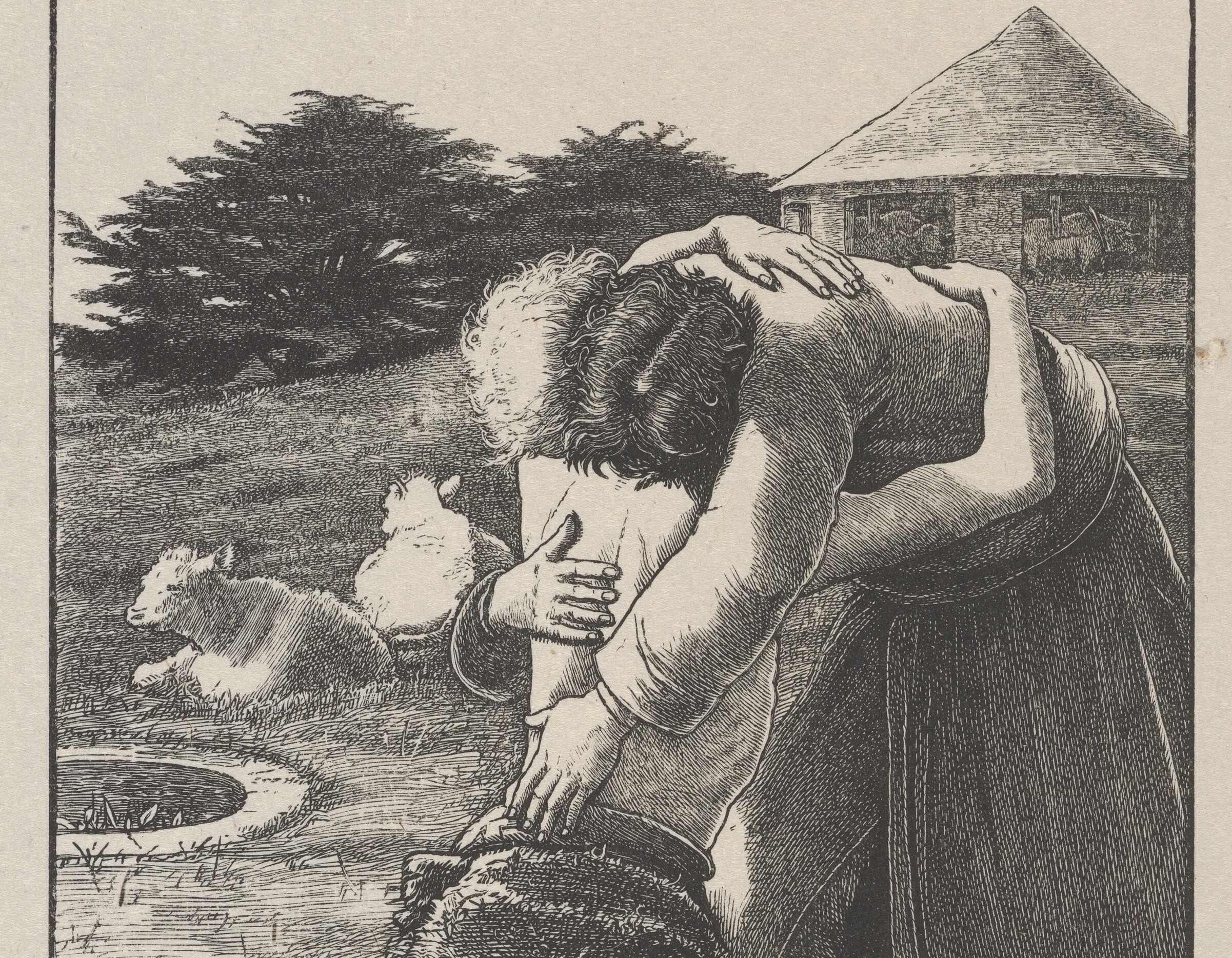
Imagine yourself as one of the participants in the scene. Who are you, where are you? Where is Jesus? What is he doing?
Ways to engage with the Bible: lectio divina
In reading the scriptures, how we read is as important as what we read. One ancient prayer practice helps us move from an analytical, informational approach to a more formational and relational one and is called lectio divina or spiritual reading. Rather than reading the Bible, we allow the Bible to read us and address us by name.
There are four basic moves to this practice: read; reflect; respond; rest.
We prepare by quietening ourselves, acknowledging God’s presence with us and surrendering our hearts to God so that we can listen expectantly to what he wants to say to us from his word.
Read. First, we read a short passage of scripture – just a few verses are enough. It helps to read aloud and slowly, so that we are not just glancing at the words with our eyes, but really hearing and noticing them, tasting and savouring them. As we read, we are listening, watching for whatever individual word or phrase seems to stand out and grab our attention, or in some way to be given to us. We ask, ‘What do you want to say to me today, Lord?’
Reflect. Next, staying with the word or phrase that we sense God has given to us as we have read, we reflect on it, perhaps asking, ‘Why this word? What was it about this word that touched my heart? How does it speak to my life right now?’ Take your time here, there is no rush to accomplish anything; simply reflect.
Respond. We have listened and reflected, now is the time to respond in prayer and by action. What seems appropriate – praise and thanksgiving? Confession or an expression of sorrow or lament? A moment of surrender, giving yourself to God again in trust and faith? Taking the first step in obedience? Whatever has been stirred up in us by our reading, we bring to God, honestly and openly, in prayer.
Rest. Finally, after we have said all we want or need to say, we rest in God’s loving presence. So often after our Bible reading, we rush into our days, but the practice of lectio divina invites us to pause and to rest awhile in God’s presence before moving off.