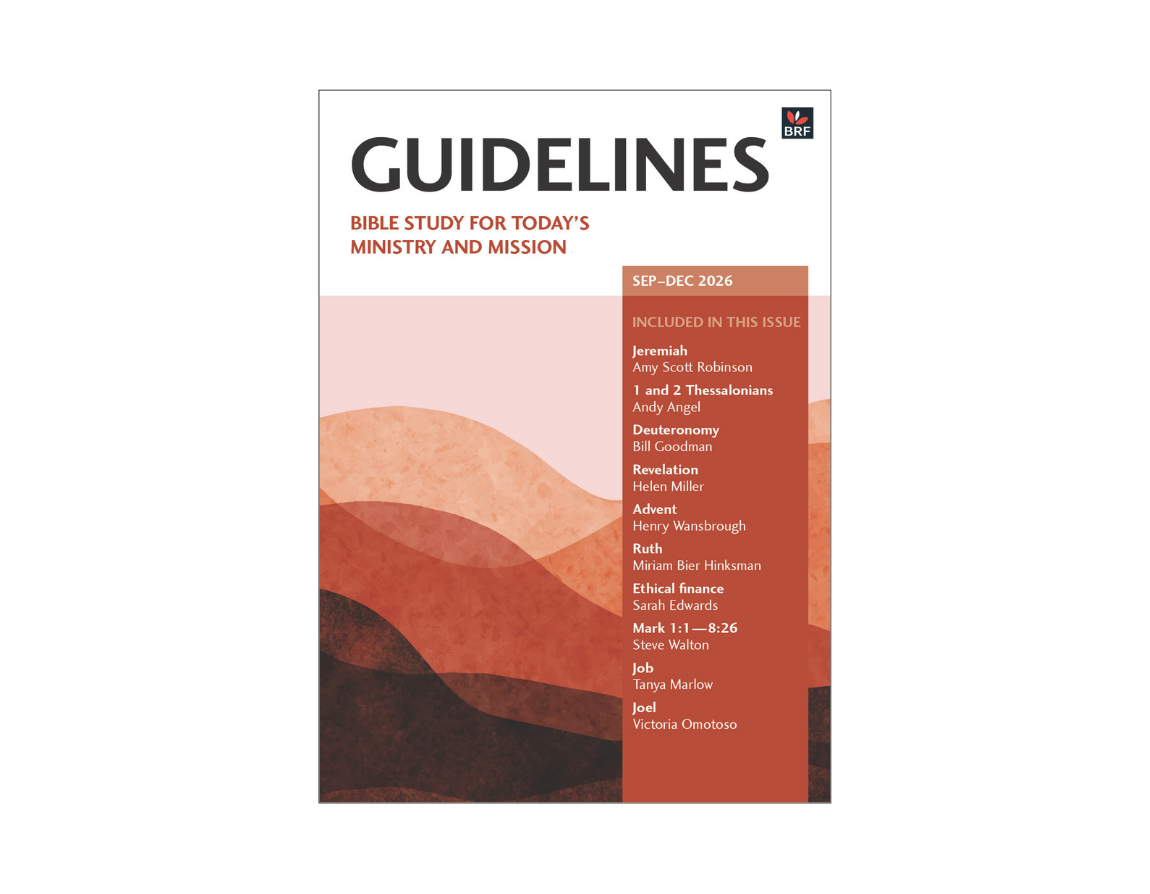
Global Bible Month is a worldwide movement that invites people everywhere to spend 30 consecutive days, 1–30 November, in God’s word. People, ministries, organisations, and global brands are coming together to amplify the transformative impact of God’s word in this worldwide initiative led by YouVersion. BRF Ministries is beginning to build its presence on YouVersion with extracts from our extensive Bible reading resources and new writing from some of our most popular authors. Among the resources we’ll be highlighting is Guidelines, our Bible reading notes series for those who want to study deeply, and enjoy some of the latest biblical scholarship. The following is taken from Miriam Bier Hinksman’s current series of studies on the book of Ruth.
22 November 2026
A time of challenge and change
The book of Ruth is set in a time of immense challenge and change. There was a famine in the land, and internal and external conflicts threatened the survival of the people of God. Ruth herself was not, initially, numbered among God’s people. She was a foreign woman from Moab. How does she end up in this story, with a book of the Bible named after her? How is it that Ruth embodies the loving kindness of God when God’s own people seem pathologically unable to do so? And how might Ruth’s story connect with our own stories, when we find ourselves in contexts of challenge and change, facing internal and external conflicts in church and society?
This week we follow one family’s search for stability and security in a hostile world. Human initiative and divine providence work together so that Ruth and her mother-in-law Naomi find new life, even after displacement, grief, and loss. Ruth, as a widowed foreign woman, has very little agency, but she uses the agency she does have to provide for Naomi. Throughout, Ruth’s kindness and faithfulness mirror the kindness and faithfulness of God.
The book of Ruth is set in the days of the judges but has much to say to any society struggling with questions of ethnic identity and belonging. It may have been written to address such questions in the early post-exilic community, when Ezra’s reforms were drawing a hard line between those who were ‘in’ and those who were ‘out’. Ruth disrupts this kind of thinking when the ‘outsider’ Ruth – the foreign widow – is counted as a ‘worthy’ woman, who takes her place in the story of God.
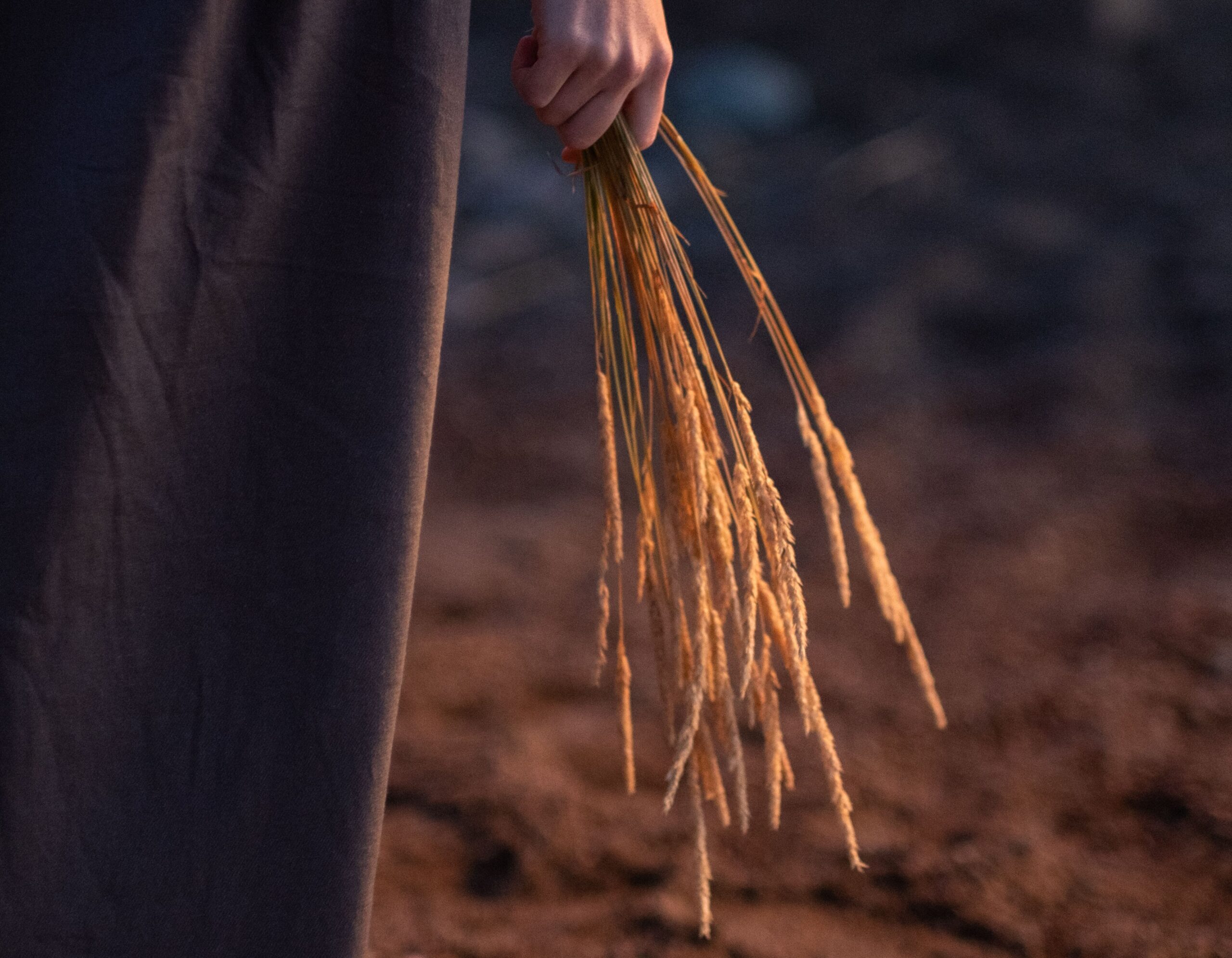
Ruth’s faithfulness to her mother-in-law Naomi shows how God’s love, loyalty, and faithfulness can be lived out by individuals.
Context is everything
In the days when the judges ruled, there was a famine in the land, and a certain man of Bethlehem in Judah went to live in the country of Moab, he and his wife and two sons. The name of the man was Elimelech and the name of his wife Naomi, and the names of his two sons were Mahlon and Chilion; they were Ephrathites from Bethlehem in Judah. They went into the country of Moab and remained there. But Elimelech, the husband of Naomi, died, and she was left with her two sons. These took Moabite wives; the name of the one was Orpah and the name of the other Ruth. When they had lived there about ten years, both Mahlon and Chilion also died, so that the woman was left without her two sons and her husband.
Ruth 1:1–5 (NRSV)
The story of Ruth takes place ‘in the days when the judges ruled’ (v. 1). These were days of tribal warfare and violence, when God’s people repeatedly failed to live according to the love, loyalty, and covenant faithfulness that characterised their God.
The book of Judges, directly before Ruth, tells story after story of the judges God raised up in times of crisis to save the warring tribes of ancient Israel from themselves and from their enemies. The crisis would be resolved, and there would be a time of relative peace and stability in the land – until next time.
As the book of Judges progresses, the situation deteriorates so badly that the tribe of Benjamin is almost destroyed. The remaining Benjaminite men are then permitted to take wives by force to continue the family line. Judges ends with the damning words, ‘in those days, there was no king in [ancient] Israel; all the people did what was right in their own eyes’ (Judges 21:25, my italics).
Into this context of escalating violence, and especially violence against women, comes the story of Ruth, whose faithfulness to her mother-in-law Naomi will show how God’s love, loyalty, and faithfulness can be lived out by individuals, in families and local communities, even within a wider societal context of violence, challenge, and change.
Verse 1 also tells us that ‘there was a famine in the land’. This explains how a family from Bethlehem came to be living in Moab. Then, as now, famine drives migration, and people are displaced from their homes as they seek economic security. The story thus begins with Elimelech, his wife Naomi, and their two sons, Mahlon and Chilion, living in the land of Moab.
In just three verses, however, everything changes (vv. 3–5). First, Elimelech dies. Time passes, Mahlon and Chilion marry local Moabite women, but then they also die. By the end of verse 5, Naomi is left without husband and sons, and therefore without economic security and protection. Her daughters-in-law, Ruth and Orpah, are also vulnerable widows without the protection and provision of their husbands. The three widows are left to the mercy of God.

Ruth’s clinging to Naomi is not just for survival’s sake, but rather shows her godly character.
Ruth’s kindness and Naomi’s bitterness
Read Ruth 1:6–22.
Naomi hears that God has provided food in Judah and so sets out for home (v. 6). Initially, Ruth and Orpah go with her, but Naomi urges them to return to Moab, arguing that she has nothing more to offer them. Orpah is persuaded, but Ruth insists to Naomi that ‘your people shall be my people and your God my God’ (v. 16). Granted, Ruth may not have many options at this point, but there are hints in the text that her clinging to Naomi is not just for survival’s sake, but rather shows her godly character.
Naomi expresses a desire for God to ‘deal kindly’ with Ruth and Orpah, as they had ‘dealt kindly’ with her and her family (v. 8). The Hebrew word for kindness here is ḥesed, which can be used to characterise relationships between people, but is more commonly used of God’s kindness. Sometimes translated ‘steadfast love’ or ‘loving kindness’, it is hard to capture its full import. This is not random kindness, but rather kindness shown within the context of deep, faithful commitment: ḥesed is an inherently relational term.
Naomi wishes her daughters-in-law to experience God’s ḥesed (v. 8), just as they have shown ḥesed towards Naomi and her sons. Their kindness is of the same nature as God’s. This faithful, loving commitment to Naomi is expressed in Ruth’s words.
When Naomi and Ruth arrive in Bethlehem, Naomi is barely recognisable as the woman who left years before. She tells the townswomen not to call her Naomi (‘pleasant’) anymore, renaming herself Mara (‘bitter’) because, she says, God has dealt bitterly with her (v. 20). Naomi attributes the loss of her husband and sons to the hand of God, which she feels has turned against her (v.13).
It is important to note that Naomi’s words attributing her ill fortune to God are her own words, expressing how she feels. They are not God’s words of ill intent toward Naomi, nor are they the storyteller’s words, as though this were objectively the case. They are Naomi’s words, as she expresses her grief, loss, and displacement and feels that God must be to blame. At this stage in the story, Naomi’s bitterness shapes her whole identity, even to the point of changing her name.
But God is at work, not against Naomi, but for her, as we shall see as the story goes on.