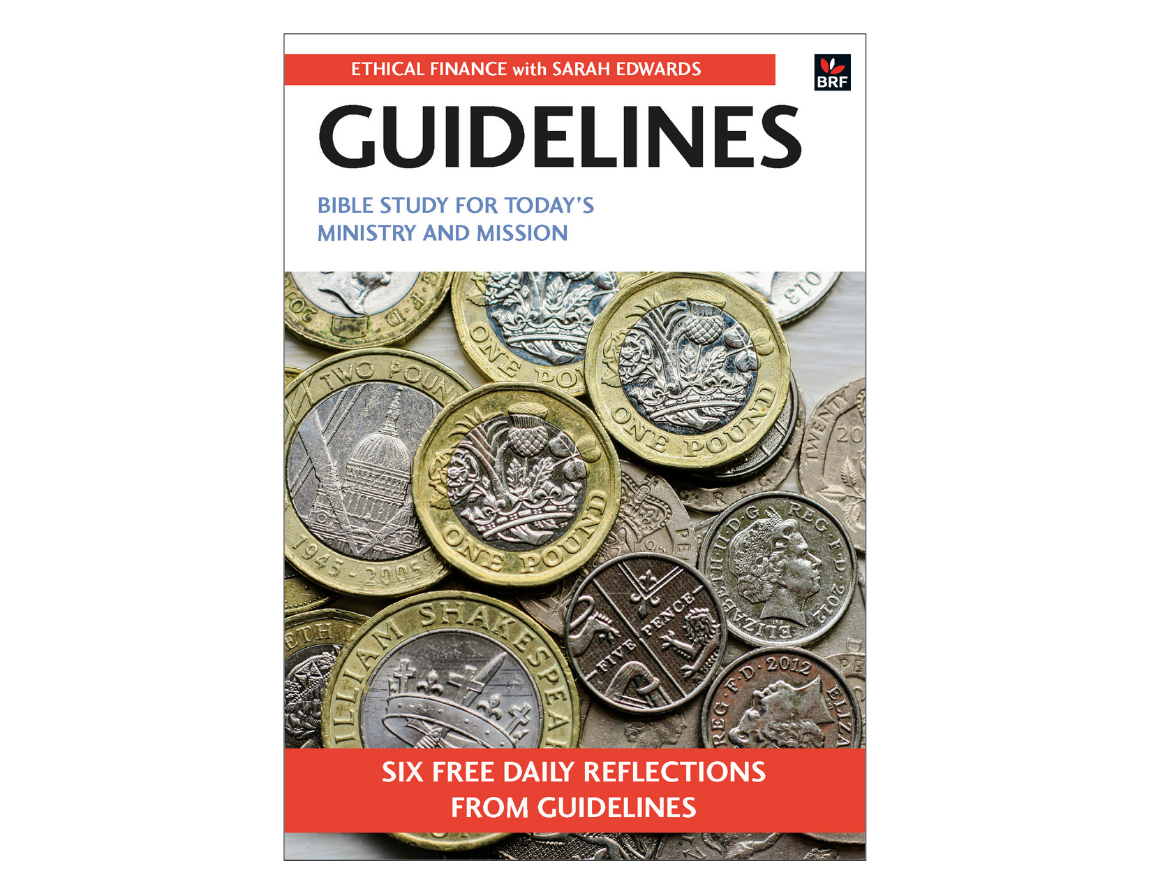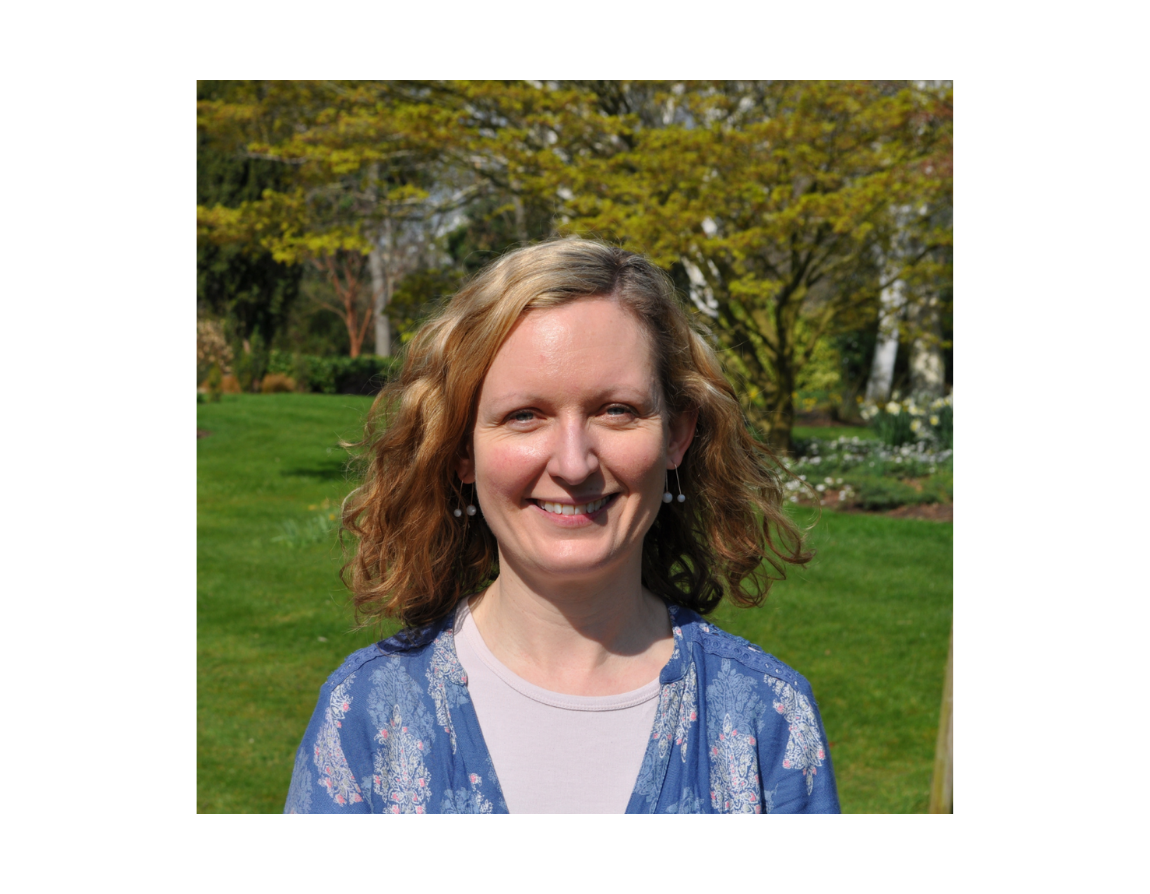

In a special collaboration between BRF Ministries and the JustMoney Movement, Sarah Edwards highlights some key ethical questions in her upcoming reflections for Guidelines.
20 September 2026
Introduction
As a society and as Christians, we tend to avoid talking about money with our friends or colleagues, and we generally don’t often hear it preached from the pulpit. But if we look at scripture – whether in the law, the prophets, or the life and words of Jesus – money is talked about a huge amount. How we see money and how we use it is part of our expression of faith, a whole-life way of living and bearing witness to the God of love in the world. Our first aim, then, is to start the conversation and see where it leads us.
Jesus begins his ministry declaring that he has come to bring ‘good news to the poor’ (Luke 4:18). He tells a rich man to sell his property and give to the poor (Matthew 19:16–22) and overturns the tables of the money changers in the temple (Matthew 21:12–13). On becoming one of his followers, Zacchaeus the tax collector gives away half of his wealth (Luke 19:1–10).
Jesus’ teaching built on the Jewish laws around generosity and giving to the poor (e.g. Deuteronomy 15:10–11) and of tackling inequality through Jubilee (Leviticus 25:8–55). He also stands in the tradition of prophetic critique of economic exploitation, such as Amos’ condemnation of those who ‘sell the innocent for silver, and the needy for a pair of sandals’ (Amos 2:6–7) and Isaiah speaking against empty sacrifices and for doing justice instead (Isaiah 1:11–17).
Often Christians have been taught a ‘spiritualised’ version of these teachings, or that they aren’t really as radical as they sound. Yet, however we interpret these passages, it’s clear that our Christian tradition has a lot to say about money.
As we encourage more reflection and conversation about ethical finance in our churches, we hope to help make connections between money and our faith, understanding what this means for how we live individually and corporately, and how we speak out prophetically to the world around us.

We are directly connected to the wider financial system and its harms in many ways.
Finance in a fallen world
‘No one can serve two masters. Either you will hate the one and love the other, or you will be devoted to the one and despise the other. You cannot serve both God and money.’
Matthew 6:24 (NIV)
Money can be viewed as a gift from God, but our financial systems and attitudes towards money are part of a world that is in rebellion against God. Our faith challenges us to reflect with unease on a world where extreme poverty is on the rise for the first time in decades, while extreme wealth has risen dramatically since the Covid-19 pandemic. Our natural world also bears the scars of our economic model of taking more and more: nature depletion, deforestation, and climate crisis.
We are directly connected to the wider financial system and its harms in many ways. Many of our high street banks lend to and invest in companies involved in nuclear weapons, fossil fuels, gambling, and tax avoidance.
Trillions of pounds are invested through our pension funds in fossil fuel expansion, deforestation, and other harmful activities, shaping a future we might not want to retire into.
What might God be saying to you about your attitude towards money and how it shapes your relationship with others and the world God has made?

Trillions of pounds are invested through our pension funds in fossil fuel expansion and deforestation, shaping a future we might not want to retire into.
Redeeming money
‘Follow my decrees and be careful to obey my laws, and you will live safely in the land. Then the land will yield its fruit, and you will eat your fill and live there in safety.’
Leviticus 25:18 (NIV)
God is redeeming the world, and as we join in with this redemptive work, God has provided patterns for us to follow that can shape how we think about money today.
In Leviticus, the provision of the sabbath is set out for people, animals, and the land. One day a week, one year every seven. This created a rhythm of rest and restoration, reflecting our human dignity and purpose as children of God, and resisting the idea of people as simply economic units exploited for wealth.
Then every 50th year, the year of Jubilee extended the sabbath principle further: a fuller reset of social, economic, and environmental inequities and injustices, including debt cancellation and restoration of the land. Whether or not this was ever fully practised, scripture sets out a truly radical vision for living well together, dealing with the inequities that had built up during the previous 50 years.
Concepts of sabbath and Jubilee can help us formulate society-wide instructions for dealing with money, possessions, and their unequal distribution.
A kingdom approach to money builds very directly on these Old Testament roots. Jesus starts his ministry in the synagogue in Nazareth with those renowned words, ‘The Spirit of the Lord is on me, because he has anointed me to proclaim good news to the poor. He has sent me to… proclaim the year of the Lord’s favour’ (Luke 4:18–19). His Jewish listeners would have understood that the year of the Lord’s favour referred to the Jubilee.
Jesus’ kingdom was and is absolutely concerned with restoration of injustices and inequities in the material realm as well as in the spiritual. The early church embodied this through radical generosity and shared resources. How could sabbath, Jubilee, and the practice of the early church shape our financial ethics as churches today?
We might not consider ourselves wealthy or exploitative, but if we have food on the table, shelter, and warmth, we are richer than many in our world. Let us consider who may be being harmed by our financial decisions. When we buy from or invest in companies that are polluting the atmosphere or exploiting workers, we contribute to this harm. How could we act differently with our finances to do good rather than harm, to care for our neighbours, and to help God’s creation flourish?

Our natural world also bears the scars of our economic model of taking more and more
Speaking up for a just use of money
Speak up for those who cannot speak for themselves,
for the rights of all who are destitute.
Speak up and judge fairly;
defend the rights of the poor and needy.
Proverbs 31:8–9 (NIV)
As we learn about our own banking, pensions, saving, and spending choices, we discover that we are connected to a financial system that shapes the world around us in all sorts of ways. Huge shifts are required for this financial system to become more just. At the moment too many people and places are being harmed by the way our economy works, rather than being served by it.
Whether we are talking about the financing of fossil fuel expansion that is expediting the climate crisis, the exploitation of workers denied fair pay and rights, or the growing inequalities between people so that extremes of poverty and wealth are allowed to co-exist, real, lasting change requires us to remember our prophetic calling to speak up about injustice.
The blessing of living in a democracy is that we can freely use our voices and call upon decision makers, whether our Members of Parliament, our government, or leaders of banks and businesses, to make a change. These sorts of issues can feel remote and even overwhelming. But we know we serve a God who calls us to play our part, and the more we do this together, the more impact we can have.
As Christians, we are part of the global church, which means we can stand in solidarity with our brothers and sisters around the world, and we can find companions for the kingdom work of seeking a more just use of money.