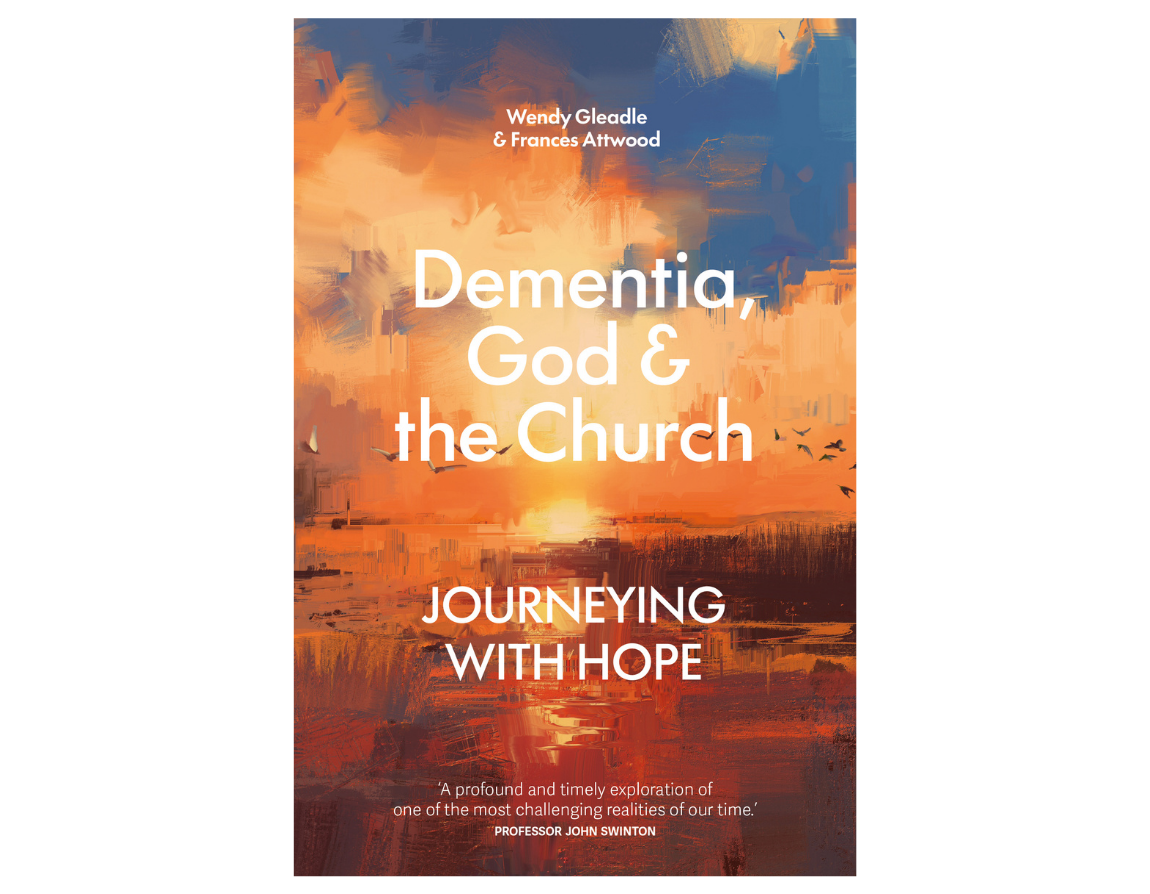

In the first of two extracts from Dementia, God, and the Church: Journeying with hope, Wendy Gleadle draws on the self-described experience of a Christian writer who is living with dementia and who says, ‘I would be humbled to be remembered for changing the way people with dementia are respected, included, supported, encouraged, and enabled. I have an eternal life with Christ, so my future is infinite.’
24 July 2026
Living with dementia: the journey begins
We are hard pressed on every side, but not crushed; perplexed, but not in despair.
2 Corinthians 4:8
It is all too easy to imagine the heartache and dread that a diagnosis of any dementia must bring. But of course, only those actually living with dementia can really know how it feels. Missed hospital appointments and keys left in strange places give way to more crippling incapacities. Ordinary tasks, like going to the shops for a pint of milk, can become insuperable obstacles to getting through the day.
Yet just as the fear of what lies ahead is taking hold, friends may drift away, either scared or repelled by the condition. Dementia is accompanied by stigma, and often people become awkward around those with the condition because they fear that person might start to show embarrassing behaviours. Society values competence, intelligence, and independence and devalues those who might be unable to demonstrate these attributes. Consequently, the belief that those living with dementia are losing these abilities can result in their loneliness and isolation.
This chapter explores the experiences of some Christian writers living with the condition themselves. They describe their early reactions to their diagnosis and how they started to adapt to their new way of life. Despite their fluctuating feelings of fear and despair, they also discovered there was still meaning and hope in their relationship with God. The first account is from Christine Bryden.
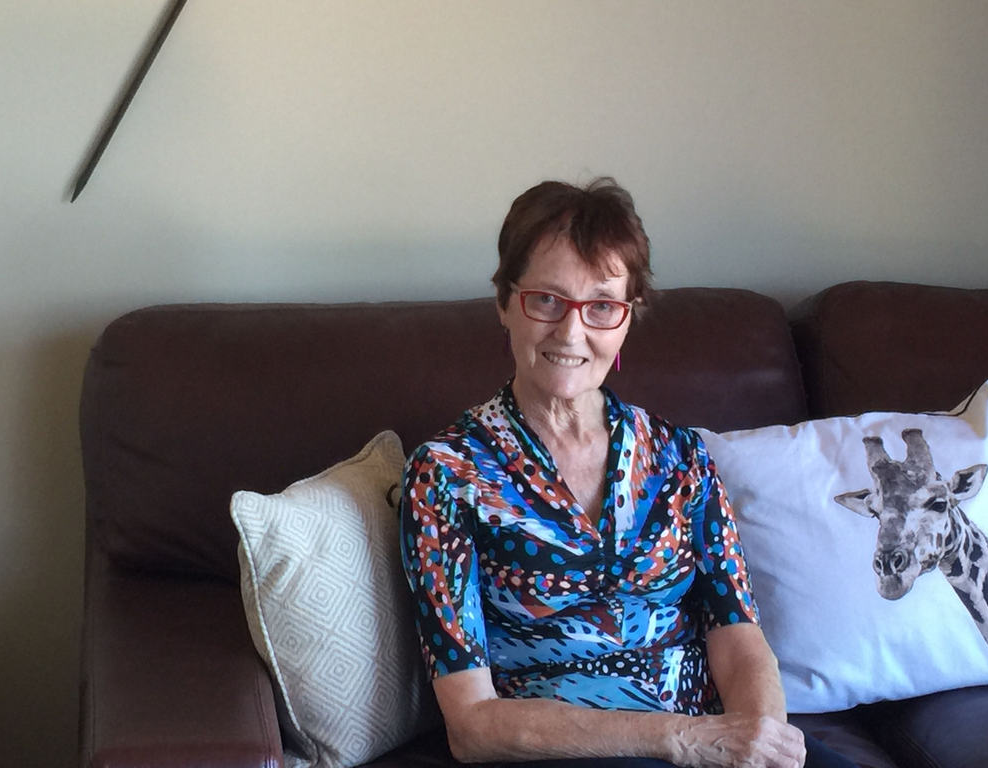
It has been over 25 years since Christine’s distressing diagnosis, and she has written several books, countless articles, and has been a worldwide speaker on the subject of dementia.
Christine Bryden
Christine originally worked in the pharmaceutical industry, then in publishing in the UK, Holland, and Australia, and finally as a senior executive in the Australian Prime Minister’s department, advising the prime minister on science and technology. After some months of headaches, confusion, and difficulties finding her way around, she went to see the doctor. She was subjected to many tests before he bluntly told her that she had dementia, should retire from work immediately, and should not be in any position of authority. She was just 46 years old.
This was a devastating diagnosis at this age – surely dementia only happened to much older people? The specialist said in a few years she would need full-time care, and then it would only be a few years until she died. But it has been over 25 years since that awful time, and since that distressing diagnosis she has written several books, countless articles, and has been a worldwide and sought-after speaker on the subject of dementia. Christine is particularly adept at describing the many ways her life was changing in the early stages of her dementia.
The complexity of so many things is a source of anguish. Just getting up, how to make a cup of tea, how to go and have a shower, where are my clothes and what shall I wear. I suppose the anguish is because no one seems to realise how difficult everything is. We can be tempted to maintain a cheerful façade, and deny anything is wrong. You may either go along with this and deny dementia, or assume we lack insight and take over our lives. We cannot win.
My memory comes and goes, with glimpses of past events or future tasks I wish to do. But I can’t find the memories when I want to, and I rush to note them down. It feels as if I will forget everything that is not written down.
I realise I now ask the same question again without any awareness of having asked it before. I know it drives others crazy to hear the same thing over and over, but how much worse is it for the person with dementia who knows they have asked you a question, but can’t remember the answer? I often ask a question and realise by the expression on the person’s face that I have asked this before, probably just a short while ago.
Questions like, ‘Do you remember?’ fill me with panic. Descriptions of your own recollections are much more helpful, as these give me time to think and may also sometimes trigger my own memory so I can share my feelings with you. Before diagnosis, ‘What do you do?’ was easy to answer. But now I can’t answer that question.
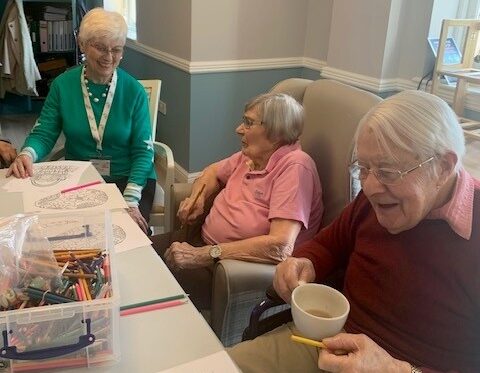
Cognitive ability perhaps became less important than an ability to relate to others.
The struggle to feel ‘normal’
Far more important to Christine is who she is and to know the relationships around her that give her comfort and a sense of support and encouragement. There is such a terrible stigma attached to this condition that no one wants to talk about it.
She explains poignantly that people living with dementia struggle to remain ‘normal’ and pretend they are feeling fine. But actually, they are not. They know what it feels like to be normal, and this is not what it feels like now. She says:
It becomes more difficult to describe how we feel, to get our thoughts in order and actually get the words out so you can understand us.
In those early days Christine describes how thankful she was to have discovered a new sense of an emotional and spiritual self within her church community. She began to regard cognitive ability as perhaps being less important than an ability to relate to others and to what was giving her a new sense of meaning. However, she was still sometimes overwhelmed by fear as the story of loss of self always seemed to permeate any discussion of dementia.
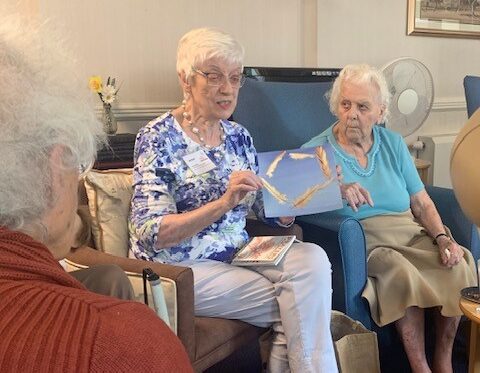
It is easy for people to believe the stereotype of dementia – being unable to speak or recognise anyone.
Overcoming stereotypes
In all her writing, Christine emphasises that she is an individual, who happens to have a condition of her brain. She found it hard to deal with all the neurologist’s medical charts and graphs which she felt denied her of her individuality, and in particular of any credibility as she was still able to write and speak after many years of living with the condition.
She explains how easy it is for people to believe the stereotype of dementia – being unable to speak or recognise anyone, and what a constant battle everyone has to overcome the fear of these later stages that are so prominently the picture everyone has of dementia. She so wanted to stress that there is a long journey beforehand, between diagnosis and the end stage, the journey of learning to live with dementia each day.
She describes this as travelling a journey deep into the core of their spirit, into the centre of their being, into what truly gives them meaning in life. Her personal reflections show how isolating the diagnosis can be:
I lost my circle of friends and colleagues; I felt I had been cast out into the wilderness, abandoned and alone. I became isolated from the world, feeling distant from God. I was in the valley of the shadow of death, and yet I came to realise that God was with me. Despite all that was happening within me, the voice of the psalmist remained true: ‘Yet shall I dwell in the house of the Lord my whole life long’ (Psalm 23:6). I turned to him in faith, longing to find hope in my suffering, knowing in my soul that ‘the steadfast love of the Lord never ceases’ (Lamentations 3:22).
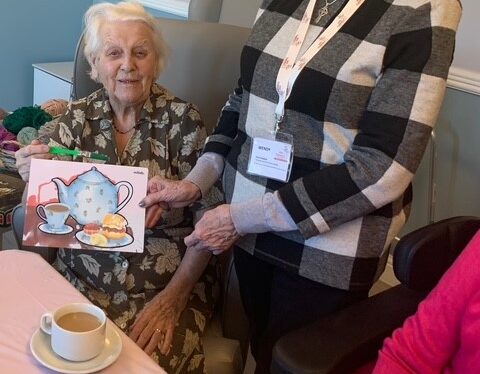
People living with dementia are a sign to others of the quite different values of the kingdom of God.
With faith as her anchor
Christine says she and her husband Paul are a team, navigating the unknown. With Paul’s help, and her faith as her anchor, she says she has been able to turn the suffering around – the shock, the horror, the fear, the trauma, which was true for a couple of years – to try to use it for God’s glory and to benefit the church. Through her talks and her books, she says she hopes she can encourage families of people living with dementia, ministers, and pastoral carers to see dementia through a ‘faith lens’. She writes:
So, they realise that no matter how severe the dementia, we are fully human and loved by God. We are embodied souls and endowed with the breath of God. We’re animated by God. Never will I be an empty shell. As I lose an identity in the world around me, which is so anxious to define me by what I do and say, rather than who I am, I can seek an identity by simply being me, created in the image of God, reflected in the divine and given meaning as a transcendent being.
This theme of remaining fully human and loved in the eyes of God is a recurring one in all her writing. Through it all, she’s come to an understanding that regardless of whether she can continue to speak or how forgetful she becomes, God still knows and loves her. By speaking in terms of her inner spirit, she touches on the sense of people living with dementia being a sign to others of the quite different values of the kingdom of God. She becomes aware that she can simply ‘be’ and allow God to work in her journey with dementia.
Christine believes that as her cognition fades, her spirituality can flourish as an important source of her identity.
In an interview with the Church Times in 2012, she spoke of the difference her Christian faith made to her feelings and outlook of living with dementia:
When you become a Christian, it’s through a spiritual awakening. It’s not through me reading texts and struggling to understand God. It’s got nothing to do with thinking. It’s a work of God.
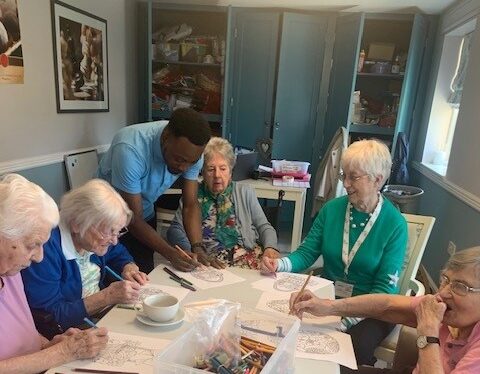
Include us, and remember we are whole human beings, with body, mind, and spirit, just like you.
The importance of inclusion
To our church families Christine says:
Include us, and remember we are whole human beings, with body, mind, and spirit, just like you. We need to be included in all your acts of worship, including Communion, and to be in fellowship with you. You can bring the Christ-light to us in our time of need.
I would be humbled to be remembered for changing the way people with dementia are respected, included, supported, encouraged, and enabled. I have an eternal life with Christ, so my future is infinite.
Christine’s aim throughout all her writing is to reach out and help others to understand the insider’s perspective of living with dementia. She challenges the outsider’s view of loss of self, as she is discovering that, despite problems with sense of time, recall, and language, she has not lost her sense of self. She continues to say: I’m still here!