
We’re delighted to welcome Janie Oliver, CEO of Stewardship, as our guest writer this week. Janie reflects on the importance of forming a lasting ‘habit of generosity’ as part of our Christian calling.
3 May 2026
Forming a holy habit of generosity
We sometimes talk about generosity as if it can only ever be spontaneous. A sudden urge to give or a moment of compassion that catches us by surprise. And those moments do matter. They can often be beautiful and deeply significant.
But if generosity only ever lives in those moments, it will always be inconsistent. It becomes shaped by how we feel, how busy we are or what happens to cross our path that day.
A habit is different. A habit is something we choose to return to, again and again, until over time it becomes a part of who we are.
That kind of formation sits right at the heart of the Christian life. We build rhythms of prayer, of reading scripture, of gathering together. And generosity is part of that too. When Jesus speaks in Matthew 6, he doesn’t say if you give, but when you give. There’s an assumption that generosity will be woven into the everyday life of those who follow him. He also makes it clear that this type of giving is not performative, but rather the natural outworking of a changed heart.

A habit is something we choose to return to, again and again, until over time it becomes a part of who we are.
Conflicting instincts
And yet, if we’re honest, generosity doesn’t always feel all that natural.
Often it shows up most easily in those spontaneous moments. But when we pause and think about how we can plan our giving, we can feel a tension rise up in us – the instinct to hold on, to protect what we have, to keep something back ‘just in case’, to not let the left hand know what the right hand is doing.
Those instincts aren’t wrong. They’re deeply human and in some cases deeply biblical. In many ways, it is wise to think carefully about saving and investing our resources. We live in a world that can feel uncertain, where giving can sometimes feel like loss.
But if we’re not careful, that way of thinking can begin to shape us more than we realise. We can quietly become people who hold tightly, rather than give freely.
That’s why intention matters.

If we’re honest, generosity doesn’t always feel all that natural.
Choices change us
Choosing to plan for generosity, to set something aside, to look for opportunities to respond deliberately, helps us to form a different kind of pattern. Over time, each act of generosity, whether it’s time, money, attention or encouragement, pushes back against the idea that we need to hold everything tightly to be secure. And slowly, those choices begin to change us.
We’ve seen something of this over the past few weeks through 40acts, our Lent generosity challenge. Together, tens of thousands of us have been taking small steps of generosity each day. Sometimes simple things like writing a note of encouragement, helping someone practically, or choosing to give financially in a new way.
At its heart, 40acts has never been about completing a list or proving something to ourselves. It’s an invitation into a rhythm. A daily moment that asks: what would it look like to choose generosity today?
Some days that feels light and joyful. Other days it feels stretching, even uncomfortable. But those moments matter. Because generosity that costs us something has a way of revealing what we really trust.
Do we trust that there will be enough?
Do we trust that giving will not diminish us?
Do we trust that God is at work beyond what we can see?
These aren’t questions we ask once. They’re questions we should return to, day after day, as God gently reshapes our perspective. Slowly, we begin to see that we are not living from scarcity, but from abundance, and that generosity can flow from that place.
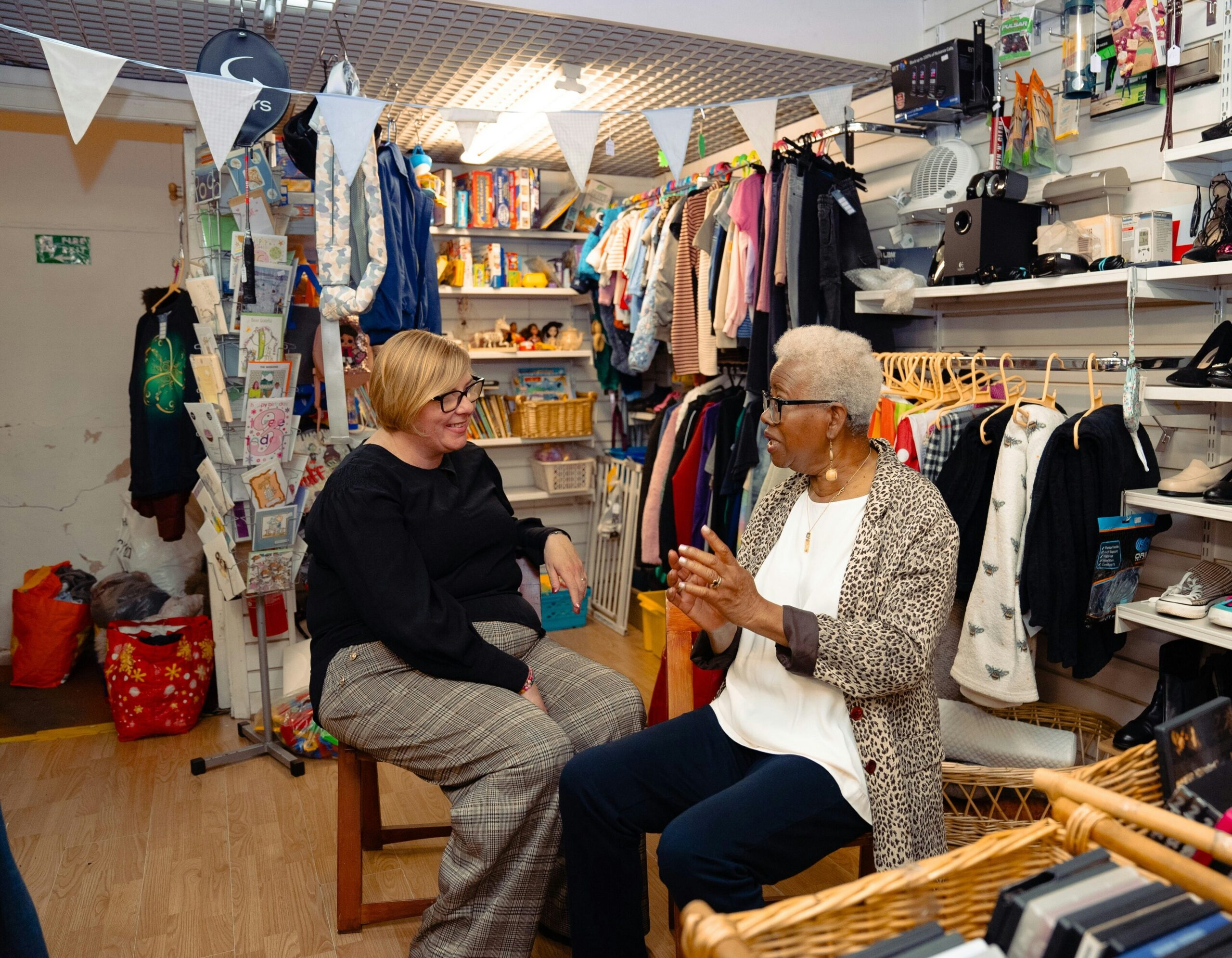
Over time, each act of generosity begins to change us.
Not just about money
It’s also worth remembering that generosity is not only about money. Money can feel like the most obvious expression, because it’s measurable. But a generous life is much wider than that. It looks like patience when we’re tired. Encouragement when it would be easier to stay silent. Making space for someone when our schedules already feel full.
One story from 40acts this year has really stayed with me:
‘Today I felt prompted to hand a bar of chocolate to a stranger sitting on a park bench. It opened up a conversation that was so beautiful and profound. The lady I gave the chocolate to was grieving the loss of her young grandson and her brother. We chatted for about 15 minutes. There were tears, hugs and I even ended up praying with her. I was amazed at how a simple gift of chocolate led to a God-ordained moment.’
I love that picture of generosity. Yes, there was a small financial cost, but it was also generosity of time, attention, compassion, and courage. A simple act became something much more, a moment where God’s love was made visible.
At Stewardship, we often talk about a thriving kingdom economy, and about helping people be the best stewards of all that God has entrusted to them. But that vision only really comes to life in the everyday choices of Christians choosing generosity as a daily habit.
And that daily habit can being by simply asking this question:
‘Lord, everything I have today is a gift from you. What would you like me to do with it?’