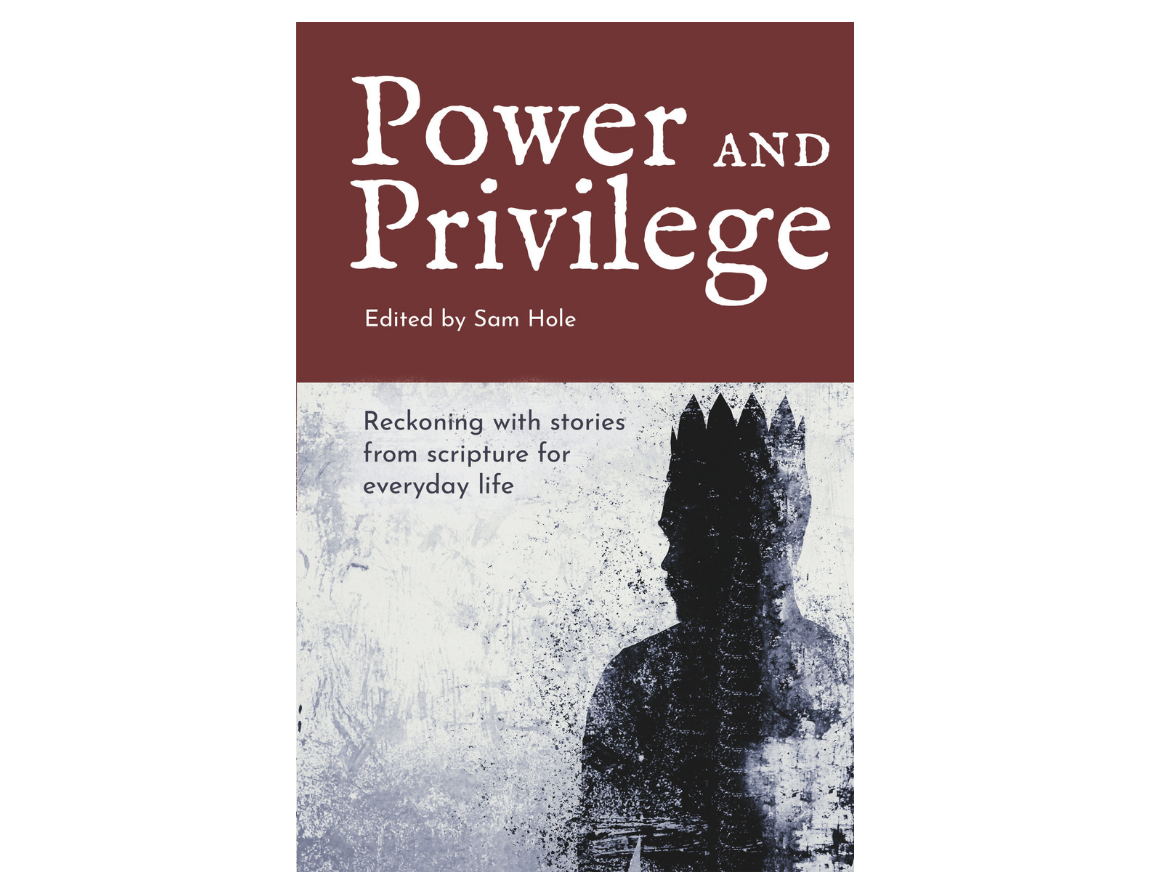

In the first of two extracts from our new title Power and Privilege: Reckoning with stories from scripture for everyday life, editor Sam Hole sets out the aim of this collection of contemporary essays on eternal and universal themes.
18 October 2026
Three simple marks
Visit the Undercroft Museum at York Minster, and among the many colourful and historic objects on display you will see a small broken Roman clay tile. At first glance, the object looks unremarkable. Yet it is surely one of the most special pieces in the museum’s collection. It dates from the second or third century AD, a time when a Roman fortress stood on the site where the Minster would be built centuries later. Just before the clay was fired, while it was still wet, someone made three simple marks into the clay to inscribe it with a ‘Chi-Rho’, the symbol which combines the two Greek letters (χ and ρ) that form the first two letters of Christ. That unknown worker was signalling their allegiance to Christ.
Leave the museum and step outside the Minster and your eye will be drawn to the very different sight of the grand, soaring towers of the Gothic cathedral. On one side of the Minster there is a modern statue of Emperor Constantine, sitting in military dress on a throne. For it was in York, in AD306, that Constantine became Roman Emperor. Six years later he converted to Christianity, shortly afterwards declaring it the official religion of the Roman Empire.
Think about power and the church, and it may well be contrasting images of this sort that come to mind. The anonymous soldier or labourer represents those millions of Christians who practise their faith in secret amid an often-hostile world. Conversely, the Minster building is emblematic of the vast influence and wealth gained in some periods by church institutions, while the statue of Constantine reminds us of the many contexts in which church and state have acted hand in glove, sometimes in ways that seem in tension with the way of life modelled by Christ.
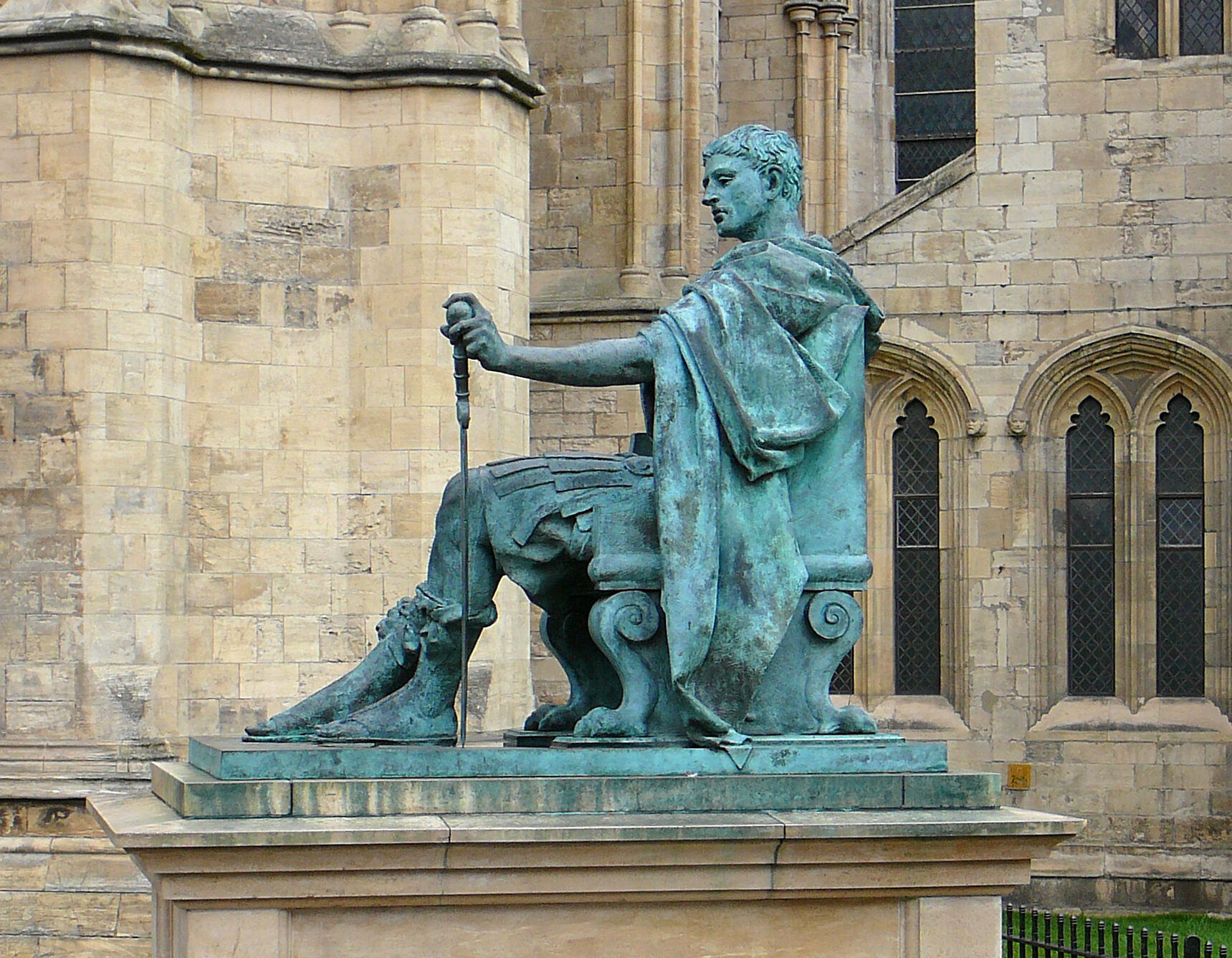
The statue of Constantine reminds us of the many contexts in which church and state have acted hand in glove.
Photo: Tim Green from Bradford, CC BY 2.0, via Wikimedia Commons
The abuse of power
Talk of power and the church may also bring to mind, however, something much darker. In recent years there have come to light a string of scandals in which prominent Christian leaders are revealed to have abused the power given to them. To name only two examples, in my own Anglican tradition I think of the recent cases of Mike Pilavachi and Bishop Peter Ball. In both cases, independent reports determined that various factors, including the leaders’ charismatic personality and a wider culture of excessive deference to those in authority, enabled their abuse over many years.
More broadly, Christians are increasingly aware that power dynamics within churches can exclude the vulnerable, even within congregations that proclaim a welcome to all. Writers such as Azariah France-Williams have shone a light on how, in order to be accepted in majority-white churches, individuals of ethnic minority heritage have often been expected to conform to certain behaviours which have more to do with class or culture than the gospel. Likewise, people with disabilities often feel held on the margins of church life.
When confronted with testimonies of this kind, many faithful churchgoers are shocked. ‘Anyone can worship here!’ is a common response. But it is clear that, in many settings, those joining a congregation are expected to fit in with the status quo, rather than being seen as gifts who may expand existing worshippers’ understandings of the breadth of the body of Christ.
When I mention I am working on a book on power and Christian faith, it is examples of the kinds listed above – the power and wealth of some churches contrasted with the quiet faith of many Christians, or the ways that the vulnerable have been abused or excluded – that come to mind most immediately to many people. These are certainly pertinent issues. They are the places where questions of power and privilege have pressed most insistently on the life of the church in the last decade or two.
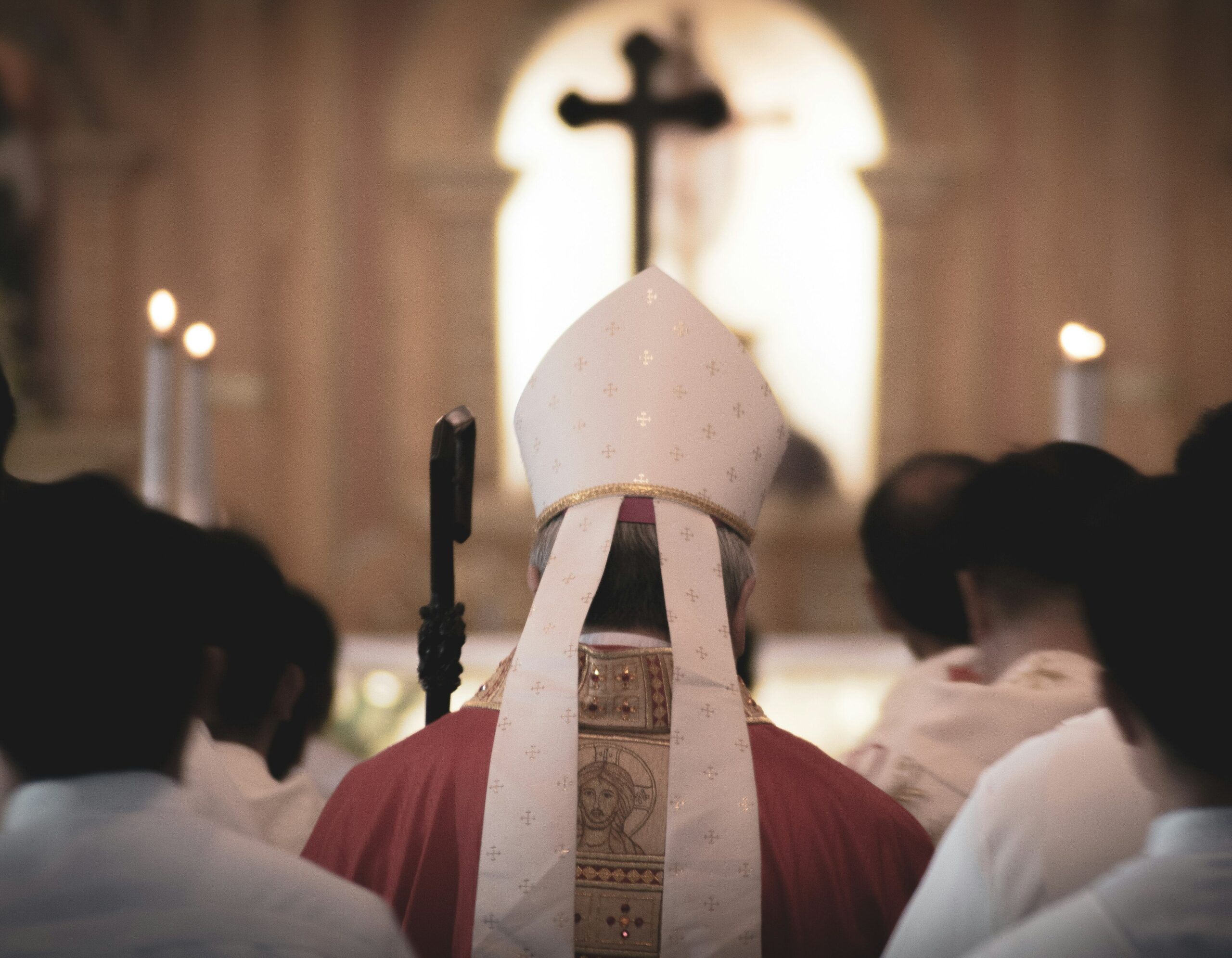
Power dynamics within churches can exclude the vulnerable, even within congregations that proclaim a welcome to all.
A biblical perspective
This book, however, approaches these debates from a different direction. It turns to the Bible, seeking inspiration for thinking more broadly about the relationship between power, privilege, and Christian faith.
In each chapter a different contributor takes up a character from the Bible. Some stories (e.g. Jesus, Nicodemus, Paul) may be familiar to readers from their regular appearances in sermons or Bible studies. You may have a particular memory of others (e.g. Joseph, Moses, Ruth) from the words and images of children’s Bibles, Sunday School teaching, and school assemblies. Other stories (e.g. Esther, Amos) are likely to be almost unknown to many readers. Yet all form part of scripture’s telling of the ways that power and privilege are at work, in the life of the church and of the world, for good and ill, and how they may be used wisely to the glory of God.
And it is important that these are stories. Certainly, the Bible contains many memorable statements relating to power and privilege. But stories have two major advantages. First, they are enjoyable and memorable. It is my hope that this book gives you a fresh appreciation of stories that, thousands of years after they were first written, continue to speak to us. Second, stories help us make sense of how the sayings we find in scripture take effect in real life – and, as we shall see, this is particularly important when it comes to consideration of privilege, which demands an appreciation of history and context.
In reading these stories, our focus is on the ways in which biblical figures engaged wisely and creatively with power and privilege. This is in no way to downplay or ignore the deep strand of biblical concern and suspicion about power and privilege (witness the prophets’ repeated and vehement condemnation of their abuse), and indeed many of the stories examined here include tales of similar gross abuses. It is imperative that we attend to the ways in which power is used in horrendous and ungodly ways, both in the scriptures and in our own day. Yet for each of us power and privilege are inescapable, and so it is at the same time essential that we ponder how we will use them faithfully.

For each of us power and privilege are inescapable, so it is essential that we ponder how we will use them faithfully.
A hopeful collection
This book will hopefully, therefore, be valuable for those in Christian authority, in both individual congregations and denominations, in helping to deepen their own reflections on their use of power and privilege. This is not simply, however, a manual for church leaders. Contributors’ meditations on power and privilege are aimed more broadly, also engaging individual members of congregations as they seek to discern how to live as Christians amid the networks and cultures of power they encounter in their daily lives – at home, at work, and among friends.
This is, overall, a hopeful collection of reflections. The writers recognise the dangers ever-present in the operation of power, but in these pages turn their attention to the ways in which Christians and the church may work creatively and faithfully to use these divine gifts to God’s glory.