
Maggi Dawn invites us to rethink those Christmas card images and look afresh at that snowy stable scene in this reflection adapted from her Advent book Beginnings and Endings.
No room at the inn
‘In those days a decree went out from Caesar Augustus, that a census be taken of all the inhabited earth. This was the first census taken while Quirinius was governor of Syria. And everyone was on his way to register for the census, each to his own city. Joseph also went up from Galilee, from the city of Nazareth, to Judea, to the city of David which is called Bethlehem, because he was of the house and family of David, in order to register along with Mary, who was engaged to him, and was with child. While they were there, the days were completed for her to give birth. And she gave birth to her firstborn son; and she wrapped him in cloths, and laid him in a manger, because there was no room for them in the inn’ (Luke 2:1–7, NASB).
Christmas cards and nativity plays give us images of starlight and snow, a lonely family in a strange place, spending the night in a freezing cold and dilapidated wooden stable, rejected by all and sundry, callously put out in the street in their moment of greatest need. But a little knowledge of the geography of the area and the customs of the time suggest a somewhat different interpretation.
Mary and Joseph, we are told, went to Bethlehem to take part in a census. Why Bethlehem? Because that was where their family originate – not a town in which they were complete strangers but a place where their relatives lived, and other relatives who had migrated would also have been returning for the census. So the idea that they were isolated foreigners in a strange town is a little wide of the mark.
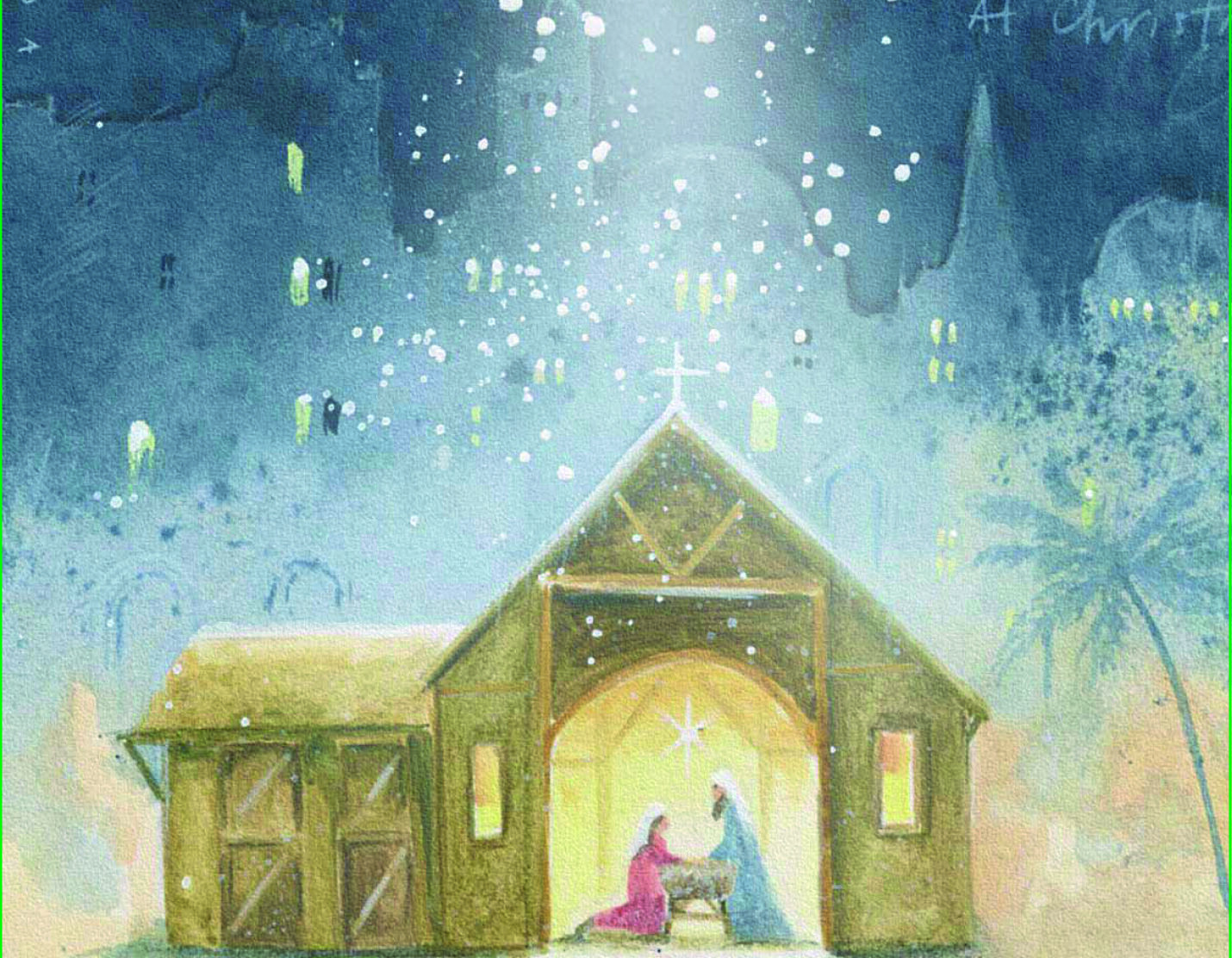
The idea that they were isolated foreigners in a strange town is a little wide of the mark.
A reality check
The layout of a first-century house in the Middle East also gives the lie to the idea of their being banished to a freezing stable. The word we translate as ‘inn’ is kataluma, which is not a hotel or B&B let out to strangers, but a large family living room used for eating and for receiving guests. If there were a lot of guests, they would eat, drink, and socialize well into the night, then just roll out the blankets on the floor to sleep – the whole roomful, children and all. The domestic animals – perhaps some chickens, a donkey, or a cow – were not far from this scene. In a typical small, one-storey house, they would have been kept in a room within the house itself, where the warmth of their bodies was as welcome as it was useful.
But in Bethlehem, there are rows of ancient houses built into the rock, and there is a series of caves below the ground. The caves form a basement to the houses, and it is thought that these were used for housing animals. One of these caves is still kept as the actual birthplace of Jesus. It’s impossible to prove whether this really was the precise location of his birth, but given that Bethlehem is so small and compact, if it wasn’t that particular cave, it must have been an identical one within a few hundred metres.
These caves are constantly warm and dry throughout the year – over 16 degrees Celsius – so if Jesus’ birthplace was among a family’s domestic animals in Bethlehem, he was not born in a freezing wooden shed at the bottom of the garden but in a warm, dry shelter within the family home.
A challenge
The layout of the house, and the likelihood that Mary and Joseph found themselves among relatives, give a somewhat different spin to the Christmas story – but it offers a slightly different challenge to our faith. Imagine, if you will, that first Christmas. Because of the census, numerous people whose family origins were in Bethlehem were converging on this very small town. While the census itself was no cause for celebration, an enforced family party was inevitably going to lighten the atmosphere. The house with the biggest kataluma – living room, dining room and guest room – would naturally play host to the party. Perhaps aunts and grandmothers from nearby would bring dessert and salads, and maybe put up a few extra guests. The kataluma would have been chock-full of people, from the smallest babies to the oldest pensioners, eating, drinking, chatting, laughing, catching up on the news.
Then, as the noise levels begin to rise, there is another knock at the door. Mary and Joseph arrive, and Mary is almost immediately in labour. If you have a one-roomed house already packed to the rafters, with children everywhere and people preparing to sleep there in a few hours’ time, where do you put a woman who goes into labour? There really was no room in the kataluma, but downstairs there was a warm, dry, quiet space – the stable.
We can’t be sure how well Mary and Joseph knew their relatives, and neither can we know quite how much of a shadow was cast by Mary’s condition. It is not clear from the biblical accounts whether the expected child was a public disgrace or merely an initial threat to Joseph, as he was sure the baby was not naturally his own child. So we can’t be sure whether they received a warm, affectionate welcome or a bit of a frosty one. We don’t know whether the stable was offered as an act of pure kindness to a couple in need, or somewhat grudgingly, out of family obligation.
It is possible that the stable was a convenient way to put the holy family in a safe but out-of-the-way space, keeping these relatives of questionable morality away from the rest of the family. But it is equally possible that the stable – warm, dry, quiet, and with some degree of privacy – was the very best thing a family of moderate means could offer them.
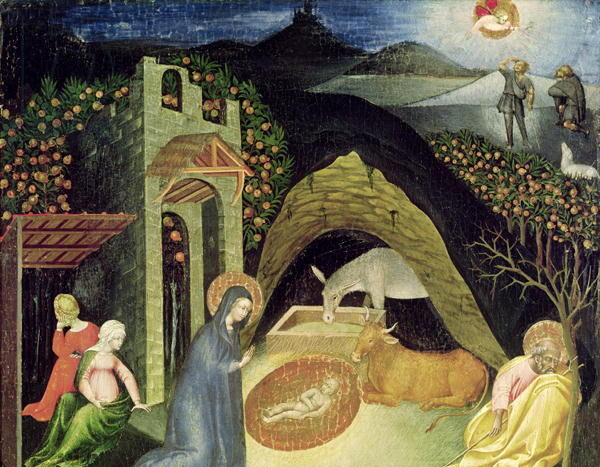
It is equally possible that the stable – warm, dry, quiet, and with some degree of privacy – was the very best thing a family of moderate means could offer them.
A metaphor
No room in the kataluma? We too may be of moderate means. In spiritual terms, we may not be able to offer Jesus a dwelling-place fit for a king. Perhaps we have only the spiritual equivalent of a one-roomed house. Perhaps the central space in our lives is already be overflowing with all manner of events and people that demand our attention. Maybe we are not ready for his arrival, and maybe the best we have to offer is a bit of improvisation – a stumbling, inadequate welcome, more or less the equivalent to hurriedly sweeping out a space in the warm, dry stable. Maybe we can’t offer the luxury he deserves, but that’s just the best we can do for now.
But Jesus never asks us to clean up our lives before he will be born within us. He asks only that we find whatever space we can, and do not delay, because his birth (and our rebirth) is imminent. He doesn’t wait for a rapturous and well-prepared welcome. He won’t turn down our humble, imperfect and perhaps even slightly grudging invitation. He doesn’t ask for satin and velvet, diamonds and Dom Perignon.
He’ll be born anywhere: all we have to do is make a space for him.