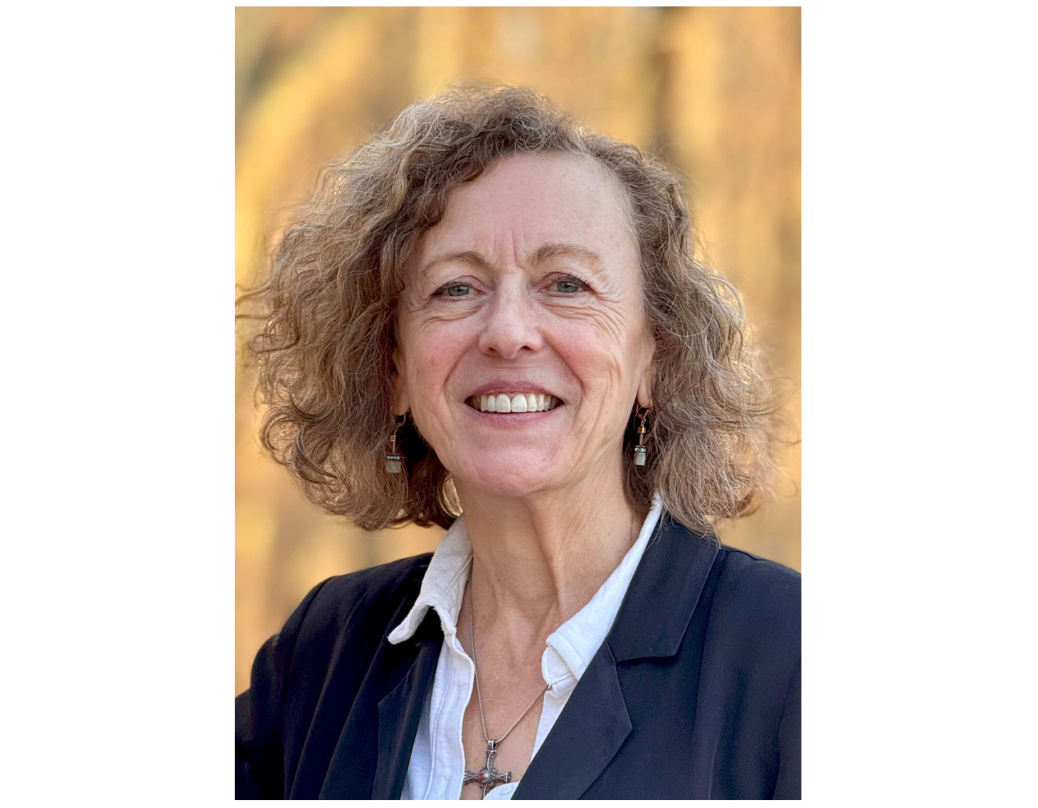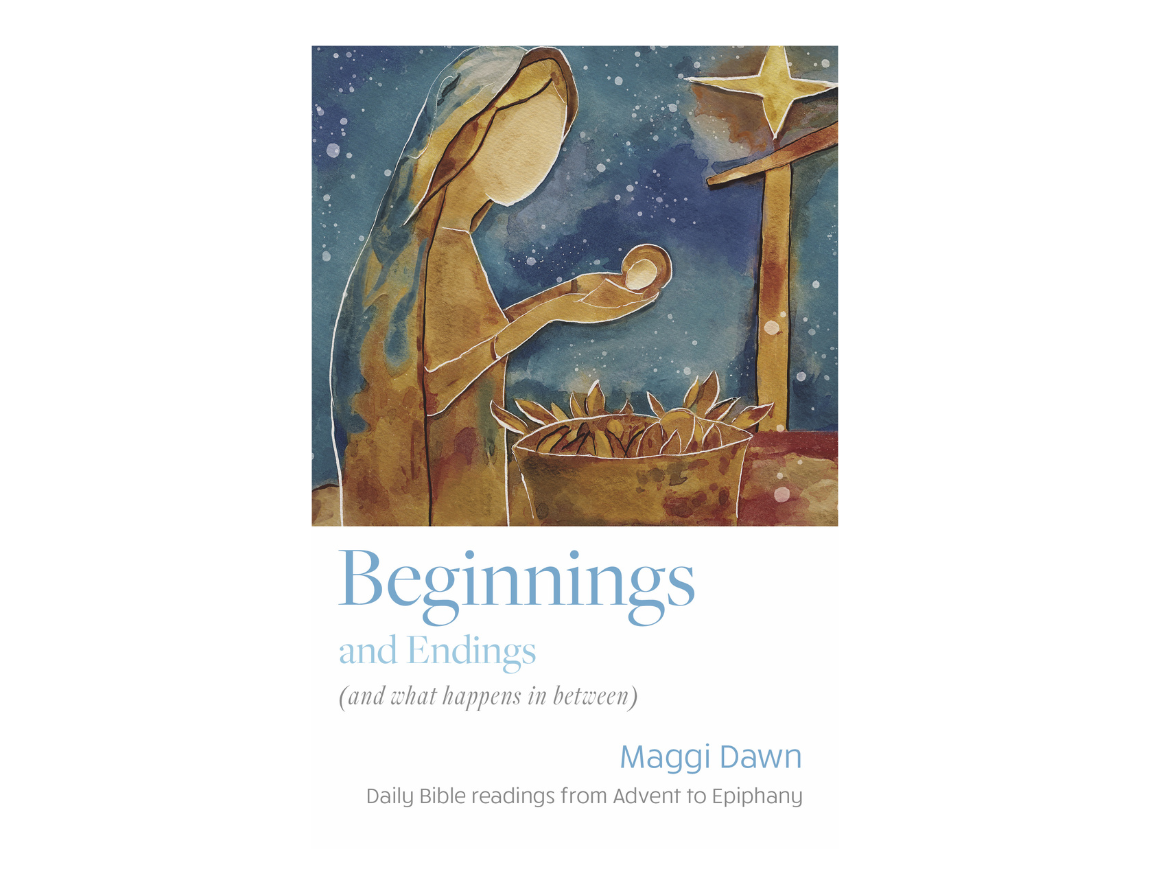

Maggi Dawn, author of Beginnings and Endings, shares a special reflection for Advent Sunday.
30 November 2025
Time to pause
It’s beginning to look a lot like Christmas. There is a tree up in every railway station, airport, and shopping mall, a board outside every restaurant and bar advertising Christmas. I am just home from celebrating Thanksgiving with family in Boston, Massachusetts, and everyone knows the next month will be packed with all kinds of Christmas everything – parties, carols, preparations, and visits with family and friends.
Once upon a time, it wasn’t like this at all! Advent was a six-week fast before Christmas, a time of quiet, sombre reflection, and only on 25 December did the twelve days of festivities begin. But gradually our culture has inverted the schedule of events: now the run up to Christmas is packed with activity so that Christmas Day feels like the wind-down after all the excitement, not the beginning of the party.
I cannot see much point in attempting to turn the tide against this cultural shift, nor to make religious scruples a reason for refusing to join in with the celebrations. But there is nothing to stop us from pausing for a few moments each day to reflect on the deeper meaning of Advent.

I cannot see much point in attempting to turn the tide against this cultural shift, but there is nothing to stop us from reflecting on the deeper meaning of Advent.
The church’s New Year’s Day
Advent Sunday is, first of all, the ‘New Year’s Day’ of the church calendar. There are various moments that are described as a ‘new year’ – the first day of January; the Lunar new year between late January and mid-February; or, for anyone involved education, the beginning of the academic year, as (in the northern hemisphere) summer gives way to autumn. For the church, on the fourth Sunday before Christmas Day, we begin our church calendar afresh with scripture readings that transport us in our imagination to the beginning and ending of all things: from creation to apocalypse, the garden of Eden to the heavenly city.
This not only frames the story of salvation as the story of everything, it also puts the spotlight on the fact that Christ was there at the beginning, and will be at the end. The creation narratives in Genesis tell us that God spoke the cosmos into being, and the presence of Christ the Word at creation is echoed in the opening lines of the gospel according to St John: ‘In the beginning was the Word…’
Advent, then, frames the story of Christmas within the bigger story, by reminding us that Christ has always been, and always will be, present. And, as the 17th-century theologian Lancelot Andrewes so poignantly noted, Christ the Word came into our world, as a tiny baby, word-less. Among all the things he laid down in order to become human was this capacity to be the creative Word, beyond the limits of human language.
Advent frames the story of Christmas within the bigger story, by reminding us that Christ has always been, and always will be, present.
Beginnings and endings
Advent begins, then, with the grand narrative of beginnings and endings, but it continues the story of salvation by focusing on an assortment of people who searched for God’s promises in their mundane, everyday experience. Chapter after chapter of the scriptures are devoted to the immense journey of Abraham, his family, and his descendants, as they set out to follow God to a place where they might live in the blessing of God.
But once they find it, they gradually discover that the place alone is not enough and salvation is not ultimately realised in a promised land. The Advent readings then move on to the words of the prophets, who looked forward to a time – a time in the future when the promises of God would be fulfilled and the promises that relate to place become blurred with something more existential.
The third Advent theme is the story of John the Baptist, the herald of Christ. John looked and behaved so much like one of the prophets of the Hebrew scriptures – wearing scratchy, spartan clothes and eating whatever raw food he could find in his desert hermitage – that people wondered whether he was, in fact, Elijah come back. But his message did not look backwards, but forwards. He drew together the longings of generations, telling all those who would listen that the place is here and the time is now: Christ is among us.
Within that grand narrative we find hundreds of everyday, human stories.
God’s presence within us
But the fourth Sunday of Advent takes us to Mary, the mother of Christ. And here we find the promises of God fulfilled in a different way. Searching for a place or a time is always overlaid with some sense that the search for God is external – Christ will come to us, Christ is near us, Christ is among us. But Mary quite literally experiences and models God’s promise that his presence is within us.
Jeremiah had prophesied the ‘new covenant’ – a time when people’s relationship to God would not be transactional, based on written words, but written on the heart. ‘I will put my law within them, and I will write it on their hearts, and I will be their God, and they shall be my people’ (Jeremiah 31:33, NRSV). Now this becomes real, as Christ becomes one of us.
The journey through Advent to Christmas, then, is part of a much bigger story than just a baby in a manger. But within that grand narrative we find hundreds of everyday, human stories – from Adam to Abraham, Elijah to Jeremiah, Zechariah to John, the Holy Family to the Magi. And Advent allows us to walk alongside them as they journeyed through time and place to discover an encounter with God that changed their hearts and lives forever.
Beginnings and Endings is a collection of my own reflections that follow these themes, in 37 short daily readings, from 1 December through to Epiphany. I invite you to come in through the side door of some very familiar stories and take a fresh look. I invite you to think and pray with me through their stories, so that we – once again – might find our own way to a fresh encounter with God.