
Jayne Lander wrote to us in December to tell us how much she appreciated Sally Welch’s post-Christmas reflections in New Daylight. ‘Thank you for putting my thoughts about Christmas into sharable words,’ wrote Jayne. ‘I hate all the commercial hype… I am a post lady and know that for everyone who has anything like the wonderful Christmas depicted, there must be ten for whom it is a very difficult time.’ Intrigued, our comms officer Eley McAinsh contacted Jayne to find out more.
15 February 2025
Thanks to Delia!
Jayne Lander delivers mail to 700 addresses in Ripley in Derbyshire. She walks about ten miles a day, pushing a Royal Mail trolley, and bad weather is no deterrent. ‘I was in the Venture Scouts from 16 till I went to university and it gave me a great preparation for outdoor life. It really set me up for this job!’
Jayne embraces the title ‘post lady’ – ‘It’s what everyone calls me’ – despite official preference for postperson. She’s been doing the job, and loving it, for just over ten years. Having studied languages at university, Jayne initially worked in sales and export administration before having her two sons and spending some time at home.
‘My parents were greengrocers. They were fantastic, but they worked such long hours. I remember having mumps, and even with mumps, I had to go to the shop and lie on a settee at the back while they worked. My dad bought me eight Enid Blyton books to occupy me! When our boys came along, I really wanted to be a stay-at-home mum.’
A few months after her first son, Jack, was born, her parents suddenly needed some extra help preparing deliveries for local care homes. The work was flexible enough to fit around looking after Jack and as the years went on, Jayne also became involved in her husband’s family business. But then, in 2014–15 both businesses folded.
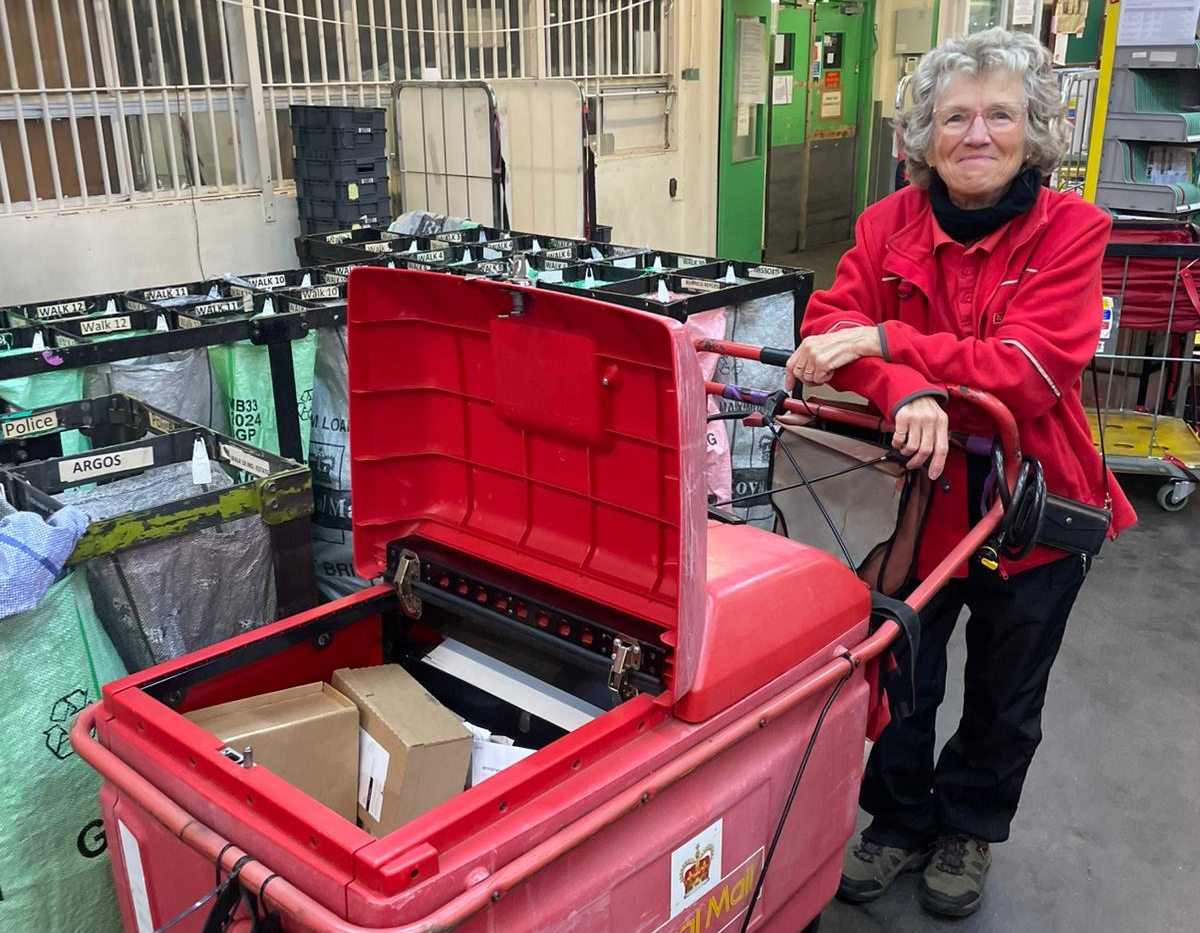
Jayne’s been a post lady, and loving it, for just over ten years.
Something completely different
‘It wasn’t a negative thing,’ says Jayne, ‘it was just one of those things. So I thought, right, I’m going to do something completely different!’
At first she thought she might get a job in the railway industry. ‘I love trains, thanks to my dad. He used to take us trainspotting and things. So I quite fancied working on a train or in a station.’ But that didn’t happen, and her alternative was to work for Royal Mail. It has felt like a calling.
‘There was a district nurse on my Alpha course. She trained in nursing later on in life and she always felt that God had sent her into the community to do that work. And I feel the same. I feel I’m meant to do this job for that same community connection. I might only spend a minute nattering with somebody, but that conversation can transform someone’s day.’
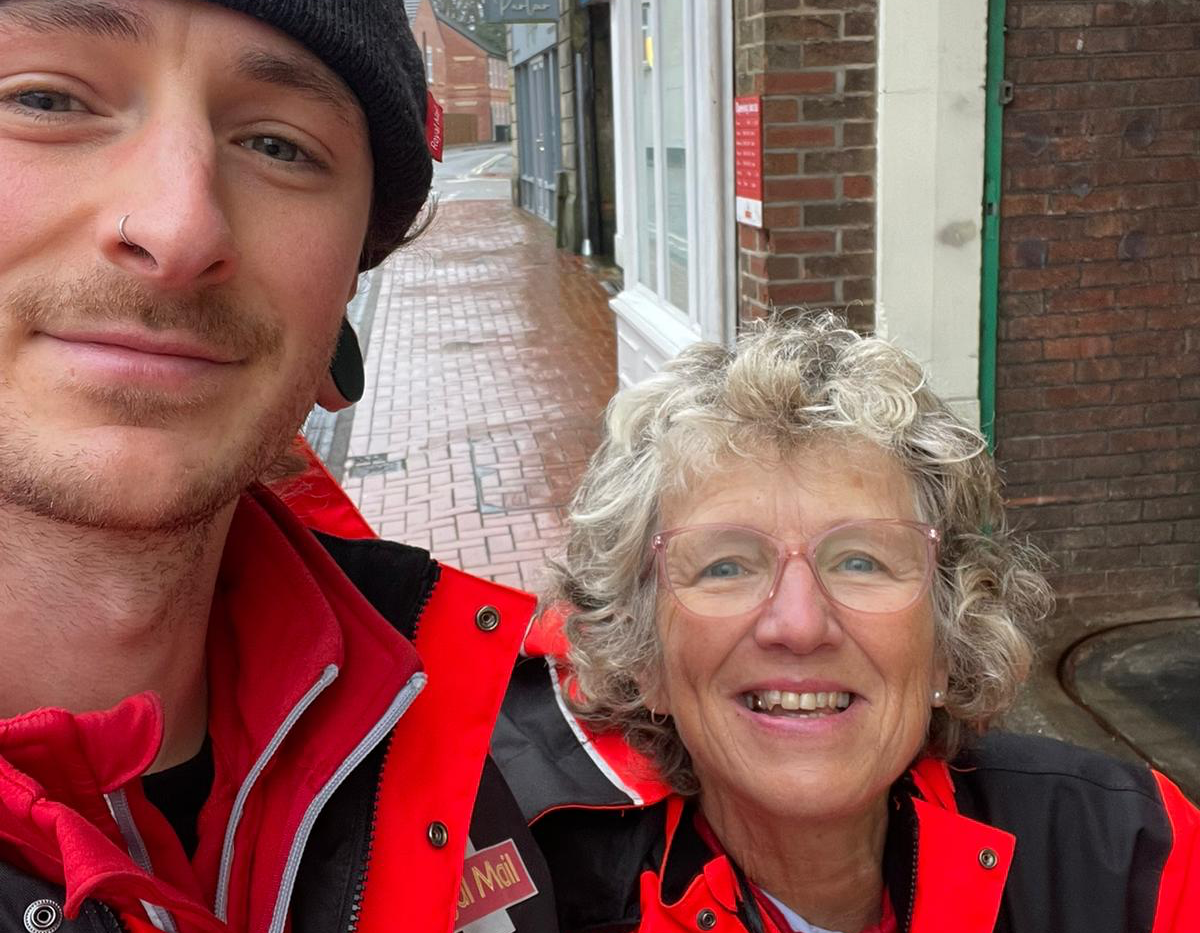
‘I feel I’m meant to do this job for that same community connection.’
Photo: Jayne with her son Tom, also a postie
Back to the beginning
Jayne went to Sunday school as a child and used to go to her mum’s Methodist chapel on ‘high days and holidays’ as a teenager.
‘But I wasn’t a regular churchgoer by any means,’ she says. ‘And then when I went to university, the “God Squad” really put me off. I know, with hindsight, they weren’t really cult-like, but I felt that at the time and avoided them at all costs.’
Jayne graduated in 1982, but by 1990, she was struggling.
‘It was such a difficult time in my life, not for anything in particular: work mainly, and I was struggling with depression and compulsive eating. Anyway, it was Lent 1990 and I suddenly thought, what’s Lent all about? So I went into the Wesley Owen bookshop in Derby to have a look. I’m quite interested in cooking, particularly baking, so I picked up Delia Smith’s A Feast for Lent.*
‘And that book just really spoke to me. There was one reading about giving our troubles and worries to God, and it just spoke so powerfully. It wasn’t one of those instant conversion things. I’m not like that; I’m all Steady Eddie. But I read it all through Lent and then we went to Norwich cathedral at Easter, and I bought New Daylight, not realising that it was published by the same organisation as A Feast for Lent.’
* our first ever Lent book, published in 1983 and reprinted several times.
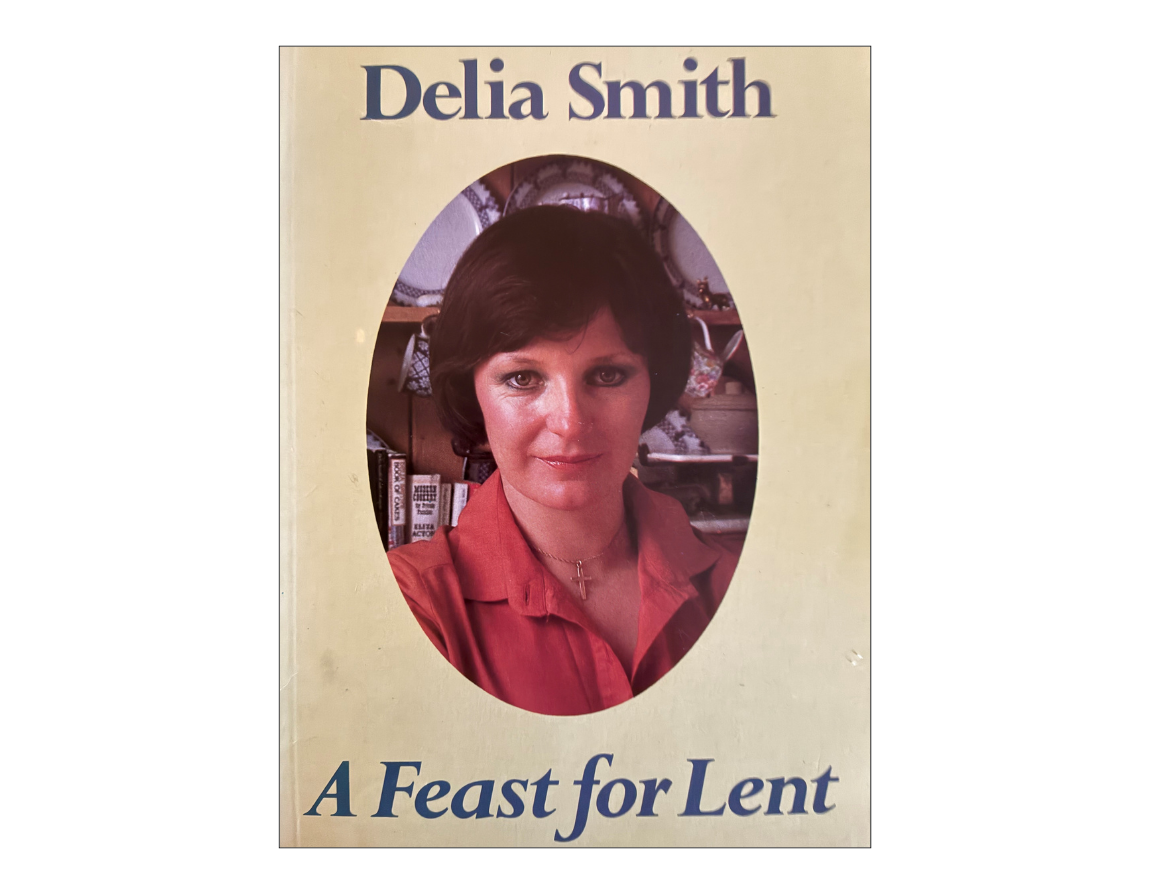
‘It was Lent 1990 and I suddenly thought, what’s Lent all about? So I picked up Delia Smith’s A Feast for Lent. And that book just really spoke to me.’
New Daylight
Jayne has continued to read New Daylight off and on ever since. ‘I can’t say I’ve read it every day, but it’s helped me continue on the path. It was difficult when the boys were very young as mornings were the busiest time. I began reading continuously again when I found I was leaving God at home when I went on holiday! Wesley Owen had gone at that point, and I went on your website to order a copy and discovered the online version and have subscribed ever since.’
Finding a church was more of a challenge. She tried a few different ones, ‘but none of them sat right’, until a family wedding the following summer.
‘My husband’s sister got married in St Clement’s, Horsley, the Anglican church we’d got married in, and where we’d both been baptised. There was a new vicar, and it was just so different from the other churches I’d tried. I wasn’t even supposed to be there. I was very, very pregnant; in fact, I was overdue. I was supposed to be there with a pram, but I was there with a bump and, in fact, Jack was born two days later.’
After Jack was born, she went back to St Clement’s, so rich in family connections.
‘My grandparents are buried there, my mum was married there, John’s mum was married there, we were married there – it was the natural place to go. I do sometimes think I would be better off in terms of witnessing to go to our local church, but I’m too entrenched in Horsley now.’
Sadly, at the moment, Jayne can’t get to church because her mum and dad, both in their 90s, need a lot of support. Her dad is in a care home and her mum is bed bound at home. ‘Some things had to give, and my Sundays are now: go to see mum, go to see dad. Church has had to give, which means New Daylight is really important to me now. It’s my start to the day. I read it before I go to work, and it keeps me feeling that I’ve not given up on God in this busy time.’
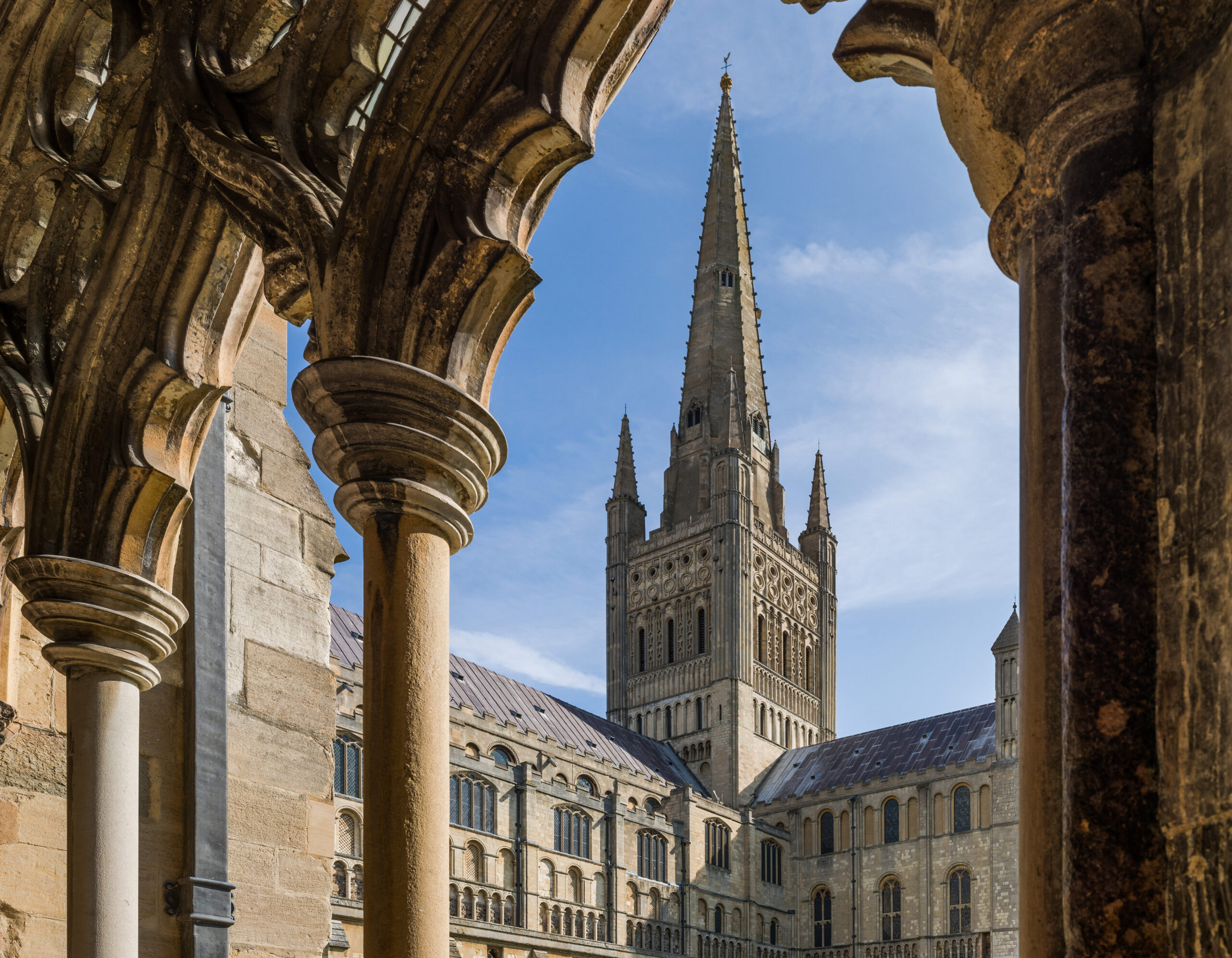
‘I can’t say I’ve read New Daylight every day, but it’s helped me continue on the path.’
Photo: The spire of Norwich Cathedral, where Jayne bought her first copy of New Daylight. Photo by David Iliff, license: CC BY-SA 3.0, via Wikimedia Commons. Cropped.
A post-lady’s-eye view
So why did Sally Welch’s New Daylight reflections at the end of December strike a such a chord with Jayne?
‘It was Sally’s introduction: “Congratulations on making it through another Christmas.” I love it. It was so human, so honest, and it encapsulated everything I’d been feeling in such a brilliant way. It was wonderful to know I wasn’t alone.
‘Just before Christmas, in the space of a few minutes, I was speaking to two dog walkers, one had lost his dad last year, and he’d lost his mum in the pandemic, so he was on his own; no brothers or sisters. Then a few minutes later, there was a lady who’d lost her husband the previous year. And just across the road there was a guy who’d lost his wife last year. And I just thought how hard Christmas is going to be for so many people, and all the cheery Christmas greetings were going to be like twists of a knife.’
Christmas at Royal Mail starts very early, of course. ‘Before Black Friday! And it just goes on and on and on. Personally, I strictly shut my mind to Christmas until the middle of December!’
But then, towards the big day, there is a genuine expression of goodwill and generosity in the chocolates and tips with which people show their gratitude for all Jayne and her colleagues have done, come rain or shine, in the local community. ‘I’m not bothered about the gifts,’ she says, ‘but it’s lovely to feel that goodwill; to me, that’s the outpouring of true Christmas spirit.’
‘It’ s a very privileged position,’ says Jayne. ‘Sometimes we’re the only people that people see. And we do get to find out things and know when people might need a bit of extra support. The great giveaway is when somebody starts to get a lot of cards, when it’s not their birthday. That’s how you get to know somebody’ s passed away. And you see hospital letters, penalty-point letters – you learn an awful lot about people.’