
A reflection on reconciliation by Amy Scott Robinson, from her 2023 Lent book Images of Grace: A journey from darkness to light at Easter.
22 March 2026
A family restored
Now Jacob looked up and saw Esau coming, and four hundred men with him. So he divided the children among Leah and Rachel and the two maids. He put the maids with their children in front, then Leah with her children, and Rachel and Joseph last of all. He himself went on ahead of them, bowing himself to the ground seven times, until he came near his brother.
But Esau ran to meet him and embraced him and fell on his neck and kissed him, and they wept. When Esau looked up and saw the women and children, he said, ‘Who are these with you?’ Jacob said, ‘The children whom God has graciously given your servant.’ Then the maids drew near, they and their children, and bowed down; Leah likewise and her children drew near and bowed down; and finally Joseph and Rachel drew near, and they bowed down. Esau said, ‘What do you mean by all this company that I met?’ Jacob answered, ‘To find favour with my lord.’ But Esau said, ‘I have enough, my brother; keep what you have for yourself.’
Genesis 33:1–9 (NRSV)
Jacob was terrified. After 20 years away, he was heading back to face his older twin brother Esau, from whom he had fled all those years ago. He had tricked Esau out of his birthright and tricked their father, Isaac, into blessing him instead of Esau. No wonder his brother had last been seen beside himself with anger, threatening to kill Jacob. Now, Jacob had heard that Esau was on his way to meet him, with 400 men.
Jacob began to organise his large household like a military operation. He divided them up into two separate travelling groups, so that if Esau attacked one of them, the other might escape. Then he took a vast quantity of his livestock – goats, sheep, camels, cows and donkeys – and sent them off ahead, bit by bit, with his servants. Each servant was charged with a message for Esau that these were gifts for him from Jacob, who was following behind. Perhaps so many gifts would mollify Esau, so that by the time Jacob and his family reached him, he would show them some mercy. In his messages, Jacob was careful to address Esau as ‘My lord’.
In fact, Isaac’s blessing had made Jacob lord over Esau (see Genesis 27:37), but Jacob was more than willing to place himself humbly into Esau’s hands if it might save his life.
This still wasn’t enough for Jacob. He looked at his family – two wives, two maids, eleven sons so far and a daughter – and, with a similar inclination towards favouritism that had caused the rift between him and Esau in the first place, he divided them up as well, sending the maids with their children ahead of Leah with hers, and placing his favourite wife Rachel at the very back with her only son, little Joseph, the light of Jacob’s life. They were in the most protected position. Everybody else would have to fall before they did.
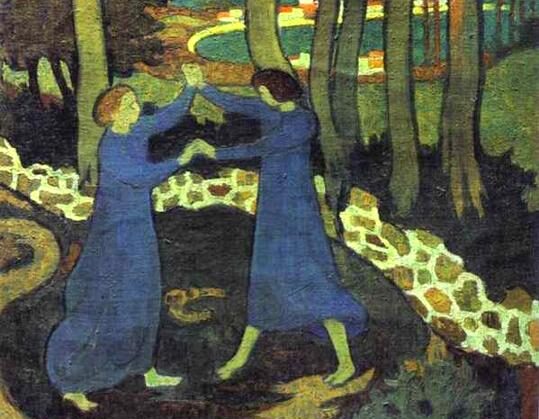
It is not for nothing that the wrestling incident happened alongside this brotherly reunion.
Wrestling with a stranger
Then, the night before they were to walk into Esau’s territory, Jacob sent the rest of the camp on ahead, and he stayed and wrestled all night with a stranger who gave him a new name: Israel, which means ‘One who strives with God’. The stranger blessed him, and Jacob declared that he had seen God face to face and yet survived (Genesis 32:22–31).
The following day, after all that preparation, Esau ‘ran to meet him, and fell on his neck and kissed him, and they wept’ (v. 4). All was forgiven, the gifts unnecessary, the careful ordering of his family irrelevant, as Esau welcomed them all with joy.
It is not for nothing that the wrestling incident happened alongside this brotherly reunion. The all-night wrestling, and the new name of Israel, was another symbol given by God: a real-life picture of the part future generations would play in reconciling earth and heaven. After all, where else have we seen a picture of somebody who has been wronged, running to meet a long-lost traveller on the road, a traveller who has decided to humble himself to the position of servant just in case?
Israel gave his new name to a nation who would continue to strive with God, to resist being at peace with God; but Jacob prevailed and received blessing, just as the people of Israel always hoped to do. Jacob’s approach to Esau was so like the way in which the nation of Israel would often approach God in the future, fearing wrath rather than trusting mercy, trying to protect themselves rather than trusting God’s promise of protection.
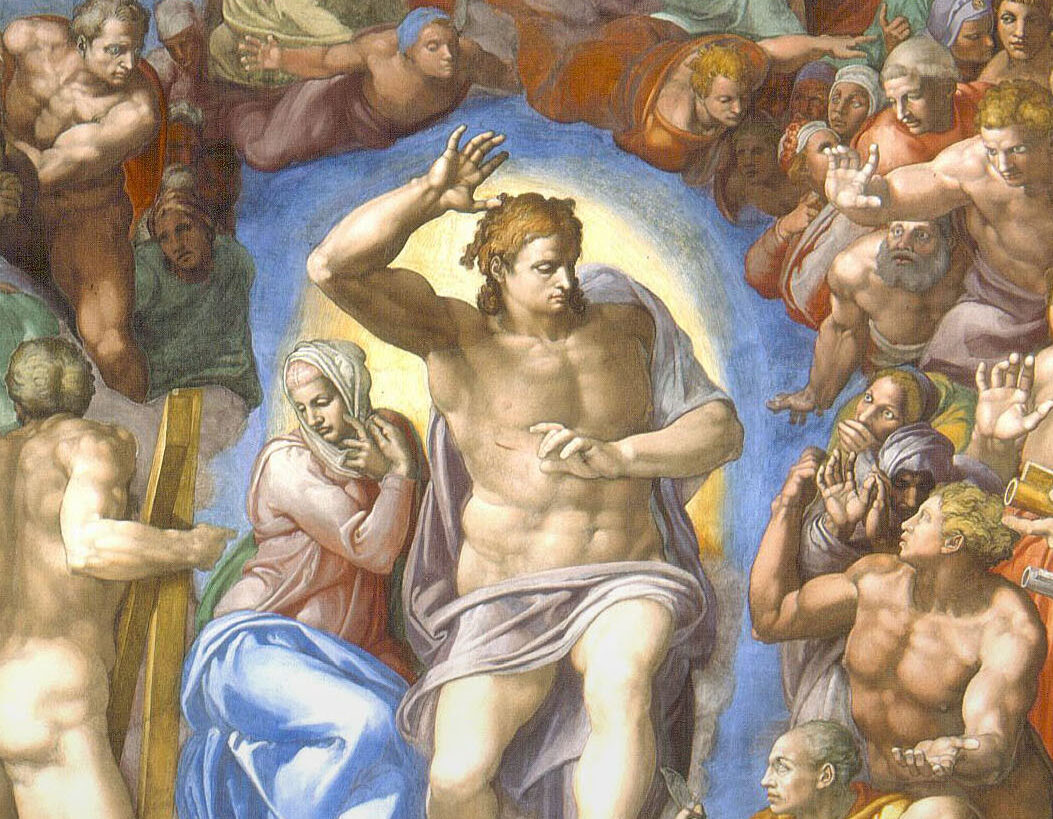
Some of us have been told that God is storming out to meet us with an army of 400 and a look of thunder on his face.
When will we learn
They are not the only ones. How often do we approach God the way Jacob approached Esau?
We put our best efforts out in front, hoping that God will be won over by the gifts of our good works, while we hide the things he might be less pleased with or tuck our treasures away behind our backs in case God wants to take them from us.
We might approach with trepidation, expecting anger and destruction. Of course, some of that is due to the messages we have heard from others. Some of us have been told that God is storming out to meet us with an army of 400 and a look of thunder on his face.
But that is not true. When we pray like that, we haven’t understood the character of God nor appreciated how safe we are in his hands and how eager he is to meet us with mercy, forgiveness, and love.
A question to end: what have you heard about God? What is the look on his face as he runs to meet you?