

Why did Jesus choose to wash his disciples’ feet the night before his execution? Martyn Percy reflects on the many meanings of this iconic gesture, in this edited extract from his challenging new Lent book The Cost of Christian Living.
8 March 2026
He began to wash his disciples’ feet
Jesus, knowing that the Father had given all things into his hands, and that he had come from God and was going back to God, rose from supper. He laid aside his outer garments, and taking a towel, tied it round his waist. Then he poured water into a basin and began to wash the disciples’ feet and to wipe them with the towel that was wrapped round him.
John 13:1–5
The ouroboros is an ancient symbol of a snake eating its own tail. The image is often found in jewellery, but also figures in illustrated manuscripts and art. The earliest known ouroboros is found in ancient Egypt, but it made its way into esoteric Christian thinking via ancient Greece. The word derives from the ancient Greek oura (‘tail’) and boros (‘eating’).
Sometimes the symbol has positive connotations associated with renewal. But equally, the symbol can also infer self-consumption and point to decline. Eating yourself to stave off hunger only goes one way and leads to one end.
In some ways, the symbol of the ouroboros presents us with a perfect paradigm for the church of today. How does the church fund its mission and ministry? By feeding off itself and consuming more of its own human and economic resources to maintain its mass. How does it fill itself again? By taking from another part of the church. This is self-mutilation in the service of self-preservation.
The early church was not concerned with self-preservation. The first martyrdom of the book of Acts – that of Stephen – shows that costly acts of service may lead to death rather than the gratitude of spectators. The early church followed the example of Jesus with a new currency of love, namely that of service. But these are forms of service usually left to those who have no reputation or status to lose. Jesus’ washing of the disciples’ feet is the responsibility of the host – a token gesture – but is bound to be delegated to a slave or servant. Jesus, in taking on the role, takes the lowest social position possible.

In some ways, the symbol of the ouroboros presents us with a perfect paradigm for the church of today.
A new world order
What makes the story of Jesus’ action so revolutionary is his validation and sacralisation of service, irrespective of status. In God’s economy, all are equal. So, all must learn to serve. This cannot be delegated to a third party, let alone to a slave or servant. It is what the host does (pun intended).
The ministry of Jesus was inherently political and economic in character as much as it was ‘other-worldly’. This had profound implications for how Christians imagined the new world order.
Moreover, the disciples are not to anticipate reward or rule in this life; all recognition of costly service and devotion is postponed until the eschaton, where the wheat will be separated from the chaff and the righteous rewarded (Matthew 6:19–21). In very early Christian tradition, the apparent imminence of the kingdom of God led some to give up work and others to lead a life of celibacy. But by the time the later documents of the New Testament were being written, Christians were being urged to respect and work with temporal authorities, get on with their ordinary labours, live and earn responsibly, and begin to apply gospel principles to this life rather than speculating about the actual date of the parousia.
These two distinct traditions within early Christian teaching are closely related. Each act of service (e.g. hospitality, charity), each extension of costly love (e.g. of turning the other cheek, loving your enemies), and each vicarious sacrifice points towards the kingdom that is to come.
Within Christian tradition, the kingdom is the place where society is reordered: the poor are made rich, captives are liberated, the lame walk, and the blind are restored to sight (Luke 4:18–19). It is also the place where the impoverished inherit the kingdom, the mourners are comforted, the meek and the peacemakers are rewarded, and the persecuted are redeemed (Matthew 5:3–11).
In other words, Christian social teaching anticipates the rule of God in prayer and action: ‘Your kingdom come, your will be done, on earth as it is in heaven’ (Matthew 6:10).
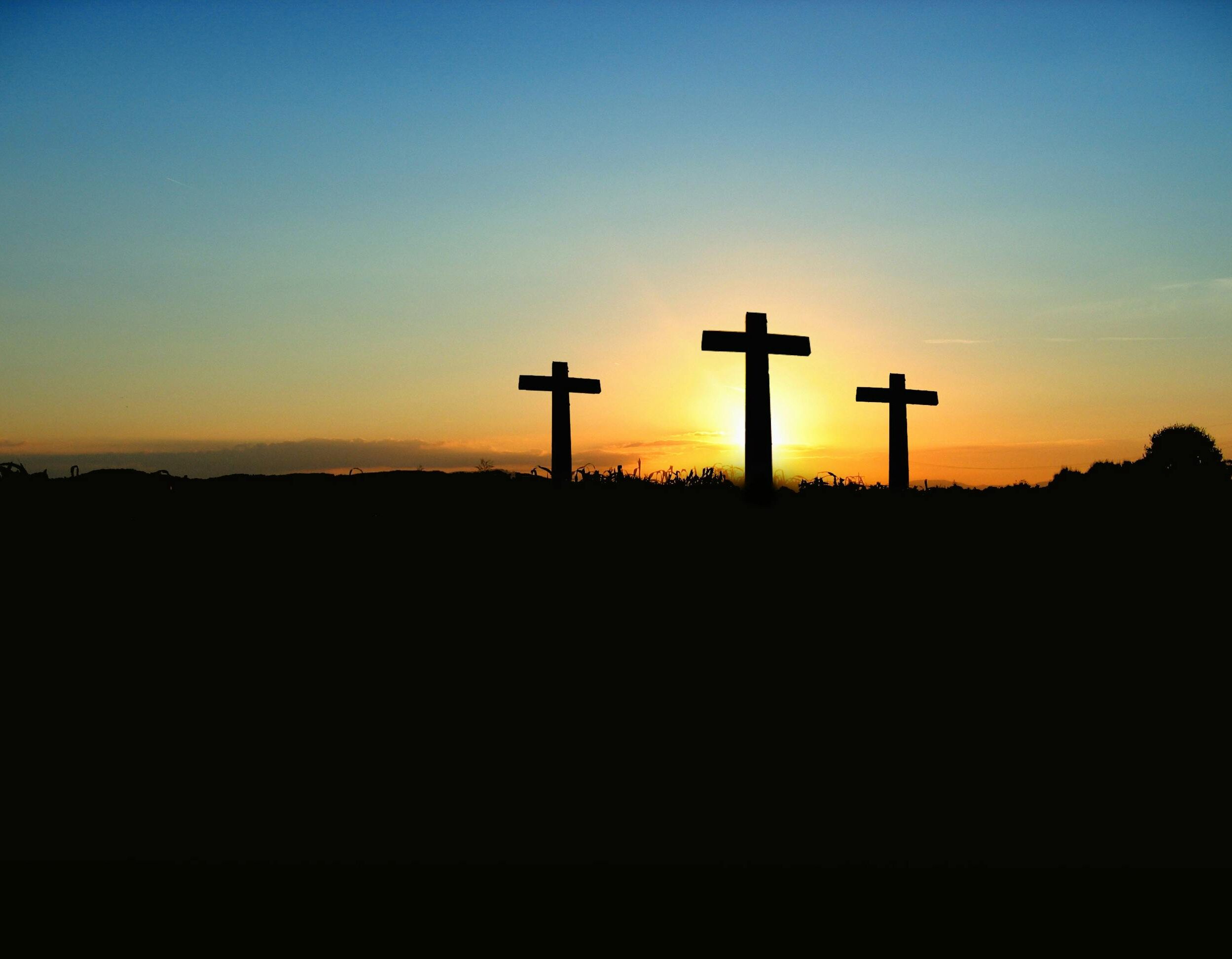
The ministry of Jesus was inherently political and economic in character as much as it was ‘other-worldly’.
The currency of God’s love
This tradition and teaching are reflected in the very first Christian communities. Stephen, the first Christian martyr, was a deacon with special responsibility for the daily distribution of alms to widows and orphans (Acts 6:1–3), reflecting the commitment to charity and service that is advocated in the gospels. In character, the first churches, although diverse in practice and belief, appear nevertheless to have exhibited a radical openness to questions of parity and inclusion.
The original spirit of St Stephen’s Day is caught in J.M. Neale’s famous 19th-century carol, celebrating Wenceslas as he tracks down an unknown beggar in a snowstorm to give him a feast. The carol ends with a moral warning:
Therefore, Christians all, be sure,
Wealth or rank possessing,
Ye who now will bless the poor,
Shall yourselves find blessing.
This is the very antithesis of the ouroboros. It is in giving that we receive, not in consuming. It is by blessing others, not ourselves, that we discover the hand and heart of God. The currency of God’s love is only for giving away. It is not for hoarding to ourselves.
Christianity was, from the outset, an inherently political, economically active, and profoundly social faith. A vivid and righteous expression of Christian faith will always challenge the present world order. Yet it is, at the same time, prepared to work within it, regarding nothing as being beyond redemption. Acts of costly service are what we are called to.
Of course, Jesus’ foot-washing at the last supper is a sign of service, humility, and becoming a servant. But maybe it was more than that – an acknowledgement that he had no power, few possessions, and no position.
Seeing the action in this light starts to get near the centre of his gesture. He washes his disciples’ feet because the events of Holy Week have gradually stripped him of his power and status as a teacher and healer. His ritual is an enactment of just how low he has sunk. So, he is a servant at the table: his face is focused on his feet, his eyes cast low. Even then, the darkness of Good Friday is already upon him. And now, today, he is stripped of everything, and he will sink even lower and into death itself.
Yet strangely, Jesus is also setting an example for his disciples. In John’s gospel, foot-washing is a gesture of deep and abiding friendship and citizenship: ‘You also ought to wash one another’s feet’ (John 13:14). This is a final reminder from Jesus to his disciples: service is the hallmark of a genuine community and faith in Christ. Just as the poor will inherit the kingdom of heaven, so will the church be led by the servants of the servants.
The sign we encounter on Good Friday is the sign of the cross, and it is closely linked to the love and service we see on Maundy Thursday. The cross is the ultimate sign of love.